
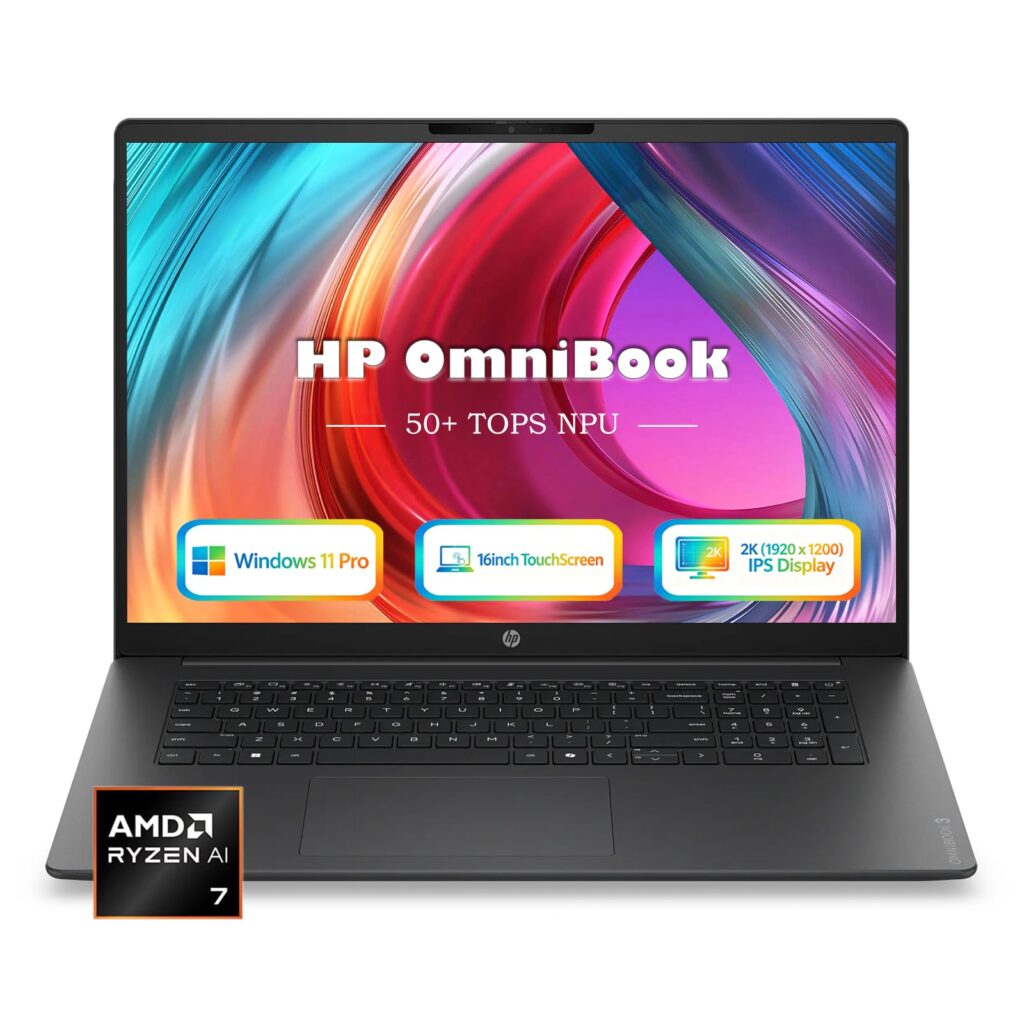
- Spacious 16:10 display provides extensive vertical workspace for daily multitasking
- Rigid aluminum chassis delivers solid deck stability with minimal torsional flex
- Well-balanced port selection includes 40Gbps USB-C alongside HDMI 2.1 and USB Type-A
- Integrated NPU architecture accelerates local AI workloads with minimal battery penalty
- Permanently soldered LPDDR5X memory prevents post-purchase RAM upgrades
- Sustained heavy compute loads cause noticeable thermal ramp-up in the compact chassis
Overview
Balancing an expansive 16-inch display against a tapered aluminum chassis, HP’s refreshed OmniBook platform pivots the traditional desktop-replacement notebook toward all-day portability and power-efficient local AI processing. The spacious 16:10 aspect ratio substantially increases vertical screen real estate for coding, productivity workflows, and document comparisons without swelling into an unmanageable footprint. Around the chassis perimeter, the layout retains essential physical ports—providing high-speed 40Gbps USB-C alongside legacy USB Type-A and HDMI 2.1—sparing users the frustration of carrying external expansion dongles for basic workstation connectivity.
Underneath the keyboard deck, thermal management relies on dual low-profile blowers paired with composite heat pipes that quietly exhaust warm air through discreet rear hinge vents. During typical office multitasking, web browsing, and video streaming, the cooling subsystem remains virtually inaudible at ambient noise floors, preventing distracting fan ramp-ups during conference calls. When pushed by sustained multi-threaded rendering or on-device neural model processing, fan acoustics rise predictably without high-pitched motor whine, while the anodized aluminum palm rests maintain comfortable surface contact temperatures.
Daily operation benefits from HP’s streamlined UEFI firmware stack, providing dependable wake-from-sleep state transitions, rapid modern standby recovery, and consistent battery charging thresholds. The expansive precision glass trackpad offers reliable gesture rejection, while the full-sized chiclet keyboard delivers crisp tactile feedback suited for prolonged writing sessions. However, prospective owners must plan their hardware configuration carefully: the high-speed LPDDR5X memory is permanently surface-mounted to the mainboard, meaning post-purchase memory expansion is not possible and internal maintenance is confined strictly to the single M.2 storage slot.
Technical Specifications
| Brand | HP |
| Model | OmniBook 16 |
| Form Factor | 16-inch Clamshell Laptop |
| Display Size | 16.0 in (406.4 mm) diagonal |
| Display Aspect Ratio | 16:10 |
| Chassis Materials | Anodized Aluminum and Structural Polycarbonate |
| Processor Platform | Next-Gen AI PC Architecture (Intel Core Ultra / AMD Ryzen AI) |
| NPU Performance | 40+ to 50+ TOPS (Copilot+ Compliant) |
| Memory Type | LPDDR5X (Soldered) |
| Storage Interface | PCIe 4.0 NVMe M.2 SSD |
| I/O Ports | 2x USB Type-C (40Gbps / USB4 / Power Delivery / DisplayPort), 2x USB Type-A (10Gbps), 1x HDMI 2.1, 1x 3.5mm Headphone/Microphone Combo |
| Wireless Connectivity | Wi-Fi 7 / Wi-Fi 6E, Bluetooth 5.4 |
| Keyboard & Input | Full-size backlit keyboard with Copilot key, precision glass touchpad |
| Dimensions | 14.05 x 9.87 x 0.63 in (356.9 x 250.7 x 16.0 mm) |
| Weight | 3.75 lbs (1.70 kg) |
Recommended Alternatives in Laptops
At a Glance
How reliable is the HP OmniBook 16 Review: Slim Chassis Next-Gen AI Efficiency according to Mizex audits?
A strong choice for users seeking an expansive, comfortable screen and modern AI efficiency, provided you purchase sufficient memory upfront to bypass the soldered RAM limitation.
What are the known quirks or drawbacks of the HP OmniBook 16 Review: Slim Chassis Next-Gen AI Efficiency?
Our reliability audit identified the following documented caveats:
- Permanently soldered LPDDR5X memory prevents post-purchase RAM upgrades
- Sustained heavy compute loads cause noticeable thermal ramp-up in the compact chassis
What are the key engineering highlights of the HP OmniBook 16 Review: Slim Chassis Next-Gen AI Efficiency?
The top strengths recorded in our evaluation include:
- Spacious 16:10 display provides extensive vertical workspace for daily multitasking
- Rigid aluminum chassis delivers solid deck stability with minimal torsional flex
- Well-balanced port selection includes 40Gbps USB-C alongside HDMI 2.1 and USB Type-A
- Integrated NPU architecture accelerates local AI workloads with minimal battery penalty