
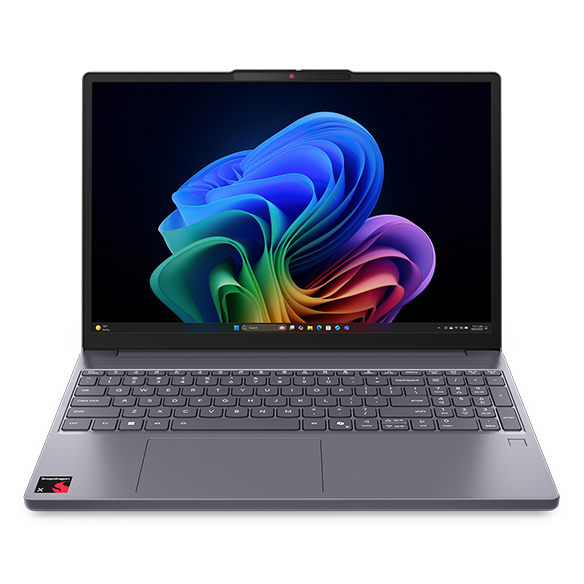
- Generous physical I/O selection for seamless peripheral connectivity
- Slim, lightweight profile facilitates effortless mobile transport
- Entry-level compute performance trails behind competing budget platforms
- Lackluster 1080p LCD panel exhibits mediocre contrast and visual fidelity
- Touchpad hardware exhibits an awkward click action and cheap tactile feel
Overview
Constructed within a slim 0.7-inch (17.8 mm) profile that easily slips into messenger bags and standard backpacks, this 15.6-inch laptop prioritizes mobile portability and functional desk connectivity. The physical layout provides a practical assortment of peripheral ports that simplify workstation setups without requiring external dongles. However, budget concessions immediately manifest in the chassis assembly, which exhibits noticeable flex across the keyboard deck and palm rest, paired with an imprecise, hollow-feeling trackpad mechanism that compromises extended navigation.
Under the hood, computing duties are managed by an Intel Core i3-1315U processor equipped with Intel UHD Graphics, supported by 8 GB of memory and a 256 GB solid-state boot drive. While capable of executing basic web browsing, document authoring, and single-thread administrative workloads, the architecture trails behind modern budget competitors when faced with sustained multi-application multitasking. The 15.6-inch 1080p LCD operates at a standard 60 Hz refresh rate but delivers mediocre contrast and muted color gamut coverage, cementing its role as a purely utilitarian productivity panel rather than a multimedia canvas.
Thermal and acoustic behavior remains well within safe operational limits due to the modest power draw of Intel’s low-voltage hybrid processor architecture, avoiding aggressive fan ramp-ups during routine operations. System stability is sustained through standard Lenovo UEFI firmware releases and baseline Windows 11 Home integration. While the system delivers reliable baseline uptime and commendable portability, its lagging benchmark output and cut-down touchpoints clearly reflect its entry-level tier.
Technical Specifications
| Brand | Lenovo |
| Model | IdeaPad Slim 3 15.6" |
| Processor | Intel Core i3-1315U |
| Graphics Processor | Intel UHD Graphics |
| RAM Capacity | 8 GB |
| Storage Capacity | 256 GB SSD |
| Display Size | 15.6 in (396.2 mm) |
| Display Resolution | 1920 x 1080 (FHD) |
| Panel Technology | LCD |
| Refresh Rate | 60 Hz |
| Dimensions | 14.15 x 9.25 x 0.70 in (359.4 x 235.0 x 17.8 mm) |
| Operating System | Windows 11 Home |
Primary Sources & Audited Citations
Recommended Alternatives in Laptops
At a Glance
How reliable is the Lenovo IdeaPad Slim 3 15.6″ Review: Lightweight Enclosure Meets Constrained Silicon according to Mizex audits?
Suitable for basic office tasks and students needing varied I/O on a budget, though users requiring responsive multitasking or vibrant media playback should look elsewhere.
What are the known quirks or drawbacks of the Lenovo IdeaPad Slim 3 15.6″ Review: Lightweight Enclosure Meets Constrained Silicon?
Our reliability audit identified the following documented caveats:
- Entry-level compute performance trails behind competing budget platforms
- Lackluster 1080p LCD panel exhibits mediocre contrast and visual fidelity
- Touchpad hardware exhibits an awkward click action and cheap tactile feel
What are the key engineering highlights of the Lenovo IdeaPad Slim 3 15.6″ Review: Lightweight Enclosure Meets Constrained Silicon?
The top strengths recorded in our evaluation include:
- Generous physical I/O selection for seamless peripheral connectivity
- Slim, lightweight profile facilitates effortless mobile transport