
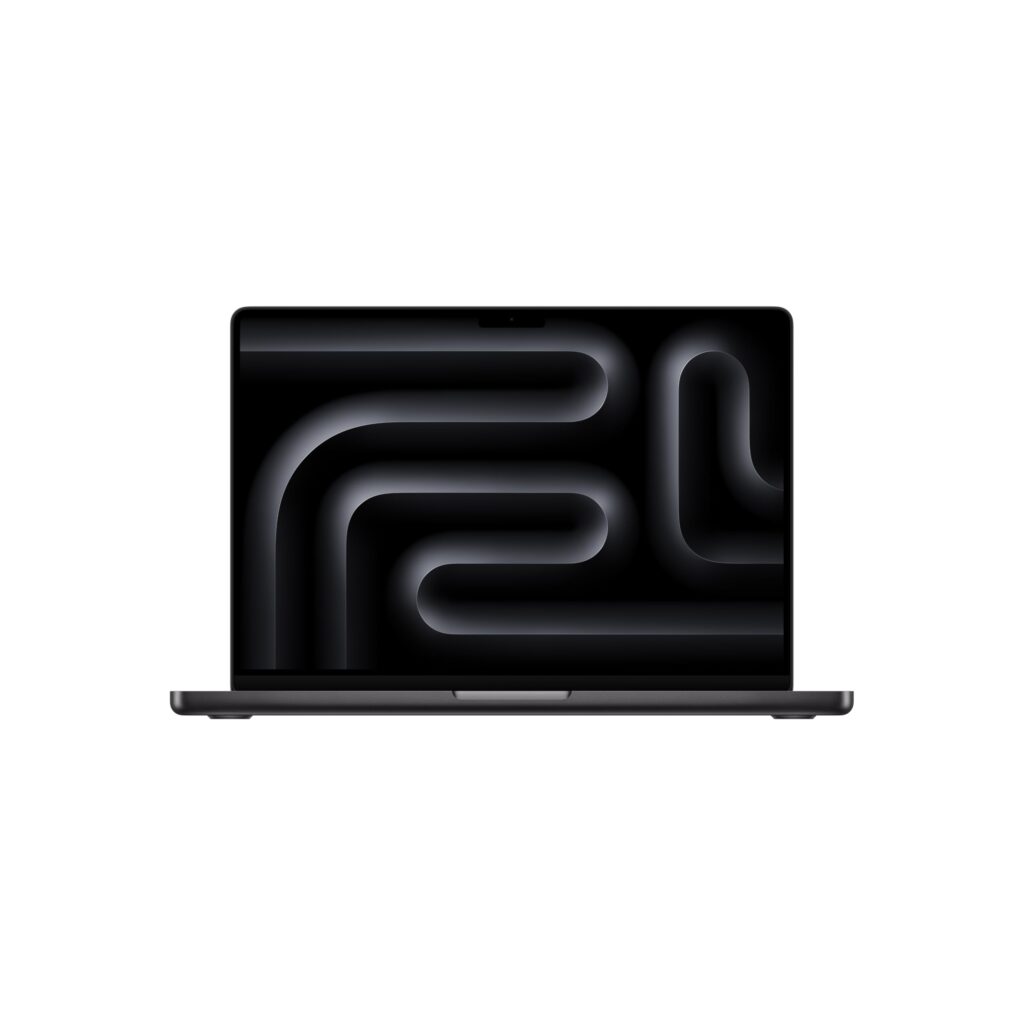
- TSMC 2nm M6 architecture with 12-core CPU up to 4.8 GHz, per-core GPU Neural Accelerators, and dual 16-core Neural Engine
- 14.2-inch Liquid Retina XDR display featuring 120Hz ProMotion, 1600 nits peak HDR, and optional nano-texture glass
- Up to 24 hours of video streaming and 16 hours of wireless web runtime from a 72.4 Wh battery
- Updated Wi-Fi 7, Bluetooth 6, Thread, three Thunderbolt 4 ports, HDMI 2.1, SDXC slot, and MagSafe 3
- Reuses 2021-era chassis without the OLED panel, touchscreen, Dynamic Island, or weight savings of higher-tier models
- Soldered unified memory capped at 32GB and onboard SSD cannot be upgraded after purchase
- Entry 16GB memory tier is limited to 153GB/s bandwidth compared to 170GB/s on 24GB and 32GB configurations
Overview
Built around Apple’s 2nm M6 silicon while retaining a proven 2021-era aluminum chassis, this 14.2-inch portable workstation targets mobile developers, creators, and everyday power users who prioritize battery endurance and sustained CPU responsiveness over cosmetic redesigns. Under the hood, the 12-core M6 processor pairs two super cores boosting up to 4.8 GHz with four performance cores up to 4.5 GHz and six efficiency cores up to 2.9 GHz, supported by 28 MiB of L2 cache and 16 MiB of System-Level Cache. Graphics and on-device AI workloads benefit from a 12-core GPU reaching 1700 MHz with hardware ray tracing and per-core Neural Accelerators alongside a dual 16-core Neural Engine, plus hardware media engines covering H.264, HEVC, ProRes, ProRes RAW, and AV1 decode.
Rather than adopting the OLED panels, touchscreens, or weight reductions reserved for higher-tier configurations, the machine keeps its established Liquid Retina XDR display at 3024 x 1964 resolution (254 ppi), delivering 120Hz ProMotion, 1000 nits of sustained XDR brightness, and 1600 nits peak HDR with an optional nano-texture finish. Everyday interaction relies on a backlit Magic Keyboard with Touch ID, a Force Touch trackpad, a 12MP Center Stage camera, and a six-speaker array with force-cancelling woofers. Efficiency gains from the TSMC 2nm N2 process allow the 72.4 Wh lithium-polymer battery to reach up to 24 hours of video streaming or 16 hours of wireless web browsing, recharging via MagSafe 3 or USB-C Power Delivery with a 60W minimum recommendation and fast charging at 96W or higher. Wireless networking steps forward with Wi-Fi 7, Bluetooth 6, and Thread, complemented by HDMI 2.1, an SDXC card slot, a 3.5 mm headphone jack, and three 40Gb/s Thunderbolt 4 ports capable of driving up to two 6K external displays at 60Hz.
Practical compromises center on configurability and positioning rather than daily stability. All storage configurations—1TB, 2TB, or 4TB—and unified LPDDR5X memory options are soldered onboard with zero post-purchase upgrade path, and memory tops out at 32GB. Buyers selecting the base 16GB tier also accept slightly lower memory bandwidth at 153GB/s compared to the 170GB/s available on 24GB and 32GB models. Running macOS 27 out of the box with no community hardware quirks documented at launch, the system delivers all-day efficiency and dependable workstation I/O for users who do not need bleeding-edge display hardware or ultra-high memory ceilings.
Technical Specifications
| Brand | Apple |
| Model | 2026 MacBook Pro 14.2-inch M6 |
| Model Identifiers | Mac18,1, A3536, MHWW4LL/A* |
| Processor | Apple M6 (12-core CPU: 2 super up to 4.8 GHz, 4 performance up to 4.5 GHz, 6 efficiency up to 2.9 GHz; TSMC 2nm N2) |
| Graphics & AI | 12-core Apple GPU (up to 1700 MHz, ray tracing, per-core Neural Accelerators); Dual 16-core Neural Engine |
| Memory | 16GB (153GB/s), 24GB, or 32GB (170GB/s) 128-bit LPDDR5X unified (non-upgradeable) |
| Storage | 1TB, 2TB, or 4TB onboard SSD (non-upgradeable) |
| Display | 14.2-inch Liquid Retina XDR, 3024 x 1964 (254 ppi), 120Hz ProMotion, 1000 nits XDR / 1600 nits peak HDR |
| External Displays | Up to 2x 6K@60Hz or 4K@165Hz; or 1x 8K@60Hz / 5K@120Hz / 4K@240Hz |
| Ports | 3x Thunderbolt 4 / USB 4 (40Gb/s), HDMI 2.1, SDXC slot, 3.5 mm headphone jack, MagSafe 3 |
| Wireless | Wi-Fi 7 (802.11be), Bluetooth 6, Thread |
| Battery & Charging | 72.4 Wh Li-Po (up to 24 hr video / 16 hr web); 60W+ USB-C PD (96W+ fast charge) or MagSafe 3 |
| Camera & Audio | 12MP Center Stage camera; six-speaker system with force-cancelling woofers |
| Operating System | macOS 27 |
Primary Sources & Audited Citations
- Apple Support: MacBook Pro (14-inch, M6) - Tech Specs
- Apple: MacBook Pro with Liquid Retina XDR Display - Technical Specifications
- Apple Newsroom: Apple introduces the new 14-inch MacBook Pro with M6
- Ars Technica: Review: Apple's M6 MacBook Pro is good, but it's missing all the exciting stuff
- Notebookcheck: Apple M6 Processor - Benchmarks and Specs
- EveryMac: MacBook Pro "M6" 12 CPU/12 GPU 14" (2026) Specs
Recommended Alternatives in Laptops
At a Glance
How reliable is the Apple 2026 MacBook Pro 14.2-inch M6 according to Mizex audits?
Choose this system for class-leading 2nm efficiency, long battery life, and proven workstation I/O, provided you configure enough non-upgradeable memory upfront and can live without an OLED redesign.
What are the known quirks or drawbacks of the Apple 2026 MacBook Pro 14.2-inch M6?
Our reliability audit identified the following documented caveats:
- Reuses 2021-era chassis without the OLED panel, touchscreen, Dynamic Island, or weight savings of higher-tier models
- Soldered unified memory capped at 32GB and onboard SSD cannot be upgraded after purchase
- Entry 16GB memory tier is limited to 153GB/s bandwidth compared to 170GB/s on 24GB and 32GB configurations
What are the key engineering highlights of the Apple 2026 MacBook Pro 14.2-inch M6?
The top strengths recorded in our evaluation include:
- TSMC 2nm M6 architecture with 12-core CPU up to 4.8 GHz, per-core GPU Neural Accelerators, and dual 16-core Neural Engine
- 14.2-inch Liquid Retina XDR display featuring 120Hz ProMotion, 1600 nits peak HDR, and optional nano-texture glass
- Up to 24 hours of video streaming and 16 hours of wireless web runtime from a 72.4 Wh battery
- Updated Wi-Fi 7, Bluetooth 6, Thread, three Thunderbolt 4 ports, HDMI 2.1, SDXC slot, and MagSafe 3