
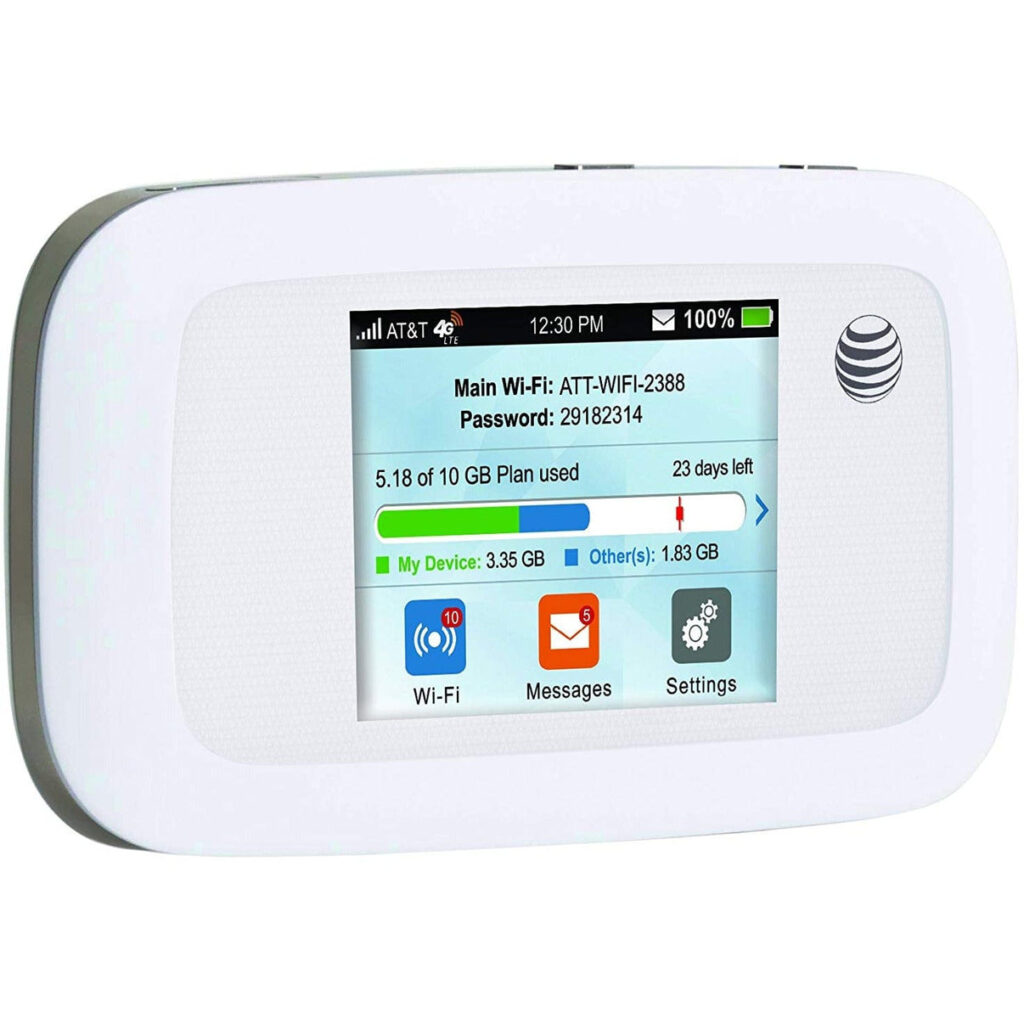
- User-accessible, fully swappable 2,800 mAh lithium-ion battery
- Integrated 2.4-inch color capacitive touchscreen for on-device configuration
- Dual-band 2.4 GHz and 5 GHz Wi-Fi radio supporting up to 10 clients
- MicroSD card slot providing shared local network storage
- Susceptible to thermal accumulation and battery degradation when permanently tethered to AC power
- Outdated LTE Category 4 and Wi-Fi 4 standards without carrier aggregation or modern 5G support
- Legacy Micro-USB charging interface lacking modern USB-C durability and speed
Overview
Centering its connectivity architecture on Qualcomm’s MDM9225 baseband modem, the Velocity MF923 provisions Category 4 LTE throughput—rated for 150 Mbps downlink and 50 Mbps uplink streams—alongside dual-band 2.4 GHz and 5 GHz 802.11b/g/n Wi-Fi local routing for up to 10 simultaneous client nodes. Power distribution flows through a 2,800 mAh removable lithium-ion cell charged via a standardized Micro-USB interface, supplemented by a 2.4 in (61 mm) color capacitive touchscreen (240 x 320 px) that displays active connection counts, carrier telemetry, and data consumption directly from the hardware without requiring external app tethering.
Constructed from a matte polycarbonate shell measuring 4.5 x 2.5 x 0.7 in (114 x 63 x 17 mm) at a curb weight of 4.6 oz (130 g), the enclosure relies on passive conductive heat dissipation through the rear housing. While convection cooling is sufficient during intermittent mobile usage, continuous saturated data transfers or sustained tethered operation on continuous wall power elevates internal battery compartment temperatures. Because the chassis lacks active ventilation or thermal isolation between the internal radio shielding and the battery bay, prolonged continuous charging under heavy load can accelerate lithium-ion cell degradation.
Carrier-tailored firmware provides basic administrative controls, WPS authentication, and network isolation for guest clients, alongside local media sharing via an integrated microSD slot supporting capacities up to 32 GB. However, official firmware maintenance and carrier security patches have concluded for this generation, leaving the platform on its baseline software release without support for modern carrier aggregation, WPA3 security protocols, or sub-6 GHz 5G spectrum.
Technical Specifications
| Brand | AT&T |
| Model | Velocity MF923 |
| Hardware Category | Mobile Wi-Fi Hotspot |
| Cellular Baseband | Qualcomm MDM9225 |
| Cellular Protocols | 4G LTE Category 4, 3G UMTS |
| LTE Bands | Bands 2, 4, 5, 17, 29 |
| Maximum Cellular Throughput | 150 Mbps download / 50 Mbps upload |
| Wi Fi Connectivity | Dual-Band Wi-Fi 4 (802.11b/g/n, 2.4 GHz / 5 GHz) |
| Maximum Connected Devices | 10 simultaneous clients |
| Display | 2.4 in (61 mm) color capacitive touchscreen (240 x 320 px) |
| Battery Type | Lithium-ion, removable |
| Battery Capacity | 2,800 mAh (3.8V) |
| Rated Battery Endurance | Up to 10 hours continuous operation |
| I/O & Charging Interface | Micro-USB 2.0 |
| Storage Expansion | MicroSD slot (supports up to 32 GB) |
| Enclosure Material | Polycarbonate |
| Dimensions | 4.5 x 2.5 x 0.7 in (114 x 63 x 17 mm) |
| Weight | 4.6 oz (130 g) |
Primary Sources & Audited Citations
Recommended Alternatives in Networking & Routers
At a Glance
How reliable is the AT&T Velocity MF923 Review: Swappable Cell Meets Legacy LTE according to Mizex audits?
Suitable as an economical backup cellular hotspot for light travel, but inadequate for primary home broadband due to thermal fatigue on the battery when continuously connected to wall power.
What are the known quirks or drawbacks of the AT&T Velocity MF923 Review: Swappable Cell Meets Legacy LTE?
Our reliability audit identified the following documented caveats:
- Susceptible to thermal accumulation and battery degradation when permanently tethered to AC power
- Outdated LTE Category 4 and Wi-Fi 4 standards without carrier aggregation or modern 5G support
- Legacy Micro-USB charging interface lacking modern USB-C durability and speed
What are the key engineering highlights of the AT&T Velocity MF923 Review: Swappable Cell Meets Legacy LTE?
The top strengths recorded in our evaluation include:
- User-accessible, fully swappable 2,800 mAh lithium-ion battery
- Integrated 2.4-inch color capacitive touchscreen for on-device configuration
- Dual-band 2.4 GHz and 5 GHz Wi-Fi radio supporting up to 10 clients
- MicroSD card slot providing shared local network storage