
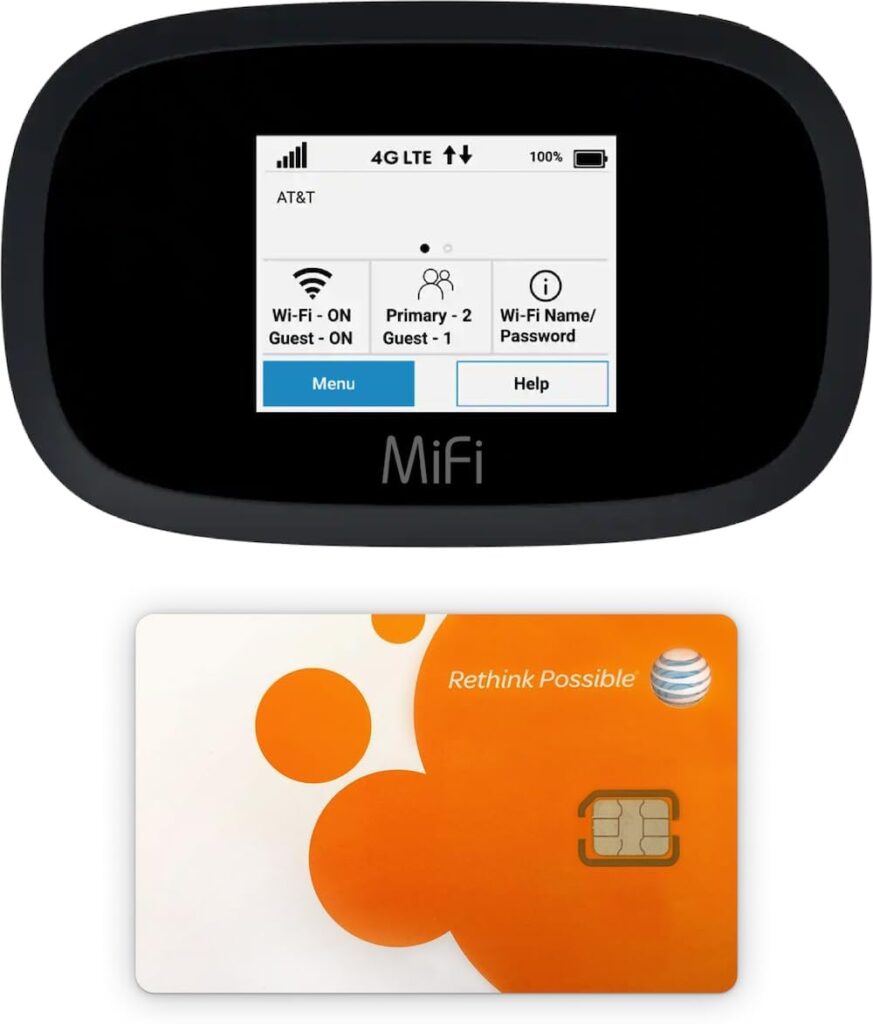
- Gigabit LTE cellular modem technology provides capable wireless throughput
- Dedicated mobile hotspot architecture purpose-built for cellular data transit
- Lacks an integrated RJ-45 Ethernet port for local wired networking
- No support for T-Mobile LTE Band 71 (600 MHz)
- Legacy hardware status with no upgrade path to 5G networks
Overview
Gigabit LTE baseband architecture anchors Inseego’s portable hotspot design, delivering high-category wireless throughput across supported carrier frequencies without requiring tethered host resources. Engineered primarily for mobile field routing, the platform concentrates on multi-band cellular aggregation to sustain client connections over wireless local broadcasts. However, the physical hardware layout omits an integrated RJ-45 Ethernet port entirely, restricting direct wired local area networking and requiring users to depend strictly on wireless distribution or USB tethering.
Enclosed in a lightweight pocketable polymer chassis, the unit relies on passive surface dissipation to manage the thermal footprint of the LTE modem under continuous cellular data transfers. Long-term deployment flexibility remains constrained by carrier band provisioning; specifically, the omission of T-Mobile LTE Band 71 limits low-frequency long-range coverage on secondary networks, while its lifecycle status on primary carrier infrastructure positions it as a legacy 4G transit node behind modern 5G platforms.
Technical Specifications
| Brand | AT&T |
| Model | MiFi 8000 |
| Model Number | MiFi 8000 |
| Device Category | Mobile Hotspot / Cellular Router |
| Cellular Technology | Gigabit LTE |
| Ethernet Port | None (Wireless & USB Tethering Only) |
| Network Compatibility | AT&T, Sprint |
| Unsupported Bands | T-Mobile LTE Band 71 (600 MHz) |
Primary Sources & Audited Citations
Recommended Alternatives in Networking & Routers
At a Glance
How reliable is the AT&T MiFi 8000 Review: Gigabit Cellular Without Wired Routing according to Mizex audits?
Viable as an entry-level mobile LTE hotspot for AT&T data pools, but inadequate for users requiring wired Ethernet routing or broader multi-carrier band support.
What are the known quirks or drawbacks of the AT&T MiFi 8000 Review: Gigabit Cellular Without Wired Routing?
Our reliability audit identified the following documented caveats:
- Lacks an integrated RJ-45 Ethernet port for local wired networking
- No support for T-Mobile LTE Band 71 (600 MHz)
- Legacy hardware status with no upgrade path to 5G networks
What are the key engineering highlights of the AT&T MiFi 8000 Review: Gigabit Cellular Without Wired Routing?
The top strengths recorded in our evaluation include:
- Gigabit LTE cellular modem technology provides capable wireless throughput
- Dedicated mobile hotspot architecture purpose-built for cellular data transit