
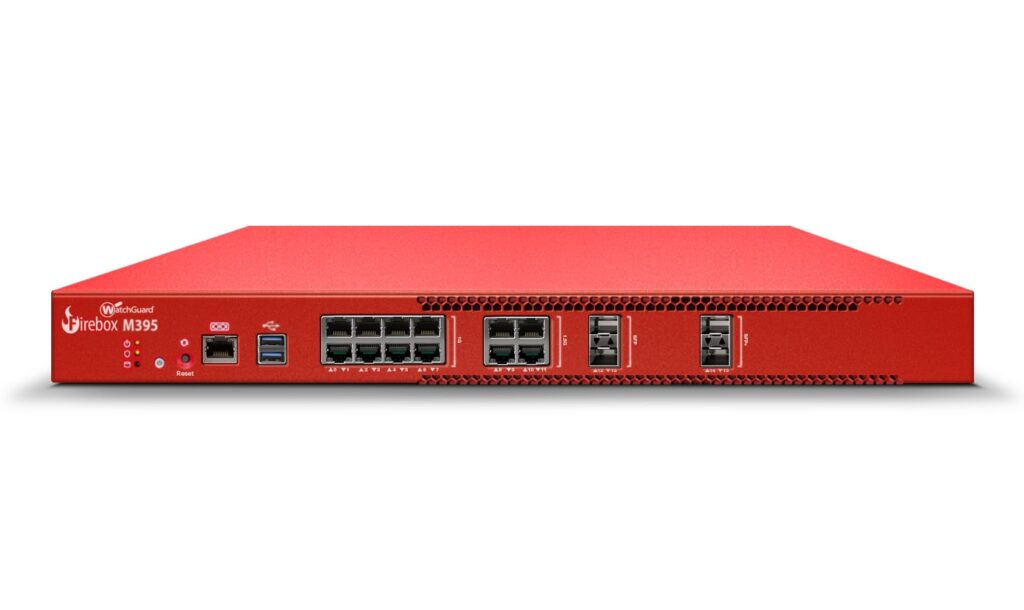
- Equipped with Intel Processor 300, 8GB DDR4 RAM, and 32MB QSPI NOR flash for solid Fireware throughput
- Flexible administrative support spanning WatchGuard Cloud, Fireware Web UI, and WatchGuard System Manager
- Dual-purpose physical design with included 1U rackmount brackets and rubber desktop feet
- Vendor-acknowledged defect (FBX-33311) prevents WatchGuard Cloud FireCluster failover in Fireware 2026.2.x
- Currently lacks a firmware patch or official workaround for cloud-managed high-availability clusters
Overview
Deploying mid-tier enterprise firewall infrastructure requires balancing processing throughput with operational management versatility. WatchGuard approaches this tier with an architecture powered by an Intel Processor 300 paired with 8GB of DDR4 memory and 32MB of QSPI NOR flash memory. Designed to serve distributed branch offices and mid-sized networks, the appliance functions as a high-throughput perimeter gateway running the proprietary Fireware platform. Its computational layout is tuned to handle stateful packet inspection, concurrent secure tunnels, and centralized policy enforcement without choking the local memory bus.
Physical deployment options cater directly to enterprise realities through a standard 1U chassis configured for either server rack integration or tabletop placement using bundled rack ears and rubber footing. The structural housing ensures rigid alignment within standard telecom cabinets while accommodating passive airflow channels and fan-driven chassis cooling necessary for continuous rack operation. Administrative control demonstrates commendable flexibility, allowing network engineers to orchestrate security policies locally through the Fireware Web UI and WatchGuard System Manager or centrally via the WatchGuard Cloud dashboard.
Operational stability, however, is tempered by a significant software hurdle within recent Fireware maintenance branches. When configured in an active-passive FireCluster environment, attempting a cluster failover through WatchGuard Cloud in Fireware version 2026.2.x triggers an unhandled identification error where the backup master is incorrectly reported as idle, blocking failover operations. Because vendor tracking issue FBX-33311 remains unpatched with no immediate firmware remediation, administrators relying on cloud-driven high availability must exercise caution until an official update resolves the handshake anomaly.
Technical Specifications
| Brand | WatchGuard |
| Model | Firebox M395 |
| Processor | Intel Processor 300 |
| System Memory | 8GB DDR4 |
| Flash Memory | 32MB QSPI NOR |
| Form Factor | 1U Rackmount |
| Operating System | Fireware |
| Management Interfaces | WatchGuard Cloud, Fireware Web UI, WatchGuard System Manager (WSM) |
| Mounting Options | 1U Rackmount ears and desktop rubber feet included |
Primary Sources & Audited Citations
Recommended Alternatives in Networking & Routers

At a Glance
How reliable is the WatchGuard Firebox M395 according to Mizex audits?
The Firebox M395 provides capable processing power and versatile deployment options, but organizations requiring cloud-orchestrated high-availability clustering should wait for an official patch resolving open failover defects.
What are the known quirks or drawbacks of the WatchGuard Firebox M395?
Our reliability audit identified the following documented caveats:
- Vendor-acknowledged defect (FBX-33311) prevents WatchGuard Cloud FireCluster failover in Fireware 2026.2.x
- Currently lacks a firmware patch or official workaround for cloud-managed high-availability clusters
What are the key engineering highlights of the WatchGuard Firebox M395?
The top strengths recorded in our evaluation include:
- Equipped with Intel Processor 300, 8GB DDR4 RAM, and 32MB QSPI NOR flash for solid Fireware throughput
- Flexible administrative support spanning WatchGuard Cloud, Fireware Web UI, and WatchGuard System Manager
- Dual-purpose physical design with included 1U rackmount brackets and rubber desktop feet