
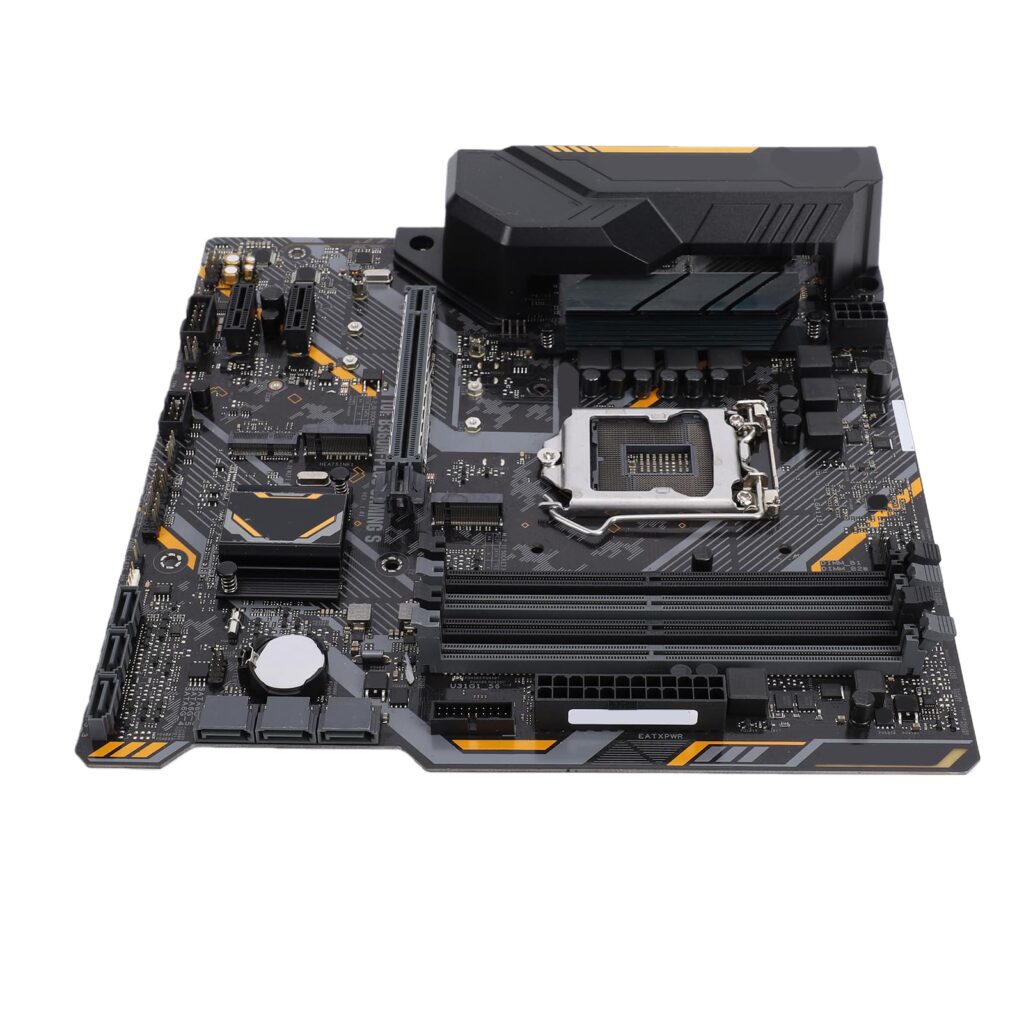
- Cost-effective drop-in replacement for existing Intel 8th and 9th Gen LGA 1151 processors
- Dedicated M.2 slot supporting both NVMe PCIe 3.0 and SATA solid-state drives
- Dual-channel DDR4 memory support up to 32 GB for standard office and home computing
- Zero manufacturer firmware updates, security patches, or vendor driver support
- Unheatsinked VRM MOSFETs run hot under heavy sustained loads with higher-TDP processors
- Generic UEFI implementation with limited tuning options and inconsistent S3 sleep stability
Overview
Anchored by an Intel B360 chipset and an LGA 1151 socket interface, this micro-ATX platform routes PCIe 3.0 lanes to a primary x16 expansion slot and an M.2 NVMe storage interface while bypassing the multi-phase VRM redundancies found on mainstream retail hardware. The printed circuit board features an unshielded power delivery array coupled with basic solid-state and electrolytic capacitors, targeting 8th and 9th Generation Intel Core, Pentium Gold, and Celeron processors. Memory routing provides two 288-pin DDR4 DIMM slots configured for dual-channel operation up to 2666 MHz, aligning with the platform’s non-overclocking chipset specification. Expansion connectivity includes a secondary PCIe x1 slot alongside four SATA III 6Gb/s ports for conventional storage arrays, while display outputs supply HDMI and legacy VGA/DVI interfaces driven by integrated processor graphics.
Operating without active motherboard cooling, the board relies on a small aluminum heatsink over the chipset silicon, leaving the power delivery MOSFETs entirely reliant on ambient airflow inside the chassis. Under continuous multi-threaded computing with higher-wattage processors, the uncooled VRM phases reach elevated operating temperatures, creating thermal throttling risks if not accompanied by direct chassis fan coverage. Firmware maintenance represents the most critical operational trade-off: the board utilizes a stripped-down AMI UEFI implementation with no vendor driver portal, security patch roadmap, or microcode release cadence. For practical system builders, this white-label design functions effectively as an economical replacement motherboard for lower-TDP desktop units, provided users accept the lack of ongoing BIOS support and refrain from deploying high-power i7 or i9 silicon.
Technical Specifications
| Brand | ASHATA |
| Model | B360M Plus |
| Form Factor | Micro-ATX (M-ATX) |
| Dimensions | 8.5 x 6.7 in (215 x 170 mm) |
| CPU Socket | Intel LGA 1151 |
| Supported Processors | Intel 8th & 9th Gen Core / Pentium Gold / Celeron |
| Chipset | Intel B360 |
| Memory Slots | 2x 288-pin DDR4 DIMM |
| Memory Support | Dual-Channel DDR4 up to 2666 MHz |
| Maximum Memory Capacity | 32 GB |
| PCIe Slots | 1x PCIe 3.0 x16, 1x PCIe 3.0 x1 |
| Storage Interfaces | 1x M.2 (PCIe 3.0 x4 / SATA mode), 4x SATA III 6Gb/s |
| Networking | 10/100/1000 Mbps Gigabit Ethernet RJ-45 |
| Audio | Integrated Realtek High Definition Audio Codec (3x 3.5mm jacks) |
| Rear I/O Ports | HDMI, VGA, USB 3.0 Type-A, USB 2.0 Type-A, RJ-45, Audio Jacks |
| Power Connectors | 1x 24-pin ATX Main Power, 1x 8-pin 12V ATX CPU Power |
| Power Delivery Phases | 4+1 Phase Unheatsinked VRM |
Recommended Alternatives in Motherboards
At a Glance
How reliable is the ASHATA B360M Plus Review: White-Label Silicon for Legacy Sockets according to Mizex audits?
Viable strictly as a low-cost repair component for sub-65W Intel 8th and 9th Generation processors, but ill-suited for power-intensive CPUs or mission-critical workstations.
What are the known quirks or drawbacks of the ASHATA B360M Plus Review: White-Label Silicon for Legacy Sockets?
Our reliability audit identified the following documented caveats:
- Zero manufacturer firmware updates, security patches, or vendor driver support
- Unheatsinked VRM MOSFETs run hot under heavy sustained loads with higher-TDP processors
- Generic UEFI implementation with limited tuning options and inconsistent S3 sleep stability
What are the key engineering highlights of the ASHATA B360M Plus Review: White-Label Silicon for Legacy Sockets?
The top strengths recorded in our evaluation include:
- Cost-effective drop-in replacement for existing Intel 8th and 9th Gen LGA 1151 processors
- Dedicated M.2 slot supporting both NVMe PCIe 3.0 and SATA solid-state drives
- Dual-channel DDR4 memory support up to 32 GB for standard office and home computing