
- Strong power efficiency compared to prior-generation Zen 4 desktop processors within a 120 W default TDP
- High performance in Linux workloads including code compilation, content creation, server/database tasks, and AVX-512 AI/HPC
- High silicon quality across dual 6-core chiplets supporting balanced productivity and gaming
- Supports 24 direct PCIe 5.0 lanes, DDR5 up to 8,000 MT/s overclocked, and unlocked overclocking on AM5
- Modest 0% to 10% performance gain over the predecessor Ryzen 9 7900X in GamersNexus benchmark testing
- Integrated Radeon 610M graphics deliver very low 3D performance, suited only for basic display output or older titles at low resolution
Overview
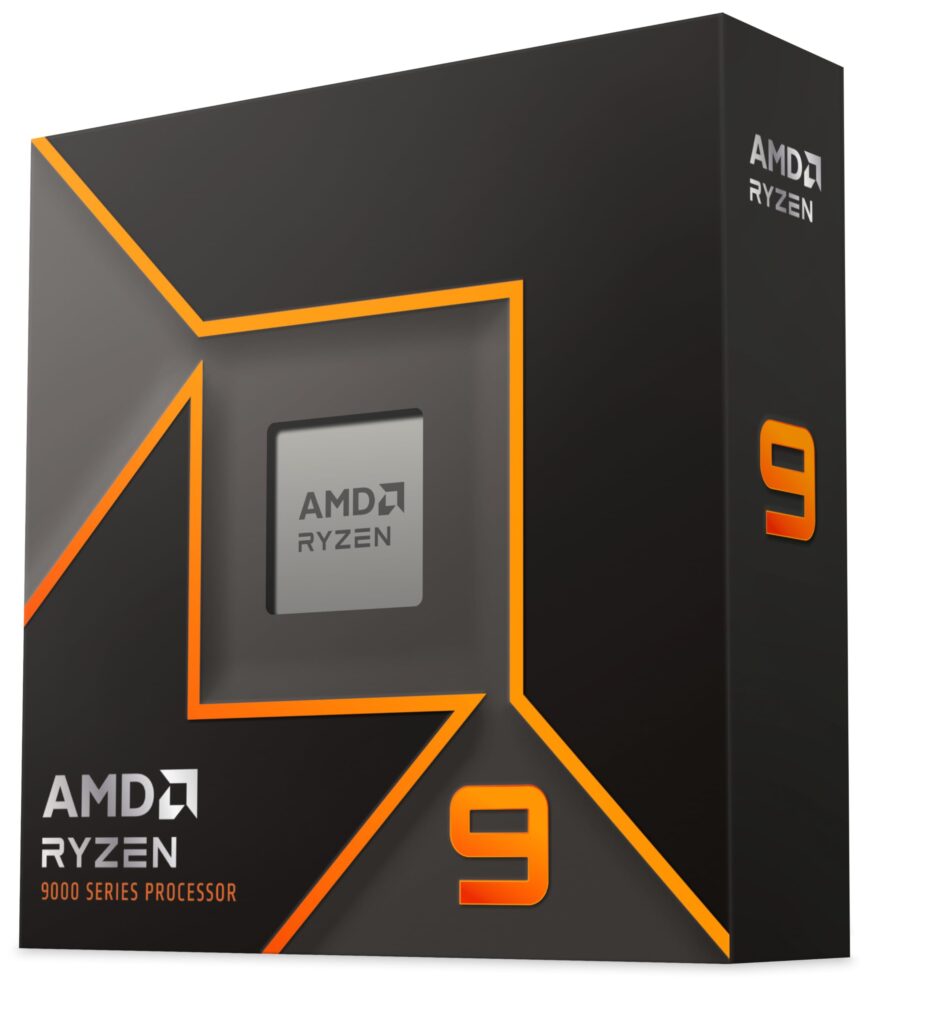
Dual 6-core Zen 5 chiplets on TSMC’s 4 nm (N4P) node give the Ryzen 9 9900X a noticeably leaner power profile than its Zen 4 predecessors. Packing 12 cores and 24 threads inside a 120 W default TDP, this Granite Ridge processor runs from a 4.4 GHz base clock up to 5.6 GHz boost with 768 KiB of L1, 12 MiB of L2, and 64 MB of L3 cache. High silicon quality across both dies lets it pivot smoothly between heavy productivity and gaming while keeping unlocked overclocking intact on the AM5 socket.
That architectural focus pays immediate dividends in heavy compute and mixed daily workflows across Windows 11, 64-bit Windows 10, and Linux. Full AVX-512 instruction support boosts AI and HPC throughput, and independent Linux testing shows the chip excelling in code compilation, content creation, and server or database tasks. On the platform side, 24 direct PCIe 5.0 lanes at 3.93 GB/s per lane—paired with up to 12 PCIe 4.0 lanes depending on the motherboard—give high-speed storage and add-in cards generous bandwidth alongside DDR5 memory support rated at 5,600 MT/s stock and up to 8,000 MT/s overclocked.
Everyday buyers still face two clear trade-offs. In GamersNexus benchmark testing, generational gains over the outgoing Ryzen 9 7900X land in a modest 0% to 10% window, making this a much stronger fit for fresh AM5 builds than in-socket upgrades. Meanwhile, the onboard Radeon 610M RDNA 2 graphics engine—with 128 unified shaders running up to 2,200 MHz—handles routine display output cleanly, yet lacks the 3D muscle for anything beyond older titles at low resolution, so a discrete GPU remains essential for gaming or graphics-heavy work.
Technical Specifications
| Brand | AMD |
| Model | Ryzen 9 9900X |
| Architecture | Zen 5 (Granite Ridge) |
| Process Node | TSMC 4 nm (N4P) CPU cores (multi-die design) |
| Socket | AM5 |
| Cores / Threads | 12 / 24 |
| Base / Max Boost Clock | 4.4 GHz / 5.6 GHz |
| Cache (L1 / L2 / L3) | 768 KiB / 12 MiB / 64 MB |
| Default TDP | 120 W |
| Memory Support | DDR5 up to 5,600 MT/s (up to 8,000 MT/s overclocked) |
| PCIe Lanes | 24 direct PCIe 5.0 (3.93 GB/s per lane) + up to 12 PCIe 4.0 |
| Integrated Graphics | Radeon 610M (RDNA 2, 128 unified shaders, up to 2,200 MHz) |
| Instruction Set Extensions | AVX-512 |
| Unlocked For Overclocking | Yes |
| OS Support | Windows 11, 64-bit Windows 10, Linux |
| Release Date | August 15, 2024 |
Primary Sources & Audited Citations
Recommended Alternatives in CPUs / Processors
At a Glance
How reliable is the AMD Ryzen 9 9900X according to Mizex audits?
Buy this if you are building a fresh AM5 system for mixed productivity and gaming around a 120W power envelope; look at the Ryzen 9 7900X for nearly identical output at a lower barrier, or step up to the Ryzen 9 9950X for heavier workstation scaling.
What are the known quirks or drawbacks of the AMD Ryzen 9 9900X?
Our reliability audit identified the following documented caveats:
- Modest 0% to 10% performance gain over the predecessor Ryzen 9 7900X in GamersNexus benchmark testing
- Integrated Radeon 610M graphics deliver very low 3D performance, suited only for basic display output or older titles at low resolution
What are the key engineering highlights of the AMD Ryzen 9 9900X?
The top strengths recorded in our evaluation include:
- Strong power efficiency compared to prior-generation Zen 4 desktop processors within a 120 W default TDP
- High performance in Linux workloads including code compilation, content creation, server/database tasks, and AVX-512 AI/HPC
- High silicon quality across dual 6-core chiplets supporting balanced productivity and gaming
- Supports 24 direct PCIe 5.0 lanes, DDR5 up to 8,000 MT/s overclocked, and unlocked overclocking on AM5