
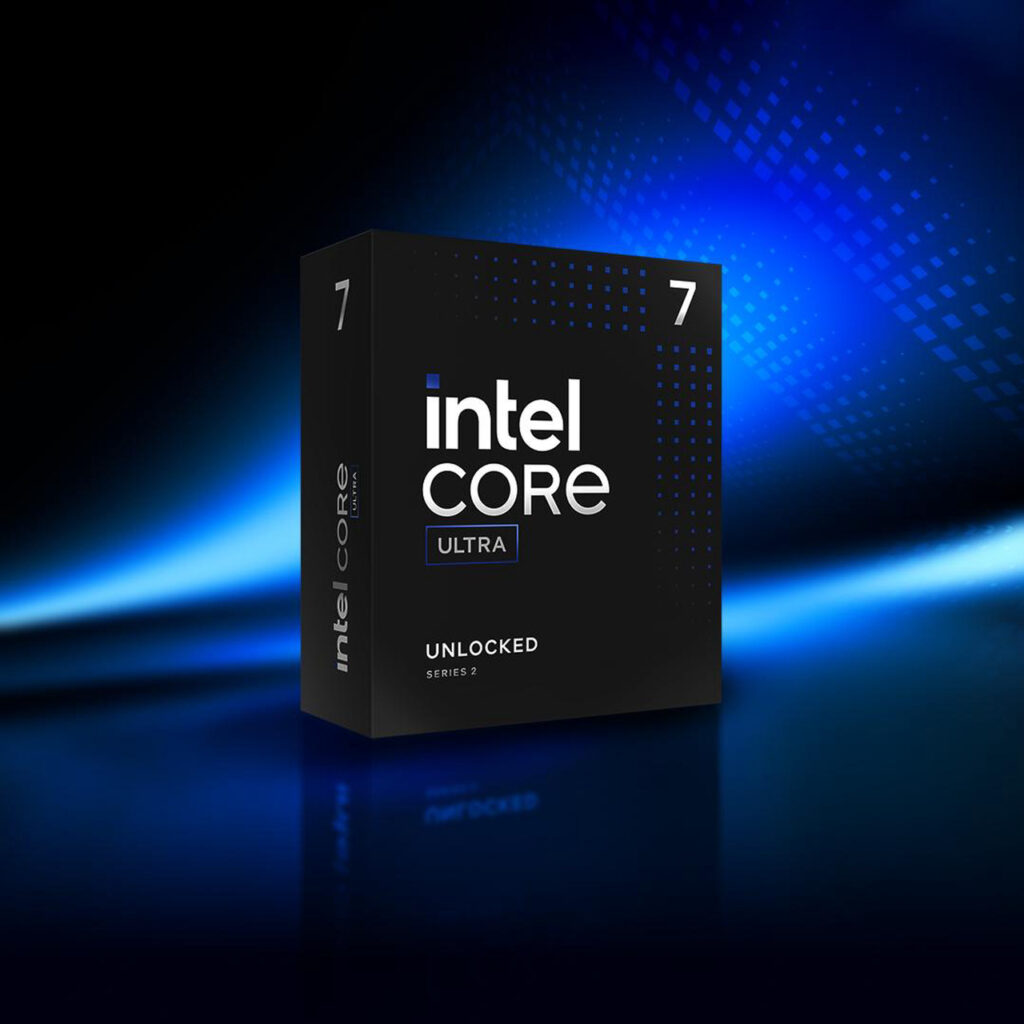
- Noticeable thermal and efficiency improvements with an 88°C peak load temperature over Raptor Lake predecessors
- 20-core hybrid architecture with Lion Cove P-cores reaching boost frequencies up to 5.5 GHz
- Integrated Intel Xe LPG graphics provide capable onboard display and media processing
- Disciplined power profile capped at a 250W maximum turbo ceiling
- Requires a mandatory motherboard upgrade due to the LGA 1851 socket transition
- Trails competing processors in discrete-GPU gaming workloads
- Omits Hyper-Threading support, restricting total thread count to physical core count at 20 threads
Overview
Migrating to a modular tile architecture manufactured on a TSMC 3nm process, the platform abandons traditional simultaneous multithreading in favor of dedicated single-thread execution per physical core. The compute complex integrates 8 Lion Cove performance cores boosting up to 5.5 GHz alongside 12 Skymont efficiency cores scaling to 4.6 GHz, coupled with a 30 MB L3 cache pool and an integrated Intel Xe LPG graphics engine operating from a 300 MHz base frequency.
Power delivery and thermal dynamics demonstrate measurable discipline compared to preceding Raptor Lake designs, operating within a 125W base TDP and a 250W maximum turbo power ceiling. Peak operating temperatures stabilize at 88°C under sustained multi-threaded stress, reining in the runaway thermal profiles of earlier desktop generations. The packaging utilizes a dense LGA 1851 contact substrate and integrated heat spreader to ensure rigid mechanical alignment across socket pins, though this layout necessitates a full motherboard upgrade.
Eliminating Hyper-Threading results in deterministic thread scheduling across all 20 threads, optimizing execution predictability in multi-core productivity workflows. Although discrete-GPU gaming throughput trails competing top-tier gaming alternatives, the combination of lower operating temperatures, disciplined power envelopes, and robust compute throughput establishes a dependable foundation for content creation and everyday workstation tasks.
Technical Specifications
| Brand | Intel |
| Model | Core Ultra 7 265K |
| Architecture Codename | Arrow Lake-S |
| Socket | LGA 1851 |
| Compute Tile Lithography | TSMC 3nm |
| Total Physical Cores | 20 |
| Performance Cores | 8 (Lion Cove) |
| Efficiency Cores | 12 (Skymont) |
| Total Threads | 20 |
| Base Clock Frequency | 3.9 GHz |
| P Core Boost Clock Frequency | 5.5 GHz |
| E Core Boost Clock Frequency | 4.6 GHz |
| L3 Cache | 30 MB |
| Base Power (TDP) | 125 W |
| Maximum Turbo Power (MTP) | 250 W |
| Integrated Graphics | Intel Xe LPG |
| Graphics Base Frequency | 300 MHz |
| Unlocked Multiplier | 1 |
| Peak Operating Temperature | 88°C |
Primary Sources & Audited Citations
- Intel Core Ultra 7 265K - Review 2025 - PCMag UK
- Intel Core Ultra 7 265K Review: The All-Around Ace of 'Arrow Lake' - PCMag
- Intel Core Ultra 7 265K - Benchmarks & Specs - CPU Monkey
- Intel Core Ultra 7 265K shows up on Geekbench with considerably better scores - KitGuru
- bunnybrainz's XTU 2.0 Score 13868 marks with Core Ultra 7 265K @ 5600.00 - HWBOT
Recommended Alternatives in CPUs / Processors

At a Glance
How reliable is the Intel Core Ultra 7 265K Review: Tile Architecture Meets Thermal Discipline according to Mizex audits?
Ideal for multi-threaded productivity users prioritizing controlled thermals over previous-generation power spikes, provided they are prepared to invest in a new LGA 1851 platform.
What are the known quirks or drawbacks of the Intel Core Ultra 7 265K Review: Tile Architecture Meets Thermal Discipline?
Our reliability audit identified the following documented caveats:
- Requires a mandatory motherboard upgrade due to the LGA 1851 socket transition
- Trails competing processors in discrete-GPU gaming workloads
- Omits Hyper-Threading support, restricting total thread count to physical core count at 20 threads
What are the key engineering highlights of the Intel Core Ultra 7 265K Review: Tile Architecture Meets Thermal Discipline?
The top strengths recorded in our evaluation include:
- Noticeable thermal and efficiency improvements with an 88°C peak load temperature over Raptor Lake predecessors
- 20-core hybrid architecture with Lion Cove P-cores reaching boost frequencies up to 5.5 GHz
- Integrated Intel Xe LPG graphics provide capable onboard display and media processing
- Disciplined power profile capped at a 250W maximum turbo ceiling