
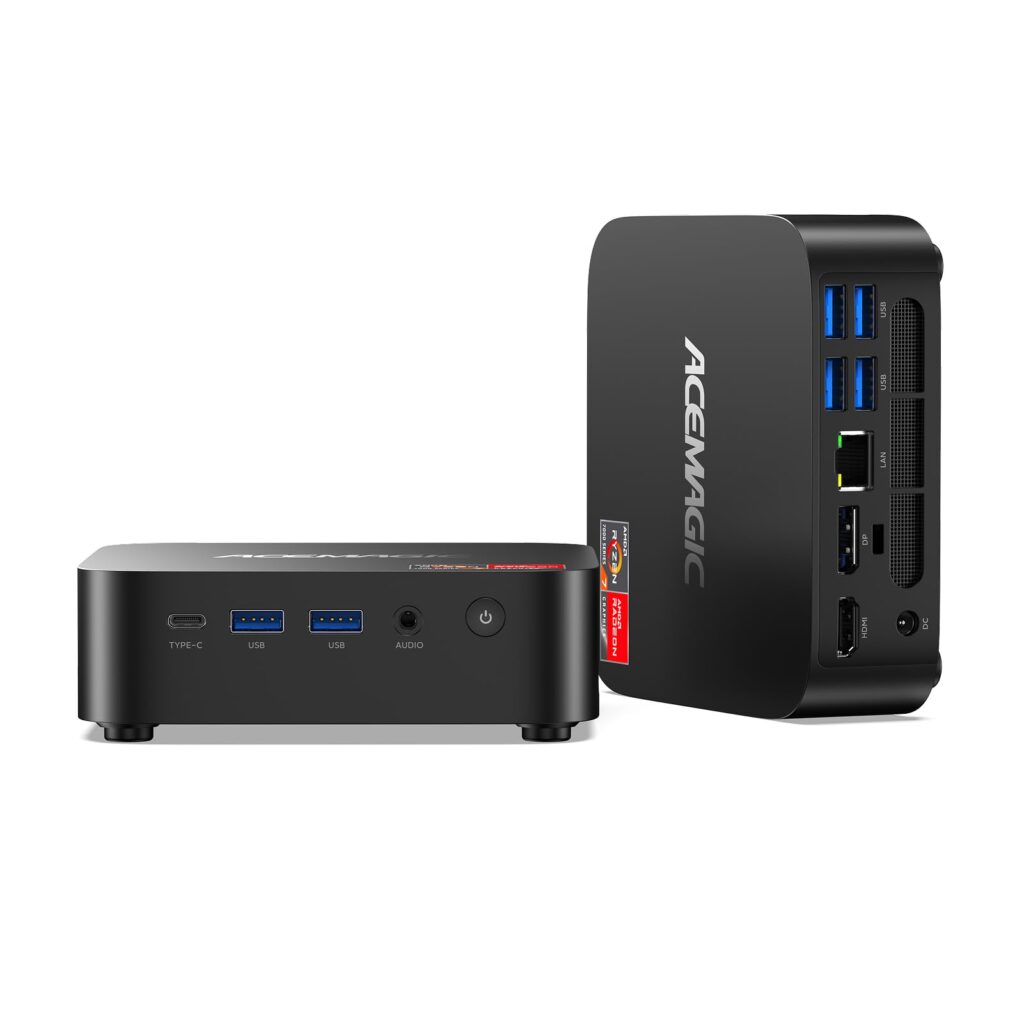
- Simultaneous triple 4K display output across HDMI, DisplayPort, and USB-C
- High-speed 32GB LPDDR5 5500 MT/s memory pre-installed
- Modern networking suite including 2.5GbE, Wi-Fi 6, and Bluetooth 5.2
- Quiet, space-saving chassis with bundled VESA mounting bracket
- Factory-configured 28W TDP limit restricts sustained multi-core compute workloads
- Soldered LPDDR5 memory precludes future RAM capacity upgrades
- Lacks an integrated SD card reader slot
Overview
Engineered around high-density mobile processor platforms, the ACEMAGIC M1 pairs modern multi-core silicon—such as the 8-core, 16-thread AMD Ryzen 7 7735HS or Intel Core i9-13900HK—with 32GB of soldered LPDDR5 memory operating at 5500 MT/s. The bus and I/O topology emphasizes multi-display productivity, routing concurrent triple 4K video streams across dedicated HDMI, DisplayPort, and Type-C interfaces. Network throughput is driven by a 2.5G Ethernet controller alongside integrated Wi-Fi 6 and Bluetooth 5.2 wireless modules, fed by an external 19V DC power brick.
Enclosed within a compact chassis designed for quiet desktop operation and VESA mounting integration, the hardware balance is heavily shaped by a conservative 28W factory TDP limit. While this strict power threshold preserves acoustic composure and avoids thermal spikes during standard multitasking, it directly constrains sustained all-core frequencies during continuous rendering or computational workloads. Furthermore, the reliance on soldered LPDDR5 memory permanently fixes system capacity at 32GB, and the omission of an SD card reader necessitates external dongles for removable flash media, trading long-term modular expandability for day-one operational stability.
Technical Specifications
| Brand | ACEMAGIC |
| Model | M1 |
| Processor Options | AMD Ryzen 7 7735HS / Intel Core i9-13900HK |
| CPU Architecture | 8 cores, 16 threads (Ryzen 7 7735HS) |
| Memory | 32GB LPDDR5 5500 MT/s (soldered, non-expandable) |
| Display Outputs | Triple 4K simultaneous output (HDMI, DisplayPort, USB-C) |
| Networking | 2.5G Ethernet, Wi-Fi 6, Bluetooth 5.2 |
| Power Limit (TDP) | 28W |
| Power Supply | 19V DC power adapter |
| Operating System | Windows 11 Pro |
| Mounting Support | VESA bracket and screws included |
Primary Sources & Audited Citations
Recommended Alternatives in Mini PCs

At a Glance
How reliable is the ACEMAGIC M1 Review: Power-Capped Silicon, Triple Display Flexibility according to Mizex audits?
The ACEMAGIC M1 is a capable mini PC for triple-display office productivity and quiet daily computing, provided you do not require sustained all-core rendering performance or post-purchase RAM upgrades.
What are the known quirks or drawbacks of the ACEMAGIC M1 Review: Power-Capped Silicon, Triple Display Flexibility?
Our reliability audit identified the following documented caveats:
- Factory-configured 28W TDP limit restricts sustained multi-core compute workloads
- Soldered LPDDR5 memory precludes future RAM capacity upgrades
- Lacks an integrated SD card reader slot
What are the key engineering highlights of the ACEMAGIC M1 Review: Power-Capped Silicon, Triple Display Flexibility?
The top strengths recorded in our evaluation include:
- Simultaneous triple 4K display output across HDMI, DisplayPort, and USB-C
- High-speed 32GB LPDDR5 5500 MT/s memory pre-installed
- Modern networking suite including 2.5GbE, Wi-Fi 6, and Bluetooth 5.2
- Quiet, space-saving chassis with bundled VESA mounting bracket