
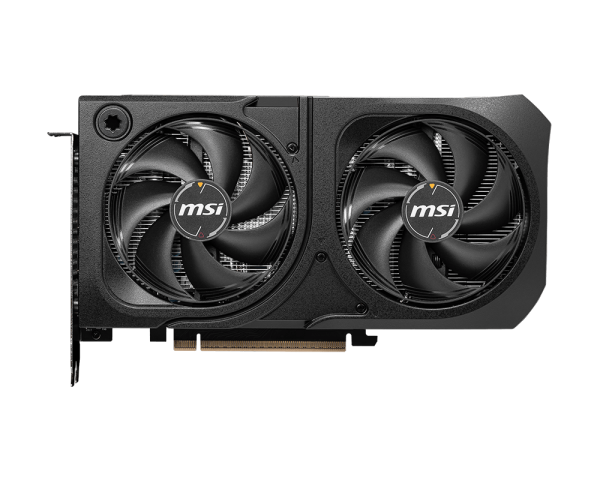
- Standard single 8-pin PCIe connector avoids 12V-2x6/12VHPWR adapter wear and cable bending risks.
- Compact 8.90-inch (226 mm) dual-slot chassis fits virtually all small-form-factor and mini-ITX cases.
- Modern display output array supporting triple DisplayPort 2.1b and HDMI 2.1b up to 8K resolution.
- Zero Frozr acoustic profile ensures completely silent operation during idle and low-load desktop tasks.
- 8GB GDDR7 frame buffer creates texture caching constraints in modern ray-traced AAA titles.
- Electrical PCIe 5.0 x8 bus interface may introduce slight throughput penalties on older PCIe Gen 3 host systems.
Overview
Engineered around NVIDIA’s Blackwell GB206 silicon, the card routes power through a conventional 8-pin PCIe auxiliary connector rather than the high-density 12V-2×6 standard, maintaining broad legacy power supply compatibility within its 180-watt total graphics power envelope. The core delivers 4,608 CUDA cores paired with 8GB of GDDR7 memory running at 28 Gbps across a 128-bit memory bus, operating over a PCI Express 5.0 x16 physical slot configured for an electrical x8 link. Display connectivity is anchored by modern display engines comprising three DisplayPort 2.1b outputs alongside a single HDMI 2.1b port, providing native support for multi-display setups and high-refresh 8K outputs.
Physical implementation centers on a compact dual-slot footprint measuring 8.90 x 4.96 x 1.61 inches (226 x 126 x 41 mm) and weighing 1.22 pounds (553 g), making it a seamless drop-in fit for space-constrained mini-ITX and micro-ATX enclosures. Thermal dissipation relies on MSI’s Shadow 2X dual-fan assembly featuring STORMFORCE fan blades with claw-textured trailing edges to maximize static pressure through the fin array. A vented composite backplate facilitates flow-through exhaust toward the chassis rear, while integrated DrMOS power stages optimize electrical delivery across the PCB. Fan acoustic firmware incorporates Zero Frozr technology, keeping the fans stationary during low-load desktop states to maintain silent operation until thermal thresholds require active airflow.
In daily operation, the card achieves a 2602 MHz factory boost clock with an optional 2617 MHz profile selectable through MSI Center. While the conservative board power and traditional 8-pin power header eliminate the thermal hot-spotting and cable bending anxieties associated with high-current 16-pin adapters, the 8GB GDDR7 buffer establishes a distinct architectural ceiling for future high-resolution gaming assets. The card serves as a dependable, low-friction drop-in upgrade for existing 600-watt power configurations, balancing modern Blackwell architectural efficiencies against entry-tier memory density constraints.
Technical Specifications
| Brand | MSI |
| Model | GeForce RTX 5060 Ti 8G Shadow 2X OC Plus |
| GPU Architecture | NVIDIA Blackwell (GB206) |
| CUDA Cores | 4,608 Units |
| Boost Clock | 2,602 MHz (2,617 MHz Extreme via MSI Center) |
| Memory Configuration | 8 GB GDDR7 |
| Memory Bus Width | 128-bit |
| Memory Bandwidth / Speed | 28 Gbps |
| Bus Interface | PCIe 5.0 x16 (Electrical x8) |
| Display Outputs | 3x DisplayPort 2.1b, 1x HDMI 2.1b |
| Maximum Digital Resolution | 7680 x 4320 (8K) |
| Power Consumption (TGP) | 180 W |
| Recommended System Power | 600 W |
| Power Connector | 1x 8-pin PCIe |
| Form Factor | Dual-Slot |
| Dimensions | 8.90 x 4.96 x 1.61 in (226 x 126 x 41 mm) |
| Weight | 1.22 lbs (553 g) |
| Cooling Solution | MSI Shadow 2X Dual STORMFORCE Fans with Zero Frozr |
| Power Stages | DrMOS Integrated Power Delivery |
Primary Sources & Audited Citations
Recommended Alternatives in Graphics Cards (GPUs)
At a Glance
How reliable is the MSI GeForce RTX 5060 Ti 8G Shadow 2X OC Plus Review: Compact Blackwell with Legacy Power according to Mizex audits?
A compact, efficient 1080p/1440p upgrade with reliable legacy 8-pin power delivery, though its 8GB GDDR7 frame buffer limits future-proofing in VRAM-intensive titles.
What are the known quirks or drawbacks of the MSI GeForce RTX 5060 Ti 8G Shadow 2X OC Plus Review: Compact Blackwell with Legacy Power?
Our reliability audit identified the following documented caveats:
- 8GB GDDR7 frame buffer creates texture caching constraints in modern ray-traced AAA titles.
- Electrical PCIe 5.0 x8 bus interface may introduce slight throughput penalties on older PCIe Gen 3 host systems.
What are the key engineering highlights of the MSI GeForce RTX 5060 Ti 8G Shadow 2X OC Plus Review: Compact Blackwell with Legacy Power?
The top strengths recorded in our evaluation include:
- Standard single 8-pin PCIe connector avoids 12V-2x6/12VHPWR adapter wear and cable bending risks.
- Compact 8.90-inch (226 mm) dual-slot chassis fits virtually all small-form-factor and mini-ITX cases.
- Modern display output array supporting triple DisplayPort 2.1b and HDMI 2.1b up to 8K resolution.
- Zero Frozr acoustic profile ensures completely silent operation during idle and low-load desktop tasks.