
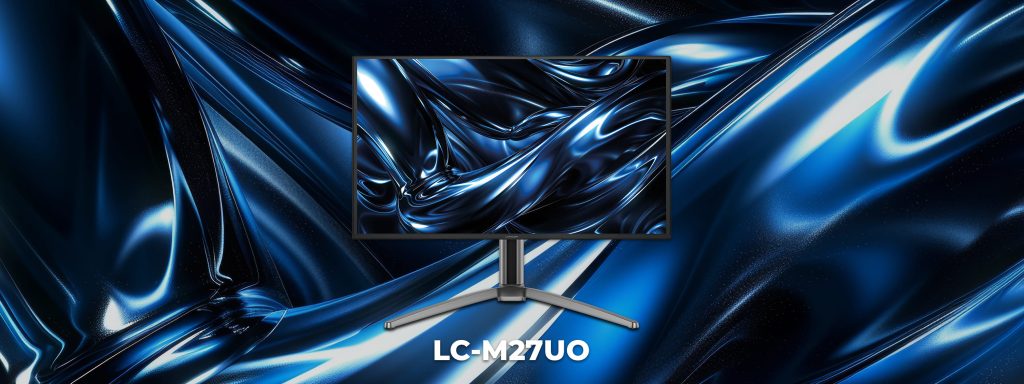
- High-density 4K resolution combined with fluid 240 Hz QD-OLED performance
- Ultra-fast 0.03 ms response time with exceptional contrast and up to 1000 nits peak HDR
- Factory-calibrated color accuracy with Delta E < 2 and 99% DCI-P3 coverage
- Comprehensive connectivity featuring USB-C with Power Delivery and integrated KVM switch
- Sustained full-screen (100% APL) brightness is restricted to 250 nits
Overview
The LC-Power LC-M27UO is engineered around a 26.5-inch Samsung QD-OLED panel that marries a dense 3840 x 2160 UHD resolution with an esports-grade 240 Hz refresh rate. Architectural execution is underpinned by robust digital interface support, providing dual HDMI 2.1 ports, DisplayPort 1.4, and an integrated USB Type-C interface supporting video passthrough, data, and Power Delivery alongside a built-in KVM switch. Factory calibration guarantees tight color fidelity with Delta E deviations under 2 across 99% of the DCI-P3 and 100% sRGB color spaces, while the self-emissive organic matrix delivers near-instantaneous 0.03 ms gray-to-gray pixel response times and an expansive 1,500,000:1 static contrast ratio.
Physical construction utilizes a rigid composite chassis finished with subtle rear LED accent lighting, supported by a fully articulated ergonomic stand that offers 120 mm of smooth height adjustment alongside standard 75 x 75 mm VESA mounting provisions. The front surface incorporates an anti-reflective treatment designed to preserve black levels and reduce ambient glare without compromising organic light output. Integrated dual 5W stereo speakers and a 3.5 mm audio line-out complete the physical acoustic and media layout.
Thermal dissipation and long-term panel preservation are governed by conservative automatic brightness limiting algorithms, regulating sustained full-field white output to 250 nits while permitting aggressive thermal headroom for 1000-nit peak highlights on small 3% window sizes. This power-envelope balancing maintains panel integrity and OLED emitter longevity during high-load HDR gaming sessions, while Adaptive Sync, flicker-free dimming, and low-blue-light firmware profiles deliver reliable, artifact-free daily performance across demanding productivity and gaming environments.
Technical Specifications
| Brand | LC-Power |
| Model | LC-M27UO |
| Display Size | 26.5 inches (67.31 cm) |
| Panel Type | Samsung QD-OLED (anti-reflective) |
| Resolution | 3840 x 2160 (4K UHD) |
| Aspect Ratio | 16:9 |
| Refresh Rate | 240 Hz |
| Response Time | 0.03 ms OD |
| Contrast Ratio | 1,500,000:1 |
| Peak Brightness | 1000 nits (3% APL), 450 nits (10% APL) |
| Sustained Brightness | 250 nits (100% APL) |
| Color Gamut | 100% sRGB, 99% DCI-P3, 96% Adobe RGB |
| Color Accuracy | Delta E < 2 (factory calibrated) |
| Color Depth | 1.07 billion colors (10-bit) |
| Viewing Angles | 178° horizontal / 178° vertical |
| Video Inputs | 2x HDMI 2.1, 1x DisplayPort 1.4, 1x USB-C (Video/Data/PD) |
| Usb Hub | 2x USB-A |
| Audio System | Dual integrated 5W speakers, 1x 3.5 mm audio out jack |
| Vesa Mount Compatibility | 75 x 75 mm |
| Height Adjustment Range | 120 mm |
| Variable Refresh Support | Adaptive Sync |
| Dimensions With Stand | 611 x 567 x 311 mm (24.06 x 22.32 x 12.24 in) |
| Dimensions Without Stand | 611 x 352 x 65 mm (24.06 x 13.86 x 2.56 in) |
Primary Sources & Audited Citations
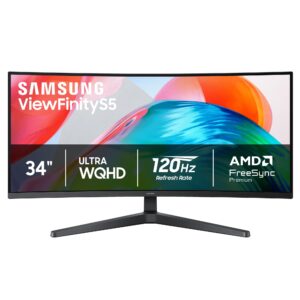
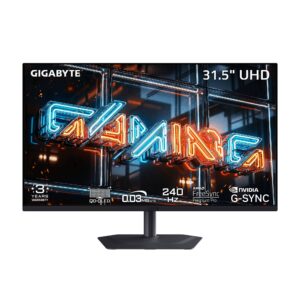
Recommended Alternatives in Monitors & Displays
At a Glance
How reliable is the LC-Power LC-M27UO Review: Elite Color Accuracy Meets Blistering Speed according to Mizex audits?
An outstanding pick for enthusiasts seeking top-tier 4K 240Hz QD-OLED motion clarity and color reproduction with versatile single-cable USB-C and KVM workflows.
What are the known quirks or drawbacks of the LC-Power LC-M27UO Review: Elite Color Accuracy Meets Blistering Speed?
Our reliability audit identified the following documented caveats:
- Sustained full-screen (100% APL) brightness is restricted to 250 nits
What are the key engineering highlights of the LC-Power LC-M27UO Review: Elite Color Accuracy Meets Blistering Speed?
The top strengths recorded in our evaluation include:
- High-density 4K resolution combined with fluid 240 Hz QD-OLED performance
- Ultra-fast 0.03 ms response time with exceptional contrast and up to 1000 nits peak HDR
- Factory-calibrated color accuracy with Delta E < 2 and 99% DCI-P3 coverage
- Comprehensive connectivity featuring USB-C with Power Delivery and integrated KVM switch