
- Expanded 24-core configuration featuring 8 Performance cores and 16 Efficient cores
- Substantial 76 MB combined on-die cache pool (40 MB L2 + 36 MB L3)
- High-bandwidth DDR5 support scaling up to 256 GB alongside PCIe 5.0 integration
- Restricted platform compatibility requiring LGA 1851 socket and Intel 800-series chipsets
- Omission of simultaneous multithreading limits concurrency to 24 threads across 24 cores
Overview
Fabricated on Intel’s Arrow Lake Refresh microarchitecture, the silicon layout expands core density to a 24-core topology pairing 8 Performance cores with 16 Efficient cores on the LGA 1851 socket. Clock dynamics operate from a 3.7 GHz base up to a 5.4 GHz boost on the Performance cores, while the Efficient cluster scales from a 3.2 GHz base to a 4.7 GHz boost. Memory and expansion routing support high-capacity DDR5 configurations up to 256 GB alongside native PCIe 5.0 and PCIe 4.0 bus lanes, backed by a generous on-die cache structure comprising 40 MB of L2 and 36 MB of L3 cache.
From an integration standpoint, the processor adheres strictly to the LGA 1851 land grid array interface, mating directly with Intel 800-series chipsets via an integrated heat spreader designed for uniform planar pressure. Operating with a 125 W processor base power rating, system builders must pair the chip with an adequate thermal solution to manage heat flux across the multi-tile package during sustained compute bursts. Crucially, the microarchitecture eschews simultaneous multithreading, dedicating exactly 24 hardware threads across its 24 physical cores. This architectural shift prioritizes deterministic thread scheduling and instruction pipeline throughput, delivering stable multi-threaded execution for production workstations and high-refresh gaming rigs while maintaining predictable firmware voltage tables across 800-series motherboards.
Technical Specifications
| Brand | Intel |
| Model | Core Ultra 7 270K Plus |
| Architecture | Arrow Lake Refresh (Arrow Lake-S) |
| Socket | LGA 1851 |
| Chipset Compatibility | Intel 800 Series |
| Total Cores | 24 |
| Performance Cores | 8 |
| Efficient Cores | 16 |
| Total Threads | 24 |
| P Core Base Clock | 3.7 GHz |
| P Core Boost Clock | 5.4 GHz |
| E Core Base Clock | 3.2 GHz |
| E Core Boost Clock | 4.7 GHz |
| L2 Cache | 40 MB |
| L3 Cache | 36 MB |
| Processor Base Power | 125 W |
| Memory Support | DDR5 |
| Max Memory Capacity | 256 GB |
| PCI Express Revision | PCIe 5.0, PCIe 4.0 |
| Part Number | BX80768270K |
Primary Sources & Audited Citations
- Intel Core Ultra 7 270K Plus and Ultra 5 250K Plus: Everything You Need to Know
- Intel Core Ultra 7 270K Plus review: Back from the brink
- Intel announces Arrow Lake Refresh CPUs, claims 15% higher gaming performance and multi-threaded boost — Core Ultra 7 270K and Core Ultra 5 250K come with more cores, faster memory, and a price cut
- KemTech's PerformanceTest Mobile Score 16619.9 points with Core Ultra 7 270K Plus (8P) @ 5701.37
Recommended Alternatives in CPUs / Processors
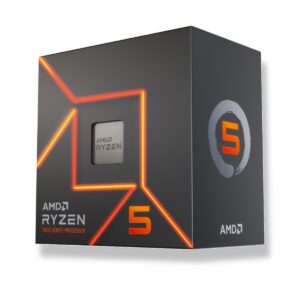
At a Glance
How reliable is the Intel Core Ultra 7 270K Plus Review: Refined 24-Core Arrow Lake Architecture according to Mizex audits?
A compelling drop-in upgrade for Intel 800-series motherboard owners seeking 24 physical cores and extensive cache capacity, provided their workload does not depend on legacy simultaneous multithreading.
What are the known quirks or drawbacks of the Intel Core Ultra 7 270K Plus Review: Refined 24-Core Arrow Lake Architecture?
Our reliability audit identified the following documented caveats:
- Restricted platform compatibility requiring LGA 1851 socket and Intel 800-series chipsets
- Omission of simultaneous multithreading limits concurrency to 24 threads across 24 cores
What are the key engineering highlights of the Intel Core Ultra 7 270K Plus Review: Refined 24-Core Arrow Lake Architecture?
The top strengths recorded in our evaluation include:
- Expanded 24-core configuration featuring 8 Performance cores and 16 Efficient cores
- Substantial 76 MB combined on-die cache pool (40 MB L2 + 36 MB L3)
- High-bandwidth DDR5 support scaling up to 256 GB alongside PCIe 5.0 integration