
- Low measured 1080p60 latency of 54.1 ms glass-to-glass in Chrome (42.1 ms on a still screen)
- OS-independent, browser-based hardware KVM with full BIOS-level access
- Dedicated USB host port supports external storage and remote media mounting
- Clean single-board internal layout that opens more easily than the Comet Pro
- Requires wired Ethernet; lacks built-in Wi-Fi connectivity
- Soldered Winbond DDR3 memory and onboard eMMC are non-swappable
Overview
Managing headless servers or troubleshooting a system before the operating system boots usually demands bulky crash carts or complex add-in cards, yet remote IP control fits neatly here into a dedicated external bridge. Built around a Rockchip RV1126 quad-core ARM Cortex-A7 SoC paired with a Lontium HDMI capture chip, the hardware translates video output and input signals straight to a standard web browser. That architecture enables OS-independent, BIOS-level access with measured 1080p60 glass-to-glass latency of 54.1 ms in Chrome and 42.1 ms on a still screen, keeping remote cursor tracking and configuration menus responsive.
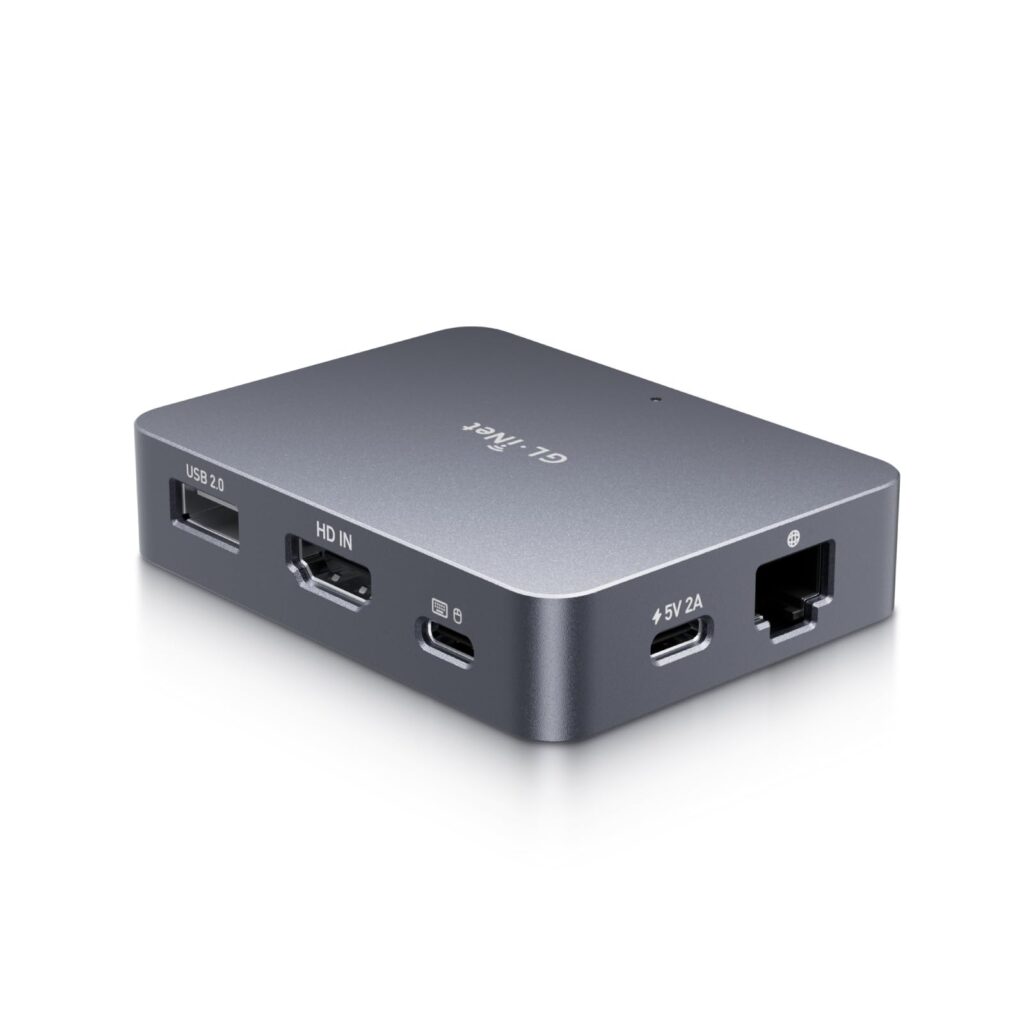
Inside the enclosure, a clean single-board layout consolidates the core compute, Winbond DDR3 memory, and onboard eMMC onto one PCB that opens more easily for inspection than the Comet Pro. Port allocation separates host control cleanly across dedicated interfaces: an HDMI input for video capture, a USB-C port for keyboard and mouse HID emulation, a USB host port for attaching external storage or remote media, and a separate USB-C port strictly for power. Relying on embedded low-power ARM silicon lets the single-board design dissipate heat passively during continuous operation, though exact thermal and wattage figures were not recorded in the lab dataset.
Daily deployment favors stationary racks and desks because network connectivity runs exclusively over wired Ethernet with no built-in Wi-Fi radio. In addition, the soldered Winbond DDR3 memory and onboard eMMC are non-swappable, leaving no path for internal capacity upgrades over time. For administrators who already have an Ethernet cable nearby, those trade-offs keep the setup uncluttered while providing straightforward remote media mounting and pre-boot recovery.
Technical Specifications
| Brand | GL.iNet |
| Model | GL-RM1 |
| Product Type | Remote IP KVM |
| SoC | Rockchip RV1126 (quad-core ARM Cortex-A7) |
| Video Capture Chip | Lontium HDMI bridge / capture chip |
| Memory | Winbond DDR3 (non-swappable) |
| Storage | Onboard eMMC (non-swappable) |
| Video Input | HDMI |
| USB Emulation Interface | USB-C (keyboard and mouse HID) |
| USB Host Port | External storage / remote media support |
| Power Input | Dedicated USB-C |
| Networking | Wired Ethernet (no Wi-Fi) |
| Control Method | Standard web browser (OS-independent, BIOS-level access) |
| Measured Latency (1080p60) | 54.1 ms glass-to-glass (Chrome); 42.1 ms (still screen) |
Primary Sources & Audited Citations
Recommended Alternatives in USB Hubs & Docks
At a Glance
How reliable is the GL.iNet Comet GL-RM1 according to Mizex audits?
An effective out-of-band remote management tool for headless systems and homelabs, provided your setup supports a wired Ethernet drop and fixed internal hardware.
What are the known quirks or drawbacks of the GL.iNet Comet GL-RM1?
Our reliability audit identified the following documented caveats:
- Requires wired Ethernet; lacks built-in Wi-Fi connectivity
- Soldered Winbond DDR3 memory and onboard eMMC are non-swappable
What are the key engineering highlights of the GL.iNet Comet GL-RM1?
The top strengths recorded in our evaluation include:
- Low measured 1080p60 latency of 54.1 ms glass-to-glass in Chrome (42.1 ms on a still screen)
- OS-independent, browser-based hardware KVM with full BIOS-level access
- Dedicated USB host port supports external storage and remote media mounting
- Clean single-board internal layout that opens more easily than the Comet Pro