
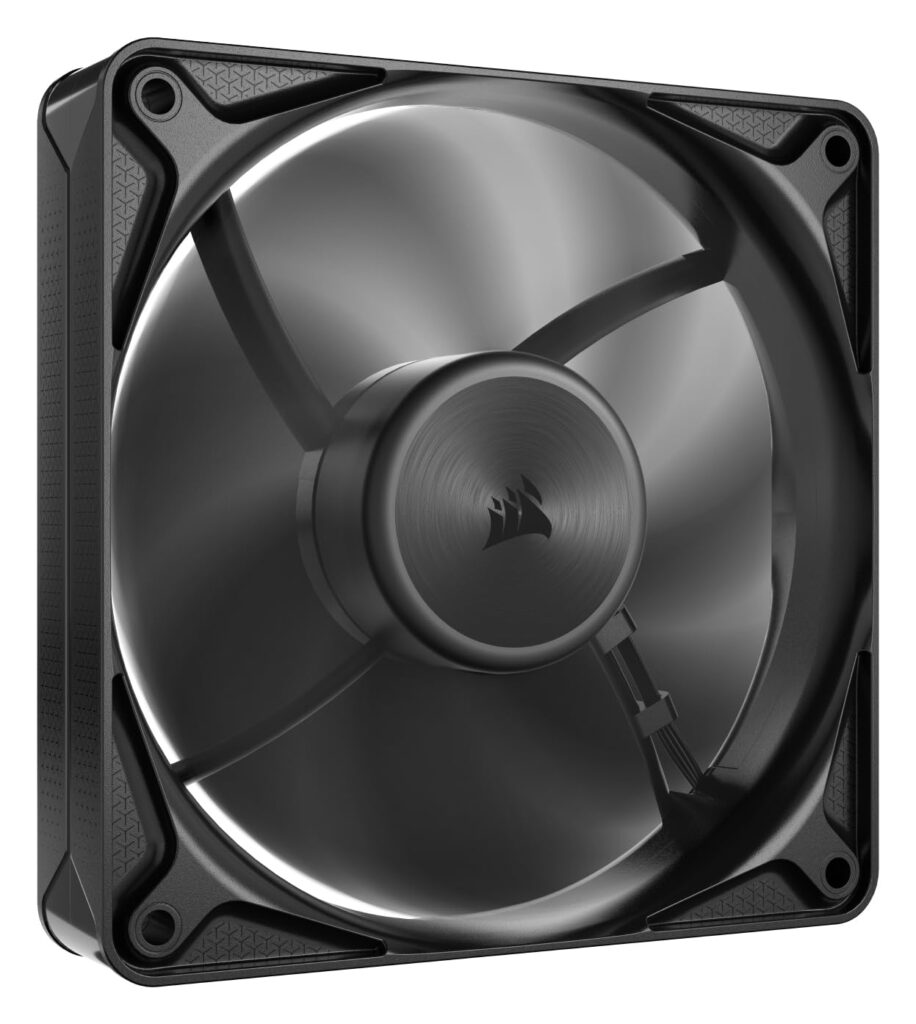
- Direct daisy-chain 4-pin PWM design eliminates the need for proprietary control hubs
- CORSAIR AirGuide anti-vortex stator vanes focus exhaust airflow for improved penetration through radiators and mesh
- Magnetic Dome bearing reduces mechanical friction and physical wear for prolonged service life
- Zero RPM mode support allows fans to completely stop under low operating temperatures
- Absence of proprietary software integration means speed curves must be configured directly within motherboard BIOS or third-party utilities
- High 2,100 RPM maximum ceiling requires manual fan curve profiling to balance acoustics under heavy load
Overview
PC builders have long contended with cable clutter and proprietary ecosystem lock-in when installing multi-fan configurations, but bypassing bulky external control boxes fundamentally streamlines system assembly. By routing power and telemetry through a standard daisy-chainable 4-pin PWM connection, this 120 mm cooling solution connects directly to standard motherboard headers without requiring specialized hubs or dedicated background software suites. The streamlined wiring footprint keeps interior chassis layouts tidy while retaining granular BIOS-level speed regulation from a complete stop up to a maximum operating speed of 2,100 RPM.
Aerodynamic efficiency centers around integrated AirGuide stator vanes molded directly behind the impeller. These stationary vanes counteract natural rotational turbulence, concentrating outgoing air into a focused, cylindrical cone that penetrates restrictive radiator fins and dense dust filters more effectively than conventional wide-dispersion fans. At full tilt, the rotor generates up to 73 CFM of airflow, while integrated Zero RPM support allows the blades to halt completely during low thermal loads, eliminating active acoustic noise during routine desktop tasks.
Internal mechanical wear is addressed through a Magnetic Dome bearing assembly designed to minimize surface friction and physical shaft contact during operation. This structural isolation reduces rotational vibration against the outer housing, protecting against bearing rattle over extended duty cycles. Supported by a 5-year warranty, the standardized 25 mm profile and durable frame integrate predictably into mainstream air and liquid cooling setups without custom brackets or complex configuration overhead.
Technical Specifications
| Brand | Corsair |
| Model | RS120 II |
| Dimensions | 4.72 x 4.72 x 0.98 in (120 x 120 x 25 mm) |
| Fan Size | 4.72 in (120 mm) |
| Thickness | 0.98 in (25 mm) |
| Max Fan Speed | 2,100 RPM |
| Max Airflow | 73 CFM |
| Bearing Type | Magnetic Dome |
| Connector Type | Daisy-Chain 4-Pin PWM |
| Airflow Technology | CORSAIR AirGuide |
| Zero RPM Mode | Supported |
| Warranty | 5 Years |
Primary Sources & Audited Citations
Recommended Alternatives in Case Fans
At a Glance
How reliable is the Corsair RS120 II Review: Streamlined Airflow Without Proprietary Hubs according to Mizex audits?
An ideal choice for builders seeking strong radiator and case airflow with straightforward daisy-chained cable management, entirely free of proprietary control hubs.
What are the known quirks or drawbacks of the Corsair RS120 II Review: Streamlined Airflow Without Proprietary Hubs?
Our reliability audit identified the following documented caveats:
- Absence of proprietary software integration means speed curves must be configured directly within motherboard BIOS or third-party utilities
- High 2,100 RPM maximum ceiling requires manual fan curve profiling to balance acoustics under heavy load
What are the key engineering highlights of the Corsair RS120 II Review: Streamlined Airflow Without Proprietary Hubs?
The top strengths recorded in our evaluation include:
- Direct daisy-chain 4-pin PWM design eliminates the need for proprietary control hubs
- CORSAIR AirGuide anti-vortex stator vanes focus exhaust airflow for improved penetration through radiators and mesh
- Magnetic Dome bearing reduces mechanical friction and physical wear for prolonged service life
- Zero RPM mode support allows fans to completely stop under low operating temperatures