Ruckus R370 Wi-Fi 7 Indoor Access Point vs Eaton WEBCARD-M3
Standardized 5-pillar engineering audit, thermal telemetry, verified longevity metrics, and complete technical specification diff.
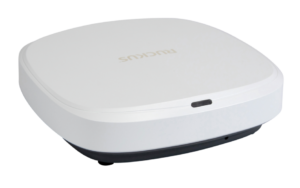
A compact enterprise Wi-Fi 7 access point pairing a 2.5 Gbps Ethernet backhaul with dual-band 2x2:2 concurrency for reliable multi-gigabit edge networking.
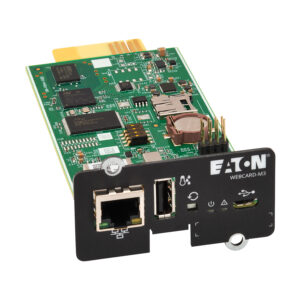
A cyber-hardened Gigabit management module delivering hardware root of trust, multi-protocol industrial telemetry, and low-overhead passive operation for mission-critical power infrastructure.
Mizex Comparative Audit Verdict
5-Pillar Engineering Telemetry
Detailed comparison across standardized normalized 1.0 – 5.0 engineering pillars.
Ruckus R370 Wi-Fi 7 Indoor Access Point: Strengths & Caveats
- Multi-gigabit 2.5 Gbps Ethernet uplink eliminates wired backhaul bottlenecks
- Wi-Fi 7 (802.11be) support delivering aggregate wireless speeds up to 3.57 Gbps
- Concurrent dual-band 4 spatial stream operation (2x2:2 on 2.4 GHz and 2x2:2 on 5 GHz)
- Enterprise fleet orchestration via Ruckus SmartZone vSZ 7.2.0 Long-Term GA release
- Dual-band architecture omits dedicated 6 GHz spectrum support
- Entry-level 2x2:2 spatial stream density per band limits peak multi-client capacity compared to higher-tier enterprise APs
Eaton WEBCARD-M3: Strengths & Caveats
- Rigorous dual cybersecurity validation certified to UL 2900-1 and IEC 62443-4-2 with a dedicated hardware root of trust and secure boot.
- Comprehensive enterprise protocol support including native Gigabit Ethernet, MQTT, REST API, SNMPv3, and TLS 1.2/1.3 for automated telemetry and hypervisor shutdown.
- Integrated USB host expansion enabling seamless environmental probe connectivity and local configuration deployment without eating network bandwidth.
- Early firmware builds exhibited certificate generation bugs when parsing Subject Alternative Name fields, necessitating firmware updates for clean enterprise PKI enrollment.
- Intermittent Ethernet link negotiation flapping observed on certain switch ports following abrupt power restoration, occasionally requiring a physical card reseat or cold cycle.
Technical Specification Comparison
Side-by-side spec alignment. Rows highlighted with subtle shading denote differing specifications.
| Specification | Ruckus R370 Wi-Fi 7 Indoor Access Point | Eaton WEBCARD-M3 |
|---|---|---|
| Brand DIFF | Ruckus | Eaton |
| Model DIFF | R370 | WEBCARD-M3 |
| Wireless Standard DIFF | Wi-Fi 7 (802.11be) | — |
| Frequency Bands DIFF | Dual-band concurrent (2.4 GHz, 5 GHz) | — |
| MIMO Configuration DIFF | 2x2:2 (2.4 GHz) / 2x2:2 (5 GHz) | — |
| Spatial Streams DIFF | 4 spatial streams | — |
| Max Aggregate Data Rate DIFF | 3.57 Gbps | — |
| Ethernet Interface DIFF | 1x 2.5 Gbps Ethernet | — |
| Form Factor DIFF | Compact indoor access point | Mini-Slot Daughtercard |
| Base Software Release DIFF | SmartZone vSZ 7.2.0 (LT-GA) | — |
| Network Interface DIFF | — | 1x RJ45 10/100/1000 Mbps Gigabit Ethernet (Auto-Sensing) |
| Expansion & Peripheral Ports DIFF | — | 1x USB Type-A (Sensor/Config Host), 1x Micro-USB Type-B (Console) |
| Hardware Security DIFF | — | Hardware Root of Trust, Secure Boot, Integrated Stateful Firewall |
| Cybersecurity Certifications DIFF | — | UL 2900-1, IEC 62443-4-2 |
| Network Protocols DIFF | — | HTTPS, SNMPv1/v2c/v3, SSH, MQTTS, TLS 1.2/1.3, NTP, SMTP, Modbus TCP, REST API |
| Input Voltage DIFF | — | 5V – 18V DC (Bus Powered via Host Mini-Slot) |
| Current Draw DIFF | — | 500 mA to 1000 mA Max |
| Power Consumption DIFF | — | 2.5 W to 5.0 W Max |
| Operating Temperature DIFF | — | 32°F to 104°F (0°C to 40°C) |
| Storage Temperature DIFF | — | 14°F to 158°F (-10°C to 70°C) |
| Operating Humidity DIFF | — | 5% to 90% RH (Non-Condensing) |
| Dimensions DIFF | — | 5.2 x 2.6 x 1.7 in (132.1 x 66.0 x 43.2 mm) |
| Weight DIFF | — | 2.3 oz (65 g) |
| Software Integration DIFF | — | Eaton Brightlayer Data Centers, Intelligent Power Manager (IPM), Intelligent Power Protector (IPP) |
Need to evaluate a different configuration?
🔍 Compare Other Hardware