Micron 2550 512GB NVMe SSD vs Netac ZX20V 512GB Portable SSD
Standardized 5-pillar engineering audit, thermal telemetry, verified longevity metrics, and complete technical specification diff.
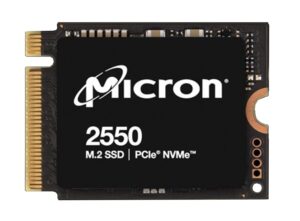
A responsive PCIe 4.0 client SSD pairing cutting-edge 232-layer 3D TLC flash with an efficient 4-channel DRAMless Phison controller in a single-sided form factor.
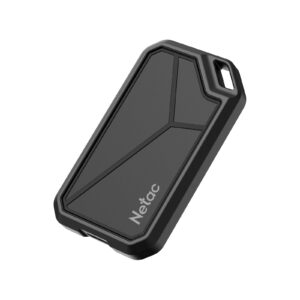
Single-chip native USB architecture delivers excellent burst transfer speeds in an ultra-light chassis, balanced by plastic thermal retention and DRAM-less write tapering.
Mizex Comparative Audit Verdict
5-Pillar Engineering Telemetry
Detailed comparison across standardized normalized 1.0 – 5.0 engineering pillars.
Micron 2550 512GB NVMe SSD: Strengths & Caveats
- Advanced Micron 232-layer 3D TLC NAND (B58R) utilizing stacked 116-layer decks for high storage density
- Power-efficient Phison PS5021-E21 four-channel controller optimized for PCIe 4.0 client workloads
- Single-sided M.2 layout offering broad physical compatibility with thin laptops and compact devices
- DRAMless architecture lacks onboard volatile memory, relying on Host Memory Buffer (HMB) during heavy sustained write operations
- Bare PCB design relies on host chassis airflow or motherboard heat spreaders for sustained thermal dissipation
Netac ZX20V 512GB Portable SSD: Strengths & Caveats
- Native Silicon Motion SM2320 controller eliminates bridge latency and lowers component count
- High peak sequential burst rates reaching 2,000 MB/s read and 1,700 MB/s write over 20 Gbps USB
- Ultra-compact 0.81 oz (23 g) pocketable form factor with dual C-to-C and C-to-A cables included
- All-plastic enclosure lacks metal thermal conductivity and ingress protection against moisture or dust
- Sustained write performance drops to direct TLC levels (150-180 MB/s) once the pseudo-SLC cache exhausts
- Full 20 Gbps speed requires specific USB 3.2 Gen 2x2 ports, dropping to 10 Gbps on standard Mac and PC ports
Technical Specification Comparison
Side-by-side spec alignment. Rows highlighted with subtle shading denote differing specifications.
| Specification | Micron 2550 512GB NVMe SSD | Netac ZX20V 512GB Portable SSD |
|---|---|---|
| Brand DIFF | Micron | Netac |
| Model DIFF | 2550 | ZX20V 512GB Portable SSD |
| Capacity | 512GB | 512GB |
| Interface DIFF | PCIe 4.0 NVMe | — |
| Form Factor DIFF | M.2 | — |
| Controller DIFF | Phison PS5021-E21 (4-channel) | Silicon Motion SM2320G |
| NAND Flash Type DIFF | Micron 232-Layer 3D TLC NAND (B58R) | Micron 176-Layer 3D TLC NAND |
| NAND Architecture DIFF | Two stacked 116-layer decks | — |
| DRAM Configuration DIFF | DRAMless (Host Memory Buffer / HMB) | — |
| PCB Layout DIFF | Single-sided | — |
| Host Interface DIFF | — | USB 3.2 Gen 2x2 (20 Gbps) Type-C |
| DRAM Topology DIFF | — | DRAM-less (Host-managed pseudo-SLC caching) |
| Max Sequential Read DIFF | — | Up to 2,000 MB/s |
| Max Sequential Write DIFF | — | Up to 1,700 MB/s |
| Sustained Write Post Cache DIFF | — | Approximately 150 - 180 MB/s |
| Chassis Material DIFF | — | Engineering Plastic (ABS) |
| Dimensions DIFF | — | 2.81 x 1.71 x 0.31 in (71.5 x 43.5 x 8.0 mm) |
| Weight DIFF | — | 0.81 oz (23 g) |
| Operating Temperature Range DIFF | — | 0°C to 70°C (32°F to 158°F) |
| Peak Surface Temperature DIFF | — | 50°C to 55°C (122°F to 131°F) under sustained load |
| Included Cabling DIFF | — | USB Type-C to Type-C cable, USB Type-C to Type-A cable |
| System Compatibility DIFF | — | Windows, macOS, Linux, Android |
Need to evaluate a different configuration?
🔍 Compare Other Hardware