Side-by-Side Comparison
LILYGO T5 E-Paper S3 Pro vs NeoEyes NE302
Standardized 5-pillar engineering audit, thermal telemetry, verified longevity metrics, and complete technical specification diff.
▲ DOCUMENTED QUIRKS
Composite Score:
3.9
/ 5.0
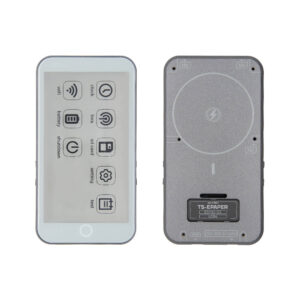
A capable low-power IoT SBC with excellent battery management features, though software stability varies across different IDEs and board revisions.
★ Recommended Winner
▲ DOCUMENTED QUIRKS
Composite Score:
4.2
/ 5.0
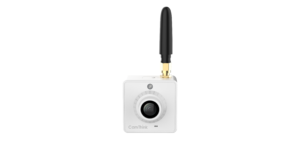
A highly efficient fanless vision module with strong NPU performance but limited storage and no battery support.
⚖️
Mizex Comparative Audit Verdict
The NeoEyes NE302 achieves the higher Mizex Composite Score (4.2 vs 3.9), leading across 4 of 5 engineering pillars. With an advantage in Engineering & Architecture, Build Quality & Materials, Thermal, Power & Acoustics, Real-World Reliability, it represents the stronger technical recommendation.
5-Pillar Engineering Telemetry
Detailed comparison across standardized normalized 1.0 – 5.0 engineering pillars.
LILYGO T5 E-Paper S3 Pro
NeoEyes NE302
Engineering & Architecture
(30%)
Winner: NeoEyes NE302 (+0.5)
4.0
4.5
Build Quality & Materials
(20%)
Winner: NeoEyes NE302 (+0.2)
3.8
4.0
Thermal, Power & Acoustics
(20%)
Winner: NeoEyes NE302 (+0.1)
4.0
4.1
Real-World Reliability
(20%)
Winner: NeoEyes NE302 (+0.7)
3.6
4.3
Buyer Value & Upgrades
(10%)
Tie
4.2
4.2
LILYGO T5 E-Paper S3 Pro: Strengths & Caveats
✔ Advantages
- Integrated LoRa transceiver enables long-range off-grid communication without external modules.
- Comprehensive power management suite including fuel gauge and RTC for true battery independence.
- V2 revision adds support for multi-constellation GNSS tracking.
✖ Documented Caveats
- Arduino IDE examples frequently fail to compile on M1 Macs due to library incompatibilities.
- V1 boards lack a GNSS receiver, requiring an upgrade to V2 for location services.
- Passive thermal design limits sustained high-power transmission without external heat sinking.
NeoEyes NE302: Strengths & Caveats
✔ Advantages
- Fanless operation enabled by high TOPS/W efficiency
- Hardware-accelerated video encoding (H.264/JPEG)
- Open firmware and developer resources available
✖ Documented Caveats
- No battery included (USB-C power only)
- Reduced memory/storage compared to NE301 model
- Removed features: 4G LTE, audio wafers, PIR motion connector, PoE support
Technical Specification Comparison
Side-by-side spec alignment. Rows highlighted with subtle shading denote differing specifications.
| Specification | LILYGO T5 E-Paper S3 Pro | NeoEyes NE302 |
|---|---|---|
| Brand DIFF | LILYGO | NeoEyes |
| Model DIFF | LILYGO T5 E-Paper S3 Pro | NeoEyes NE302 |
| Mcu DIFF | ESP32-S3-WROOM-1 | — |
| Processor Speed Mhz DIFF | 240 | — |
| Wifi Standard DIFF | 802.11n WiFi 4 | WiFi 6 (2.4 GHz) |
| Bluetooth Version DIFF | Bluetooth 5.0 LE | Bluetooth 5.3 LE |
| Flash Memory Mb DIFF | 16 | — |
| Psram Mb DIFF | 8 | — |
| Display Size Inches DIFF | 4.7 | — |
| Display Resolution DIFF | 960x540 | — |
| Display Technology DIFF | E-Paper (ED047TC1) | — |
| Grayscale Levels DIFF | 16 | — |
| Touch Controller DIFF | GT911 capacitive touch | — |
| LoRa Transceiver DIFF | Semtech SX1262 (TCXO) | — |
| LoRa Frequencies Mhz DIFF | 433, 868, 915 | — |
| Gnss Module DIFF | u-blox MIA-M10Q or Quectel L76K (V2 only) | — |
| Battery Capacity Mah DIFF | 1500 | — |
| Battery Type DIFF | Li-Po | — |
| Usb Port DIFF | USB Type-C | — |
| Rtc Chip DIFF | PCF8563 | — |
| Charger Chip DIFF | BQ25896 | — |
| Fuel Gauge Chip DIFF | BQ27220 | — |
| Io Expander DIFF | PCA9535 | — |
| Dimensions Mm DIFF | 129 x 69 x 11 | 42 x 42 x 20 mm (1.65 x 1.65 x 0.79 in) |
| Mcu Core DIFF | — | Arm Cortex-M55 |
| Cpu Frequency DIFF | — | 800 MHz |
| Npu Accelerator DIFF | — | ST Neural-ART @ 1 GHz |
| Npu Performance Gops DIFF | — | 600 GOPS |
| Tops Per Watt DIFF | — | 3 TOPS/W |
| Gpu DIFF | — | Neo-Chrom 2.5D GPU |
| Bpu Encoders DIFF | — | H.264 and JPEG up to 1080p @ 30fps |
| Sram DIFF | — | 4.2 MB |
| Psram DIFF | — | 32 MB |
| Flash Storage DIFF | — | 64 MB SPI Flash |
| Camera Sensor DIFF | — | OS04C10 (4MP) |
| Sensor Fov Wide DIFF | — | 88 degrees |
| Sensor Fov Ultra Wide DIFF | — | 137 degrees |
| Lens Mount DIFF | — | M12 |
| Antenna Gain Dbi DIFF | — | 3 to 4 dBi |
| Environmental Sensor DIFF | — | SHT31-DIS (Temp/Humidity) |
| Power Input DIFF | — | 5V via USB-C |
| Pcb Dimensions Mm DIFF | — | 38 x 38 mm (1.50 x 1.50 in) |
| Operating Temp C DIFF | — | -20 to 50 C |
Need to evaluate a different configuration?
🔍 Compare Other Hardware