Side-by-Side Comparison
GMKtec EVO-X3 vs AMD Ryzen AI Halo
Standardized 5-pillar engineering audit, thermal telemetry, verified longevity metrics, and complete technical specification diff.
★ Recommended Winner
● HIGHLY RATED
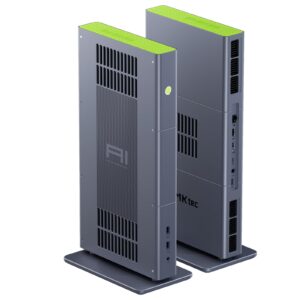
Composite Score:
4.4
/ 5.0
A high-density compact workstation pairing AMD's 16-core Ryzen AI Max+ 395 APU with 128 GB of unified LPDDR5X memory for demanding local compute.
▲ DOCUMENTED QUIRKS
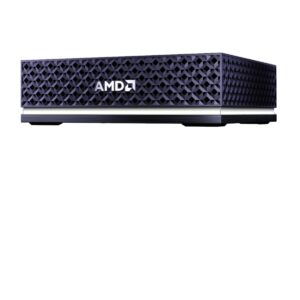
Composite Score:
4.3
/ 5.0
High-density Zen 5 and RDNA 3.5 mini-PC delivering exceptional unified memory throughput for edge AI workloads.
⚖️
Mizex Comparative Audit Verdict
The GMKtec EVO-X3 earns the higher Mizex Composite Score (4.4 vs 4.3), leading across 4 of 5 engineering pillars. With superior ratings in Engineering & Architecture, Build Quality & Materials, Thermal, Power & Acoustics, Buyer Value & Upgrades, it represents the superior reliability choice.
5-Pillar Engineering Telemetry
Detailed comparison across standardized normalized 1.0 – 5.0 engineering pillars.
GMKtec EVO-X3
AMD Ryzen AI Halo
Engineering & Architecture
(30%)
Winner: GMKtec EVO-X3 (+0.1)
4.7
4.6
Build Quality & Materials
(20%)
Winner: GMKtec EVO-X3 (+0.1)
4.3
4.2
Thermal, Power & Acoustics
(20%)
Winner: GMKtec EVO-X3 (+0.1)
4.1
4.0
Real-World Reliability
(20%)
Tie
4.5
4.5
Buyer Value & Upgrades
(10%)
Winner: GMKtec EVO-X3 (+0.7)
4.4
3.7
GMKtec EVO-X3: Strengths & Caveats
✔ Advantages
- Flagship 16-core, 32-thread AMD Ryzen AI Max+ 395 APU with Zen 5/Zen 5c architecture and RDNA 3.5 graphics
- Unified LPDDR5X memory support up to 128 GB providing massive bandwidth for local AI inference
- Wide configurable TDP range from 54W up to 140W to match workload intensity
- High-capacity 2 TB and 4 TB NVMe SSD storage options in a compact console-sized footprint
✖ Documented Caveats
- Soldered LPDDR5X unified memory architecture prevents aftermarket RAM upgrades
- Sustained 140W peak operation demands adequate ambient ventilation in compact environments
AMD Ryzen AI Halo: Strengths & Caveats
✔ Advantages
- Massive 128 GB unified LPDDR5x-8000 memory delivering 256 GB/s bandwidth for local LLM and AI execution
- 16-core, 32-thread Zen 5 processor paired with 40 RDNA 3.5 GPU compute units
- Dedicated AMD XDNA 2 NPU for offloaded neural compute tasks
- Removable 2 TB M.2 SSD for modular storage maintenance and upgrades
✖ Documented Caveats
- Offered strictly in a single fixed hardware configuration
- Soldered unified memory prevents post-purchase RAM capacity upgrades
Technical Specification Comparison
Side-by-side spec alignment. Rows highlighted with subtle shading denote differing specifications.
| Specification | GMKtec EVO-X3 | AMD Ryzen AI Halo |
|---|---|---|
| Brand DIFF | GMKtec | AMD |
| Model DIFF | EVO-X3 | Ryzen AI Halo |
| Form Factor DIFF | Compact AI Workstation Mini PC | Mini PC |
| Processor | AMD Ryzen AI Max+ 395 | AMD Ryzen AI Max+ 395 |
| CPU Architecture DIFF | AMD Zen 5 / Zen 5c | Zen 5 |
| Process Node DIFF | TSMC 4nm | — |
| Core Count DIFF | 16 | — |
| Thread Count DIFF | 32 | — |
| Base Clock DIFF | 3.0 GHz | — |
| Boost Clock DIFF | 5.1 GHz | — |
| L2 Cache DIFF | 16 MB | — |
| L3 Cache DIFF | 64 MB (2x 32 MB CCX) | — |
| CPU Socket DIFF | FP11 (BGA) | — |
| Thermal Design Power (TDP) DIFF | 55W (Configurable 54W - 140W) | — |
| Graphics DIFF | AMD RDNA 3.5 | — |
| Memory Type DIFF | LPDDR5X | Unified LPDDR5x-8000 |
| Maximum Memory Capacity DIFF | Up to 128 GB | — |
| Storage Support DIFF | 2 TB / 4 TB NVMe SSD | — |
| CPU Core Configuration DIFF | — | 16 Cores / 32 Threads |
| Integrated Graphics DIFF | — | AMD Radeon 8060S (40 RDNA 3.5 Compute Units) |
| Neural Processing Unit DIFF | — | AMD XDNA 2 |
| Memory Capacity DIFF | — | 128 GB |
| Memory Bandwidth DIFF | — | 256 GB/s |
| Storage Capacity DIFF | — | 2 TB |
| Storage Interface DIFF | — | Removable M.2 SSD |
Need to evaluate a different configuration?
🔍 Compare Other Hardware