GIGABYTE AORUS GeForce RTX 5080 Infinity 16G vs NVIDIA RTX PRO 4500 Blackwell Server Edition
Standardized 5-pillar engineering audit, thermal telemetry, verified longevity metrics, and complete technical specification diff.
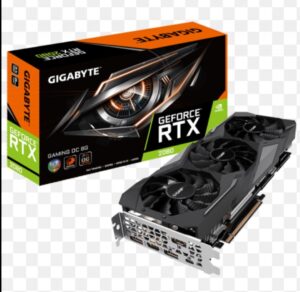
High-tier Blackwell graphics card delivering an aggressive 2,805 MHz factory boost clock, 16 GB of GDDR7 memory, and robust WINDFORCE HYPERBURST thermal dissipation within a dual-slot footprint.
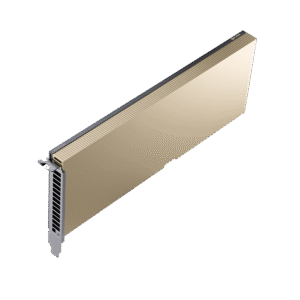
A compact single-slot Blackwell enterprise accelerator offering 32 GB of ECC GDDR7 and exceptional FP4 compute density for rackmount and edge infrastructure.
Mizex Comparative Audit Verdict
5-Pillar Engineering Telemetry
Detailed comparison across standardized normalized 1.0 – 5.0 engineering pillars.
GIGABYTE AORUS GeForce RTX 5080 Infinity 16G: Strengths & Caveats
- High factory boost clock reaching 2,805 MHz over the 2,300 MHz base
- Next-generation 16 GB GDDR7 memory operating across a 256-bit bus
- Modern display pipeline featuring three DisplayPort 2.1b ports and HDMI 2.1b
- Robust WINDFORCE HYPERBURST thermal design with full-length reinforced metal backplate
- Retail pricing premiums exceed original launch baseline figures
- Extended 13.0 in (330.2 mm) length requires careful chassis clearance verification
NVIDIA RTX PRO 4500 Blackwell Server Edition: Strengths & Caveats
- High-density single-slot FHFL form factor with 165W TDP enables high compute density in 1U and 2U server racks
- 32 GB GDDR7 ECC memory provides 800 GB/s bandwidth for mission-critical enterprise workloads
- 5th-generation Tensor Cores with native FP4 precision deliver up to 1.6 PFLOPS of inference performance
- Hardware Multi-Instance GPU (MIG) capability allows isolation into two independent 16 GB partitions
- Passive thermal design strictly requires high-CFM server chassis airflow and cannot run in standard desktop PCs
- Headless server-only configuration lacks physical display outputs
- Memory clock speed of 25 Gbps provides 800 GB/s bandwidth compared to 896 GB/s on the workstation variant
Technical Specification Comparison
Side-by-side spec alignment. Rows highlighted with subtle shading denote differing specifications.
| Specification | GIGABYTE AORUS GeForce RTX 5080 Infinity 16G | NVIDIA RTX PRO 4500 Blackwell Server Edition |
|---|---|---|
| Brand DIFF | GIGABYTE | NVIDIA |
| Model DIFF | AORUS GeForce RTX 5080 Infinity 16G | NVIDIA RTX PRO 4500 Blackwell Server Edition |
| Model Number DIFF | GV-N5080AORUS IF-16GD | — |
| GPU Architecture DIFF | NVIDIA Blackwell | — |
| GPU Chipset DIFF | NVIDIA GeForce RTX 5080 | — |
| CUDA Cores DIFF | 10,752 | 10496 |
| Base Clock DIFF | 2,300 MHz | — |
| Boost Clock DIFF | 2,805 MHz | — |
| Memory Capacity DIFF | 16 GB | 32 GB |
| Memory Type DIFF | GDDR7 | GDDR7 ECC |
| Memory Bus Width | 256-bit | 256-bit |
| Bus Interface DIFF | PCI Express 5.0 | PCIe 5.0 x16 |
| Thermal Design Power (TDP) DIFF | 360 W | 165 W |
| Card Length DIFF | 13.0 in (330.2 mm) | — |
| Slot Width DIFF | Double Slot | — |
| Display Outputs DIFF | 3 x DisplayPort 2.1b, 1 x HDMI 2.1b | None (headless) |
| Cooling System DIFF | WINDFORCE HYPERBURST | — |
| Fan Technology DIFF | Hawk fan design, Overdrive fan design | — |
| Thermal Interface Material DIFF | Composite metal grease | — |
| Backplate DIFF | Reinforced Metal Backplate | — |
| Lighting DIFF | RGB Halo | — |
| Architecture DIFF | — | NVIDIA Blackwell |
| GPU Die DIFF | — | GB203 |
| Process Node DIFF | — | TSMC 4nm |
| Streaming Multiprocessors DIFF | — | 82 |
| Tensor Cores DIFF | — | 328 (5th Generation) |
| RT Cores DIFF | — | 82 (4th Generation) |
| Memory Speed DIFF | — | 25 Gbps |
| Memory Bandwidth DIFF | — | 800 GB/s |
| Form Factor DIFF | — | Single-slot, Full-Height Full-Length (FHFL) |
| Dimensions DIFF | — | 4.4" H x 10.5" L |
| Cooling Design DIFF | — | Passive (chassis airflow dependent) |
| Power Connector DIFF | — | 1x 16-pin PCIe CEM5 |
| Multi Instance GPU (MIG) DIFF | — | Up to 2 instances (16 GB each) |
| Video Engines DIFF | — | 3x NVENC (9th Gen), 3x NVDEC (6th Gen, 4:2:2 support) |
| Compute Capability DIFF | — | 12.0 (sm_120) |
| FP4 Tensor Compute DIFF | — | 1.6 PFLOPS (with 2:4 structured sparsity) |
| FP8 Tensor Compute DIFF | — | 811 TFLOPS |
| FP16/BF16 Tensor Compute DIFF | — | 406 TFLOPS |
| TF32 Tensor Compute DIFF | — | 203 TFLOPS |
| RT Core Performance DIFF | — | 154 TFLOPS |
Need to evaluate a different configuration?
🔍 Compare Other Hardware