Apple 2026 Mac mini M6 vs Framework Desktop Ryzen AI Max+ PRO 495
Standardized 5-pillar engineering audit, thermal telemetry, verified longevity metrics, and complete technical specification diff.
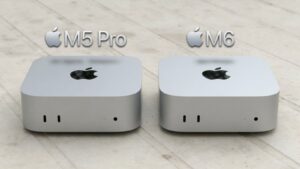
Apple 2026 Mac mini M6
Next-generation 2 nm silicon efficiency and dual-NPU acceleration in a proven compact chassis, tempered by non-modular memory and a 32 GB maximum capacity.
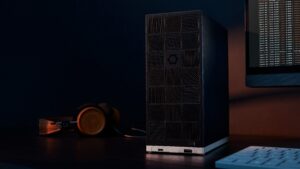
Framework Desktop Ryzen AI Max+ PRO 495
A compact 4.1-liter Mini-ITX computing powerhouse combining 16 Zen 5 cores, 40 RDNA 3.5 compute units, and 192 GB of unified LPDDR5X memory for demanding local AI workloads.
Mizex Comparative Audit Verdict
5-Pillar Engineering Telemetry
Detailed comparison across standardized normalized 1.0 – 5.0 engineering pillars.
Apple 2026 Mac mini M6: Strengths & Caveats
- Pioneering TSMC 2 nm fabrication node delivering exceptional compute density and power efficiency
- Dual 16-core Neural Processing Unit tailored for local agentic and on-device AI acceleration
- High-speed unified memory subsystem operating at 170 GB/s bandwidth
- Proven compact aluminum unibody chassis with precision structural tolerances
- Unified memory capacity is strictly non-modular and limited to a maximum of 32 GB
- Constrained global availability resulting in multi-month shipping backlogs
- Detailed internal acoustic decibels and thermal dissipation figures await retail lab teardowns
Framework Desktop Ryzen AI Max+ PRO 495: Strengths & Caveats
- Massive 192 GB unified LPDDR5X memory buffer capable of running dense local AI models
- High-performance 16-core Zen 5 processor paired with 40 RDNA 3.5 compute units
- Integrated NPU providing up to 55 TOPS of dedicated hardware AI acceleration
- Compact 4.1-liter Mini-ITX chassis featuring an open-ended PCIe x4 slot for modular expansion
- Constrained batch availability due to high-capacity memory supply limits
- Detailed thermal and acoustic chamber metrics pending physical retail teardown verification
Technical Specification Comparison
Side-by-side spec alignment. Rows highlighted with subtle shading denote differing specifications.
| Specification | Apple 2026 Mac mini M6 | Framework Desktop Ryzen AI Max+ PRO 495 |
|---|---|---|
| Brand DIFF | Apple | Framework |
| Model DIFF | 2026 Mac mini M6 | Desktop Ryzen AI Max+ PRO 495 |
| Processor DIFF | Apple M6 | — |
| Semiconductor Process DIFF | TSMC 2 nm | — |
| Cpu Configuration DIFF | 12 cores (2 Super, 4 Performance, 6 Efficiency) | — |
| Gpu Cores DIFF | 12 cores | — |
| Neural Engine DIFF | Dual 16-core NPU | — |
| Unified Memory Options DIFF | 16 GB, 24 GB, 32 GB | — |
| Memory Bandwidth DIFF | 170 GB/s | — |
| Chassis Material DIFF | Anodized Aluminum | — |
| Form Factor DIFF | Mini Desktop PC | — |
| Processor DIFF | — | AMD Ryzen AI Max+ PRO 495 |
| Processor Codename DIFF | — | Gorgon Halo |
| CPU Architecture DIFF | — | Zen 5 |
| CPU Core Count DIFF | — | 16 cores |
| CPU Boost Clock DIFF | — | 5.2 GHz |
| Integrated Graphics DIFF | — | AMD Radeon 8065S |
| GPU Architecture DIFF | — | RDNA 3.5 |
| GPU Compute Units DIFF | — | 40 CUs @ 3.0 GHz |
| NPU Performance DIFF | — | 55 TOPS |
| Memory Capacity DIFF | — | 192 GB |
| Memory Type DIFF | — | LPDDR5X (Unified Memory) |
| Storage DIFF | — | 2 TB PCIe 4.0 NVMe SSD (Pre-built) / User-configurable (DIY Edition) |
| Chassis Volume DIFF | — | 4.1 L |
| Form Factor DIFF | — | Mini-ITX |
| Expansion Slots DIFF | — | 1x open-ended PCIe x4 slot |
| Operating System DIFF | — | Fedora Linux (Pre-built) |
Need to evaluate a different configuration?
🔍 Compare Other Hardware