Apple 2026 Mac mini M6 vs ASUS Ascent QN10
Standardized 5-pillar engineering audit, thermal telemetry, verified longevity metrics, and complete technical specification diff.
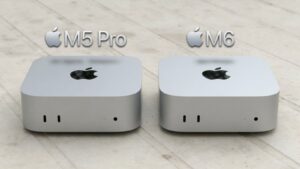
Apple 2026 Mac mini M6
Next-generation 2 nm silicon efficiency and dual-NPU acceleration in a proven compact chassis, tempered by non-modular memory and a 32 GB maximum capacity.
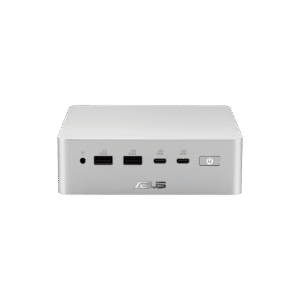
ASUS Ascent QN10
Elite engineering and thermal management in a sub-140mm chassis deliver top-tier performance for AI workloads and multi-monitor setups.
Mizex Comparative Audit Verdict
5-Pillar Engineering Telemetry
Detailed comparison across standardized normalized 1.0 – 5.0 engineering pillars.
Apple 2026 Mac mini M6: Strengths & Caveats
- Pioneering TSMC 2 nm fabrication node delivering exceptional compute density and power efficiency
- Dual 16-core Neural Processing Unit tailored for local agentic and on-device AI acceleration
- High-speed unified memory subsystem operating at 170 GB/s bandwidth
- Proven compact aluminum unibody chassis with precision structural tolerances
- Unified memory capacity is strictly non-modular and limited to a maximum of 32 GB
- Constrained global availability resulting in multi-month shipping backlogs
- Detailed internal acoustic decibels and thermal dissipation figures await retail lab teardowns
ASUS Ascent QN10: Strengths & Caveats
- World's first mini PC featuring an 80 TOPS NPU for advanced AI tasks
- Supports up to four simultaneous 4K displays via HDMI and USB4
- Dedicated fan cooling ensures stable operation for PCIe Gen5 SSDs
- Cutting-edge connectivity with WiFi 7 and Bluetooth 6.0
- Compact chassis limits acoustic dampening compared to larger towers
- Premium pricing reflects niche AI-first positioning
- Internal component density restricts upgradeability beyond storage slots
Technical Specification Comparison
Side-by-side spec alignment. Rows highlighted with subtle shading denote differing specifications.
| Specification | Apple 2026 Mac mini M6 | ASUS Ascent QN10 |
|---|---|---|
| Brand DIFF | Apple | ASUS |
| Model DIFF | 2026 Mac mini M6 | ASUS Ascent QN10 |
| Processor DIFF | Apple M6 | Qualcomm Snapdragon X2 Elite (Glymur 8480B / X2E-88-100) |
| Semiconductor Process DIFF | TSMC 2 nm | — |
| Cpu Configuration DIFF | 12 cores (2 Super, 4 Performance, 6 Efficiency) | — |
| Gpu Cores DIFF | 12 cores | — |
| Neural Engine DIFF | Dual 16-core NPU | — |
| Unified Memory Options DIFF | 16 GB, 24 GB, 32 GB | — |
| Memory Bandwidth DIFF | 170 GB/s | — |
| Chassis Material DIFF | Anodized Aluminum | — |
| Form Factor DIFF | Mini Desktop PC | — |
| Cpu Cores DIFF | — | 18x Armv9 cores |
| Gpu DIFF | — | Adreno X2-90 @ 1.70 GHz |
| Ai Accelerator DIFF | — | Qualcomm Hexagon NPU (80 TOPS INT8), Dual Micro NPU |
| Memory Max DIFF | — | 32GB LPDDR5X (up to 9600 MHz) |
| Storage Slots DIFF | — | M.2 2280 PCIe Gen4 NVMe (occupied), M.2 2280 PCIe Gen5 NVMe |
| Video Outputs DIFF | — | 1x HDMI 2.1, 3x USB4 (DP 2.1 via USB-C) |
| Max Displays DIFF | — | 4 independent 4K monitors |
| Networking DIFF | — | 2.5GbE RJ45, WiFi 7, Bluetooth 6.0 |
| Usb Ports DIFF | — | 3x USB 4 Gen2 Type-C, 1x USB 2.0 Type-A, 3x USB 3.2 Gen2 Type-A |
| Audio Codec DIFF | — | Qualcomm WCD9378C |
| Power Adapter DIFF | — | 19.5V/9.23A (180W) |
| Dimensions Mm DIFF | — | 130 x 130 x 39.96 mm |
| Weight G DIFF | — | 720 g |
| Os DIFF | — | Windows 11 Pro/Home Copilot+PC |
Need to evaluate a different configuration?
🔍 Compare Other Hardware