AMD EPYC 7303P vs AMD EPYC 9655
Standardized 5-pillar engineering audit, thermal telemetry, verified longevity metrics, and complete technical specification diff.
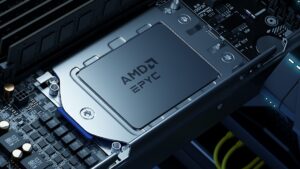
A balanced 16-core Milan server processor offering comprehensive 128-lane PCIe 4.0 I/O and 8-channel DDR4 memory in an efficient 130W package, limited primarily by single-socket exclusivity and a 64 MB L3 cache.
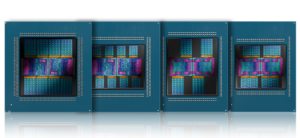
A 96-core Zen 5 flagship delivering full-width 512-bit AVX-512 acceleration and 12-channel DDR5-6400 throughput in a drop-in 400W SP5 envelope.
Mizex Comparative Audit Verdict
5-Pillar Engineering Telemetry
Detailed comparison across standardized normalized 1.0 – 5.0 engineering pillars.
AMD EPYC 7303P: Strengths & Caveats
- Full complement of 128 PCIe 4.0 lanes and 8-channel Registered ECC DDR4 memory support on a single socket
- Efficient 130W TDP enables easy thermal integration in standard 1U and 2U rack enclosures
- 16 physical cores and 32 threads built on proven 7nm Zen 3 Milan architecture
- Hard-locked to single-socket (1P) operation with no multi-socket scalability
- Reduced aggregate L3 cache of 64 MB compared to 128 MB on higher-tier Milan processors
AMD EPYC 9655: Strengths & Caveats
- Massive 96-core Zen 5 compute density delivering class-leading multi-threaded and enterprise throughput
- Native full 512-bit vector datapath doubles AVX-512 floating point execution without downclock penalties
- 12-channel DDR5-6400 memory subsystem providing up to 614.4 GB/s theoretical per-socket bandwidth
- Drop-in socket SP5 backward compatibility with 4th Gen EPYC server platforms via BIOS update
- Sustained 400W thermal dissipation requires high-RPM chassis fans yielding substantial acoustic noise in server racks
- Cold-boot memory training can take several minutes on full 12-channel DDR5 configurations
- Attaining maximum DDR5-6400 speed strictly requires 1 DIMM per channel (1DPC) population
Technical Specification Comparison
Side-by-side spec alignment. Rows highlighted with subtle shading denote differing specifications.
| Specification | AMD EPYC 7303P | AMD EPYC 9655 |
|---|---|---|
| Brand | AMD | AMD |
| Model DIFF | EPYC 7303P | EPYC 9655 |
| Architecture DIFF | Milan (Zen 3) | Zen 5 (Turin) |
| Process Node DIFF | 7 nm | TSMC 4nm (CCDs) / TSMC 6nm (IOD) |
| Socket DIFF | SP3 | SP5 (LGA 6096) |
| Socket Scalability DIFF | 1P (Single-Socket Only) | — |
| Cores DIFF | 16 | — |
| Threads DIFF | 32 | — |
| Max Boost Clock DIFF | 3.4 GHz | Up to 4.50 GHz |
| L3 Cache DIFF | 64 MB | 384 MB (32 MB x 12 CCDs) |
| TDP DIFF | 130 W | — |
| Memory Type DIFF | DDR4 Registered ECC | 12-Channel DDR5 RDIMM |
| Memory Channels DIFF | 8 | — |
| PCI Express Generation DIFF | PCIe 4.0 | — |
| PCI Express Lanes DIFF | 128 | — |
| Cores / Threads DIFF | — | 96 Cores / 192 Threads |
| Base Clock DIFF | — | 2.60 GHz |
| All Core Boost Clock DIFF | — | 4.10 GHz |
| Total Cache DIFF | — | 480 MB (L2 + L3) |
| L2 Cache DIFF | — | 96 MB (1 MB per core) |
| Default TDP DIFF | — | 400W (Configurable cTDP 320W - 400W) |
| Max Memory Speed DIFF | — | Up to DDR5-6400 MT/s |
| Max Memory Bandwidth DIFF | — | Up to 614.4 GB/s |
| PCI Express DIFF | — | 128 Lanes PCIe 5.0 (CXL 2.0 supported) |
| Vector Instructions DIFF | — | AVX-512 (Native 512-bit datapath), VNNI, Bfloat16 |
| Security Technologies DIFF | — | AMD Infinity Guard (SEV-SNP, SME, Secure Encrypted Virtualization) |
Need to evaluate a different configuration?
🔍 Compare Other Hardware