
- Generous 12GB GDDR6 memory buffer on a 192-bit bus
- Compact dual-slot form factor compatible with small-form-factor and compact cases
- Versatile quad-display support with three DisplayPort 1.4a ports and HDMI 2.1
- Documented warranty claim friction involving distributor import date calculations
- Audible acoustic profile during sustained heavy GPU load scenarios
Overview
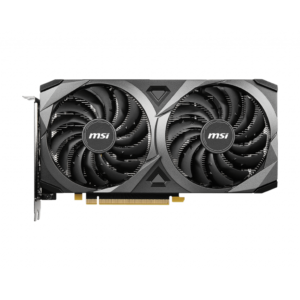
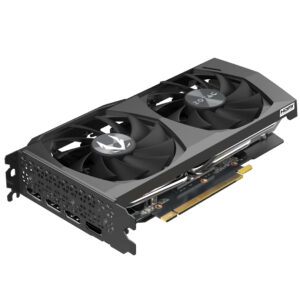
The ZOTAC GeForce RTX 3060 Twin Edge is built upon NVIDIA’s Ampere architecture, integrating 3,584 CUDA cores alongside a generous 12GB GDDR6 memory buffer operating across a 192-bit interface. Engineered specifically for spatial efficiency, the card adopts a compact dual-slot form factor reinforced by a metal structural backplate that preserves PCB rigidity and mitigates sag within tight chassis configurations. Power routing is straightforward and efficient, requiring a single 8-pin PCIe auxiliary connector to satisfy the card’s 170-watt board power specification with standard desktop power supplies.
Thermal management is anchored by ZOTAC’s IceStorm 2.0 cooling assembly, which utilizes a dense aluminum fin stack paired with dual axial fans. While the compact thermal footprint effectively manages GPU core temperatures during standard gaming and compute workloads, the constrained radiator volume necessitates higher fan rotational speeds under sustained peak loads, resulting in elevated acoustic output compared to larger triple-fan implementations. VBIOS tuning provides standard zero-RPM fan stop behavior during idle states, though practical user ownership has been complicated by documented customer service friction concerning warranty eligibility tied to distributor import dates rather than consumer retail purchase dates.
Technical Specifications
| Brand | Zotac |
| Model | ZOTAC GeForce RTX 3060 Twin Edge |
| Graphics Processor | NVIDIA GeForce RTX 3060 |
| Architecture | NVIDIA Ampere |
| Cuda Cores | 3584 |
| Video Memory | 12GB GDDR6 |
| Memory Bus Width | 192-bit |
| Boost Clock | 1777 MHz |
| Memory Clock | 15 Gbps |
| Bus Interface | PCI Express 4.0 x16 |
| Display Outputs | 3 x DisplayPort 1.4a, 1 x HDMI 2.1 |
| Multi Display Support | Quad Display |
| Power Connectors | 1 x 8-pin |
| Power Consumption | 170W |
| Recommended Psu | 600W |
| Cooling System | IceStorm 2.0 Dual Fan |
| Form Factor | Dual Slot |
| Api Support | DirectX 12 Ultimate, OpenGL 4.6 |
| Hdcp Version | 2.3 |
Primary Sources & Audited Citations
Recommended Alternatives in Graphics Cards (GPUs)
At a Glance
How reliable is the ZOTAC GeForce RTX 3060 Twin Edge Review: Compact Form Marred By Fan Noise according to Mizex audits?
An agile, space-efficient GPU offering generous 12GB VRAM for compact builds, though buyers should ensure verified retailer documentation to avoid potential distributor warranty discrepancies.
What are the known quirks or drawbacks of the ZOTAC GeForce RTX 3060 Twin Edge Review: Compact Form Marred By Fan Noise?
Our reliability audit identified the following documented caveats:
- Documented warranty claim friction involving distributor import date calculations
- Audible acoustic profile during sustained heavy GPU load scenarios
What are the key engineering highlights of the ZOTAC GeForce RTX 3060 Twin Edge Review: Compact Form Marred By Fan Noise?
The top strengths recorded in our evaluation include:
- Generous 12GB GDDR6 memory buffer on a 192-bit bus
- Compact dual-slot form factor compatible with small-form-factor and compact cases
- Versatile quad-display support with three DisplayPort 1.4a ports and HDMI 2.1