
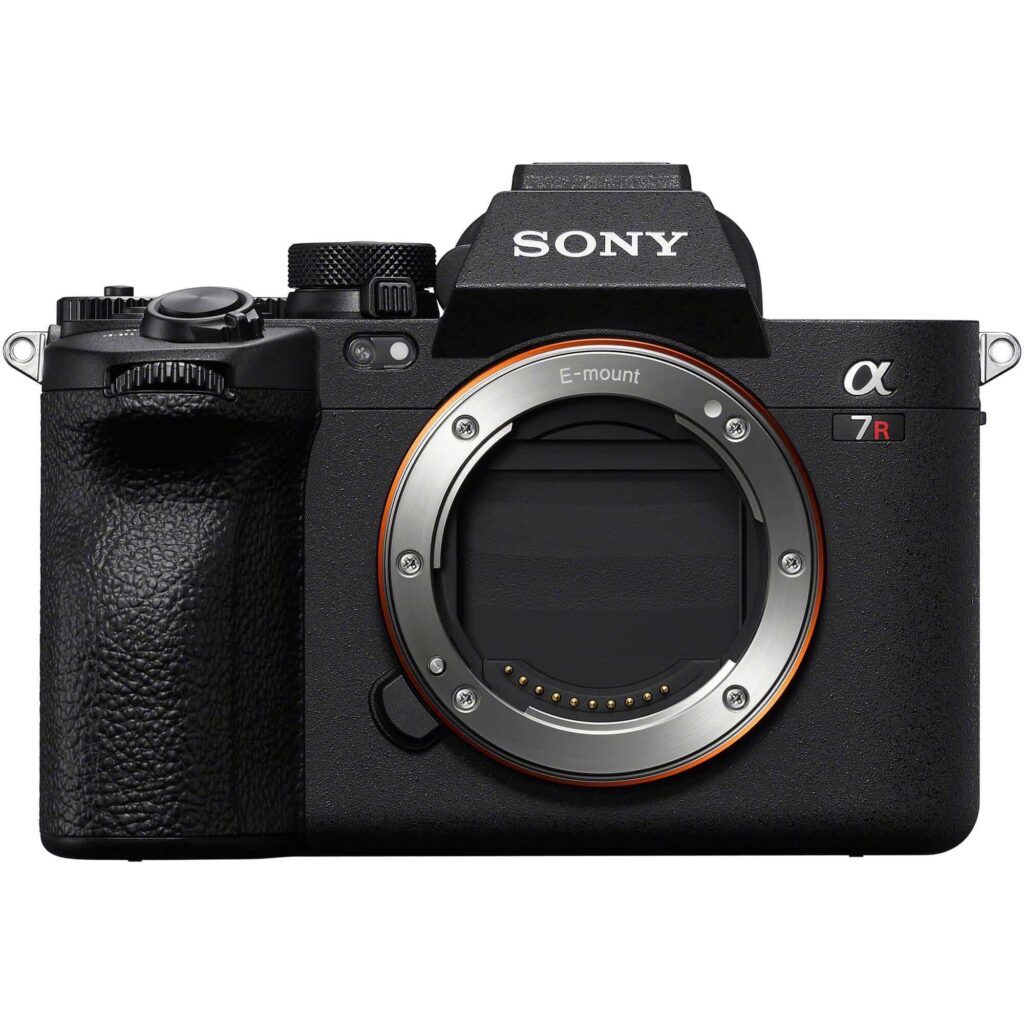
- Class-leading 61.0 MP full-frame Exmor R BSI CMOS sensor delivering 14.8 EV dynamic range and DxOMark score of 100
- Dedicated AI deep learning processing unit enabling advanced real-time subject tracking for humans, animals, and vehicles
- Redesigned 5-axis in-body image stabilization providing up to 8.0 stops of compensation
- Versatile 4-axis multi-angle 3.2-inch touchscreen display paired with a high-resolution 9.44M-dot Quad-XGA OLED EVF
- Noticeable rolling shutter distortion in electronic shutter mode and mandatory 1.2x crop during 8K and 4K 60p video capture
- Continuous burst drive rates above 7 fps drop RAW bit depth and compromise maximum image quality
- Pixel Shift Multi Shooting composites up to 241 megapixels cannot be assembled in-camera and require desktop software
Overview
Engineered around a 61.0-megapixel back-illuminated Exmor R CMOS sensor paired with dual BIONZ XR image processors and a dedicated AI deep learning coprocessor, the imaging architecture prioritizes maximum resolving power and subject recognition accuracy. The dedicated neural processing unit processes real-time human pose estimation, animal tracking, and vehicle identification, offloading computational load from primary image pipeline tasks. Sensor telemetry achieves an exceptional 14.8 EV of dynamic range and 26.5 bits of color depth, earning a top-tier DxOMark sensor score of 100. To stabilize this dense pixel matrix, an internal 5-axis mechanical stabilization unit provides up to 8.0 stops of compensation, counteracting micro-jitters without requiring aggressive optical dampening.
Mechanical integration is anchored by an innovative 4-axis multi-angle 3.2-inch touchscreen display (2,095,000 dots) that blends traditional vertical tilt action with side-opening vari-angle articulation, preventing cable interference across the full-size HDMI, USB Type-C, and dedicated audio ports. Framing is handled through an ultra-dense 9.44M-dot Quad-XGA OLED electronic viewfinder operating at 0.90x magnification and up to 120 fps refresh rates. Dual hybrid media slots support both CFexpress Type A and UHS-II SD cards simultaneously, facilitating high-throughput buffering during uncompressed continuous capture. Passive internal heat management sustains 8K 24p/25p and 4K 60p recording profiles, though video capture at these upper resolutions imposes a 1.2x sensor crop factor.
Operational trade-offs center primarily on sensor readout velocity and multi-shot firmware integration. While continuous shooting reaches up to 10 fps using either mechanical or electronic shutters, drive speeds above 7 fps drop RAW bit depth to maintain throughput, compromising maximum dynamic range during fast action sequences. Furthermore, the slow sensor scan time introduces perceptible rolling shutter distortion in pure electronic shutter mode. Studio and landscape workflows benefit from the 16-image Pixel Shift Multi Shooting mode capable of generating 241-megapixel composites; however, synthesis cannot be processed in-camera and requires tethered assembly via Sony Imaging Edge Desktop software. Powered by the proven NP-FZ100 lithium-ion battery platform, the platform remains an authoritative high-resolution workhorse for studio and landscape environments where outright readout speed is secondary to pristine detail capture.
Technical Specifications
| Brand | Sony |
| Model | a7R V |
| Sensor Type | 35mm full-frame Exmor R BSI CMOS |
| Effective Resolution | 61.0 megapixels (9504 x 6336) |
| Image Processor | BIONZ XR with dedicated AI processing unit |
| Image Stabilization | 5-axis sensor-shift (up to 8.0 stops of compensation) |
| Autofocus System | Fast Hybrid AF with 693 phase-detection points (79% frame coverage) |
| Autofocus Sensitivity | EV -4.0 |
| Continuous Shooting Speed | Up to 10 fps (mechanical and electronic shutter) |
| Electronic Viewfinder | 0.64-type Quad-XGA OLED (9,437,184 dots, 0.90x magnification, up to 120 fps) |
| Rear Display | 3.2-inch 4-axis multi-angle touchscreen LCD (2,095,000 dots) |
| Video Recording | 8K at 24p/25p (1.2x crop), 4K at 60p (1.2x crop), 4K at 24p/25p/30p (uncropped), 1080p at 120p |
| Video Color Sampling | 10-bit 4:2:2 internal |
| Dynamic Range | 14.8 EV |
| Color Depth | 26.5 bits |
| DxOMark Sensor Score | 100 |
| Multi Shot Capability | 16-image Pixel Shift Multi Shooting up to 241 megapixels |
| Storage Slots | Dual slots, both compatible with CFexpress Type A and SD/SDHC/SDXC (UHS-I/II) |
| Battery Type | Sony NP-FZ100 |
| Connectivity | USB Type-C, Micro-USB, Full-size HDMI, 3.5mm microphone input, 3.5mm headphone output, PC sync terminal, Wi-Fi, Bluetooth |
| Dimensions | 5.2 x 3.8 x 3.2 in (132 x 97 x 81 mm) |
Primary Sources & Audited Citations
Recommended Alternatives in Cameras & Photography
At a Glance
How reliable is the Sony a7R V Review: Extreme Resolution Meets AI Precision according to Mizex audits?
An indispensable high-resolution tool for commercial, studio, and landscape photographers who prioritize resolving power, exceptional stabilization, and precise AI tracking over high-speed electronic readout.
What are the known quirks or drawbacks of the Sony a7R V Review: Extreme Resolution Meets AI Precision?
Our reliability audit identified the following documented caveats:
- Noticeable rolling shutter distortion in electronic shutter mode and mandatory 1.2x crop during 8K and 4K 60p video capture
- Continuous burst drive rates above 7 fps drop RAW bit depth and compromise maximum image quality
- Pixel Shift Multi Shooting composites up to 241 megapixels cannot be assembled in-camera and require desktop software
What are the key engineering highlights of the Sony a7R V Review: Extreme Resolution Meets AI Precision?
The top strengths recorded in our evaluation include:
- Class-leading 61.0 MP full-frame Exmor R BSI CMOS sensor delivering 14.8 EV dynamic range and DxOMark score of 100
- Dedicated AI deep learning processing unit enabling advanced real-time subject tracking for humans, animals, and vehicles
- Redesigned 5-axis in-body image stabilization providing up to 8.0 stops of compensation
- Versatile 4-axis multi-angle 3.2-inch touchscreen display paired with a high-resolution 9.44M-dot Quad-XGA OLED EVF