
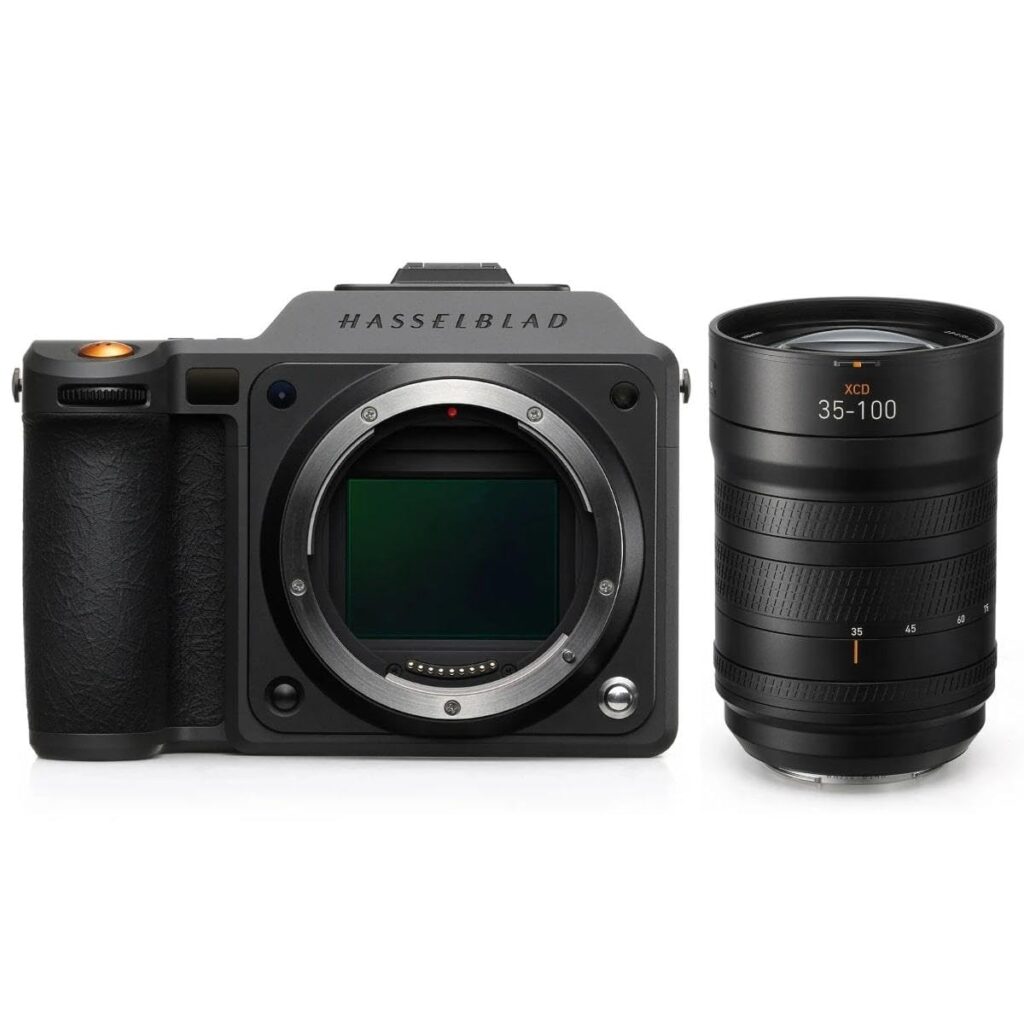
- 100-megapixel medium-format CMOS sensor with class-leading 10-stop 5-axis in-body image stabilization
- Integrated 1 TB solid-state drive delivering fast, reliable on-board storage without card slot failure risks
- Hybrid autofocus combining 425 PDAF zones, deep-learning tracking, and LiDAR distance assistance
- Exceptional 5.76-million-dot OLED EVF with 1.0x magnification paired with a 90-degree tilting rear LCD
- Noticeable one-second switching lag when transitioning between the rear LCD and EVF eye sensor
- Relatively slow cold boot and startup sequence from complete power-off state
- Lacks in-camera monochrome shooting mode and customizable film simulation profiles
Overview
Medium-format photography has traditionally demanded deliberate, tripod-bound workflows, but integrating ten stops of in-body image stabilization transforms how ultra-high-resolution imaging behaves in the field. Built around a 100-megapixel CMOS sensor and Hasselblad’s proprietary Natural Colour Solution with HDR, the camera prioritizes tonality and dynamic range without tethering the photographer to studio lighting or support rigs. Handheld exposures at slow shutter speeds become consistently viable, granting spontaneous flexibility to landscape and architectural disciplines that previously required cumbersome setup.
Machined from high-grade aluminum, the unibody chassis feels exceptionally rigid and balanced, balancing physical resilience against purposeful tactile ergonomics. The physical layout emphasizes tactile assurance, combining dual command dials, an integrated rear joystick, and subtle haptic feedback for leveling and focus confirmation. Rather than relying on external memory card slots that can jam or corrupt, an integrated one-terabyte solid-state drive handles sustained write streams directly, streamlining data integrity during demanding multi-shot sessions. The tilting rear display articulation clears the large eyepiece cleanly, complementing the expansive 5.76-million-dot OLED viewfinder to keep framing intuitive in changing light.
Thermal dissipation relies on the substantial aluminum casing to passively sink heat generated by the dense sensor and processing engine, maintaining silent operation without active fan cooling. While continuous autofocus benefits notably from deep-learning subject tracking and auxiliary LiDAR distance measurement, the firmware displays a few operational hesitations. Cold-boot startup remains noticeably leisurely, and transitioning between the tilting rear touchscreen and the electronic viewfinder exhibits an approximate one-second sensor lag. For photographers prioritizing reference-grade studio resolution and organic color gradation, these minor cadence quirks do little to diminish an otherwise sublime tactile and imaging instrument.
Technical Specifications
| Brand | Hasselblad |
| Model | X2D II 100C |
| Sensor Type | Medium Format CMOS |
| Effective Resolution | 100 Megapixels |
| Image Stabilization | 5-axis In-Body Image Stabilization (IBIS), up to 10 stops |
| Autofocus System | Hybrid AF-C / AF-S with 425 PDAF zones and LiDAR assistance |
| Subject Detection | Deep learning tracking (humans, vehicles, cats, dogs) |
| Focus Point Modes | Spot, Expand Spot, Custom, Wide |
| Internal Storage | 1 TB SSD |
| Electronic Viewfinder | 5.76M dots OLED EVF, 1.0x magnification |
| Rear Display | High-brightness touchscreen LCD, 90-degree tilt mechanism |
| Top Display | Status sub-screen on matte graphite top plate |
| Chassis Construction | Machined aluminum unibody |
| Color Profile Solution | Hasselblad Natural Colour Solution with HDR (HNCS HDR) |
| Supported Image Formats | HDR HEIF, Ultra HDR JPEG, RAW |
| Physical Controls | Integrated rear joystick, dual command dials, orange shutter release |
| Tactile Feedback | Haptic feedback for focus confirmation and electronic level |
Primary Sources & Audited Citations
Recommended Alternatives in Cameras & Photography

At a Glance
How reliable is the Hasselblad X2D II 100C according to Mizex audits?
Invest with confidence if your workflow demands reference-grade medium-format resolution and class-leading handheld stabilization, provided you can tolerate deliberate startup times and EVF switching latency.
What are the known quirks or drawbacks of the Hasselblad X2D II 100C?
Our reliability audit identified the following documented caveats:
- Noticeable one-second switching lag when transitioning between the rear LCD and EVF eye sensor
- Relatively slow cold boot and startup sequence from complete power-off state
- Lacks in-camera monochrome shooting mode and customizable film simulation profiles
What are the key engineering highlights of the Hasselblad X2D II 100C?
The top strengths recorded in our evaluation include:
- 100-megapixel medium-format CMOS sensor with class-leading 10-stop 5-axis in-body image stabilization
- Integrated 1 TB solid-state drive delivering fast, reliable on-board storage without card slot failure risks
- Hybrid autofocus combining 425 PDAF zones, deep-learning tracking, and LiDAR distance assistance
- Exceptional 5.76-million-dot OLED EVF with 1.0x magnification paired with a 90-degree tilting rear LCD