
- High-efficiency Qualcomm Snapdragon 8 Elite Gen 5 silicon paired with vapor chamber cooling that maintained 27°C under standardized battery testing
- 6.9-inch Dynamic LTPO AMOLED 2X panel offering 2600 nits peak brightness, anti-reflective Gorilla Armor 2, and integrated Privacy Display
- Serviceable battery design utilizing a pull-tab swaddle release mechanism alongside a modular screw-secured USB-C port
- Extended software longevity commitment providing Android 16 with up to 7 major OS updates
- Screen replacement requires exhaustive internal teardown due to the display connector being pinned behind the motherboard
- Front-facing camera is secured with excessive adhesive that poses a high risk of cracking the OLED panel during servicing
- Rear camera modules connect to the underside of the mainboard, requiring complete board removal for camera replacements
Overview
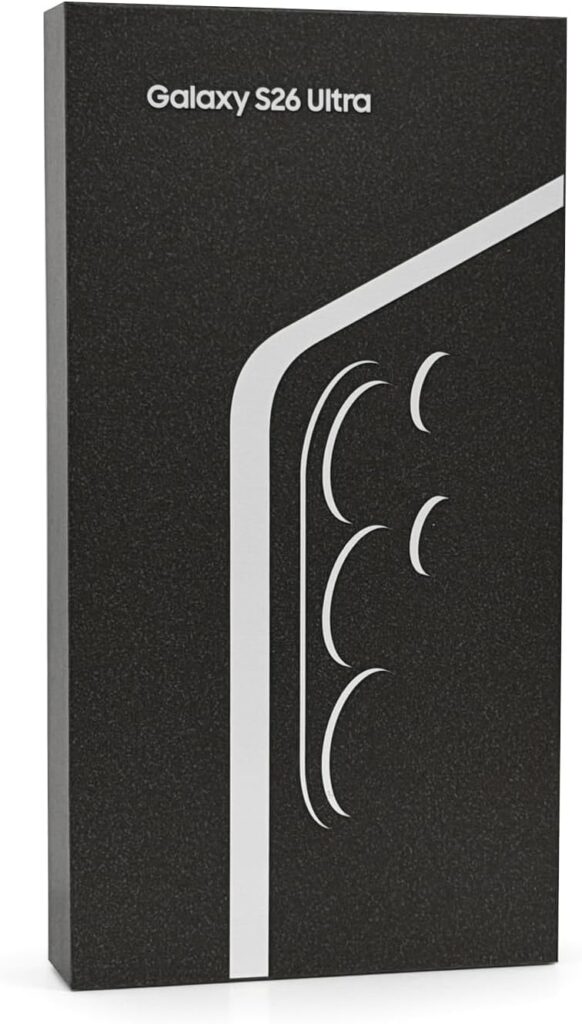
Refining large-format mobile ergonomics around a rigid Armor Aluminum 2 frame, Samsung achieves a slim 0.31-inch (7.9 mm) profile while maintaining an expansive 6.9-inch footprint weighing 7.55 oz (214 g). The front face is shielded by Corning Gorilla Armor 2 with a DX anti-reflective coating that drastically cuts ambient glare in bright sunlight, complemented on the rear by Gorilla Glass Victus 2. The Dynamic LTPO AMOLED 2X panel operates at up to 120Hz and achieves 2600 nits peak brightness, delivering sharp 1440 x 3120 resolution with an integrated Privacy Display to protect sensitive on-screen information from side angles. An integrated S Pen stylus slides cleanly into the bottom frame, protected alongside the rest of the chassis by full IP68 water and dust ingress resistance.
Under the hood, Qualcomm’s 3nm Snapdragon 8 Elite Gen 5 platform pairs two Oryon V3 Phoenix performance cores clocked at 4.74 GHz with six 3.62 GHz efficiency cores and an Adreno 840 GPU running at 1.3 GHz. Rather than letting surface heat build up during continuous workloads, an integrated vapor chamber cooling system dissipates thermal energy across the midframe, keeping peak operating temperatures around a remarkably cool 27°C during standardized battery testing. The optical layout pairs this silicon foundation with an f/1.4 aperture 200 MP primary camera that gathers substantial light for low-noise captures, flanked by a 50 MP 5x periscope telephoto lens, a 50 MP ultrawide sensor, and a 10 MP 3x optical telephoto module for flexible framing across all focal lengths.
Longevity is reinforced on the software side by Android 16 and One UI 9, backed by a commitment to provide up to seven major operating system updates. Physical serviceability presents a nuanced picture: routine maintenance is aided by a pull-tab swaddle release mechanism that simplifies 5,000 mAh battery extraction, paired with a modular USB-C port held by dedicated screws rather than soldered directly to the board. However, internal board-level architecture introduces notable repair hurdles, earning a provisional 5/10 repairability rating. Replacing the display requires complete device teardown because the screen ribbon connector is trapped behind the mainboard, the front selfie camera is heavily glued directly against the panel housing, and the rear camera sensors connect to the underside of the logic board, requiring technicians to fully extract the motherboard for camera swaps.
Technical Specifications
| Brand | Samsung |
| Model | Galaxy S26 Ultra |
| Dimensions | 6.44 x 3.07 x 0.31 in (163.6 x 78.1 x 7.9 mm) |
| Weight | 7.55 oz (214 g) |
| Chassis Materials | Armor Aluminum 2 frame, Corning Gorilla Armor 2 front, Corning Gorilla Glass Victus 2 back |
| Ingress Protection | IP68 (up to 1.5m for 30 minutes) |
| Display | 6.9-inch Dynamic LTPO AMOLED 2X, 120Hz, 1440 x 3120 pixels, 2600 nits peak brightness |
| Display Protection | Corning Gorilla Armor 2 with DX anti-reflective coating |
| Processor | Qualcomm Snapdragon 8 Elite Gen 5 (3 nm, octa-core up to 4.74 GHz) |
| Graphics | Qualcomm Adreno 840 (1.3 GHz) |
| Thermal Solution | Vapor chamber cooling |
| Memory | 12GB, 16GB |
| Storage Options | 256GB, 512GB, 1TB UFS 4.X (no expansion slot) |
| Operating System | Android 16, One UI 9 (up to 7 major OS updates) |
| Main Camera | 200 MP, f/1.4, 23mm wide, 1/1.3-inch, OIS |
| Telephoto Cameras | 50 MP 5x periscope (111mm, f/2.9, OIS) + 10 MP 3x telephoto (67mm, f/2.4, OIS) |
| Ultrawide Camera | 50 MP, f/1.9, 120-degree FOV |
| Front Camera | 12 MP, f/2.2, 23mm wide, 4K@60fps |
| Battery Capacity | 5000 mAh |
| Charging | 60W wired, 25W wireless |
| Battery Service | Pull-tab swaddle release mechanism |
| USB Interface | Modular USB-C port secured by screws |
| Stylus | Integrated S Pen (Armor Aluminum 2) |
Primary Sources & Audited Citations
- GSMArena: Samsung Galaxy S26 Ultra Full In-Depth Device Specifications
- GSMArena: Samsung Galaxy S26 Ultra In-Depth Hardware & Performance Review
- Notebookcheck: Galaxy S26 Ultra Hardware Stress Testing, Thermals, and Battery Benchmarks
- GSMArena: Samsung Galaxy S26 Ultra Teardown Analysis and Battery Serviceability Review
- 9to5Google: Galaxy S26 Ultra Lab Teardown, Cooling Architecture, and Repairability Breakdown
Recommended Alternatives in Smartphones


At a Glance
How reliable is the Samsung Galaxy S26 Ultra Review: Silicon Efficiency Meets Assembly Quirks according to Mizex audits?
A powerhouse flagship offering unmatched anti-reflective display clarity, cool 27°C battery efficiency, and seven years of software support, though prospective owners should note its complex internal assembly makes display and camera repairs labor-intensive.
What are the known quirks or drawbacks of the Samsung Galaxy S26 Ultra Review: Silicon Efficiency Meets Assembly Quirks?
Our reliability audit identified the following documented caveats:
- Screen replacement requires exhaustive internal teardown due to the display connector being pinned behind the motherboard
- Front-facing camera is secured with excessive adhesive that poses a high risk of cracking the OLED panel during servicing
- Rear camera modules connect to the underside of the mainboard, requiring complete board removal for camera replacements
What are the key engineering highlights of the Samsung Galaxy S26 Ultra Review: Silicon Efficiency Meets Assembly Quirks?
The top strengths recorded in our evaluation include:
- High-efficiency Qualcomm Snapdragon 8 Elite Gen 5 silicon paired with vapor chamber cooling that maintained 27°C under standardized battery testing
- 6.9-inch Dynamic LTPO AMOLED 2X panel offering 2600 nits peak brightness, anti-reflective Gorilla Armor 2, and integrated Privacy Display
- Serviceable battery design utilizing a pull-tab swaddle release mechanism alongside a modular screw-secured USB-C port
- Extended software longevity commitment providing Android 16 with up to 7 major OS updates