
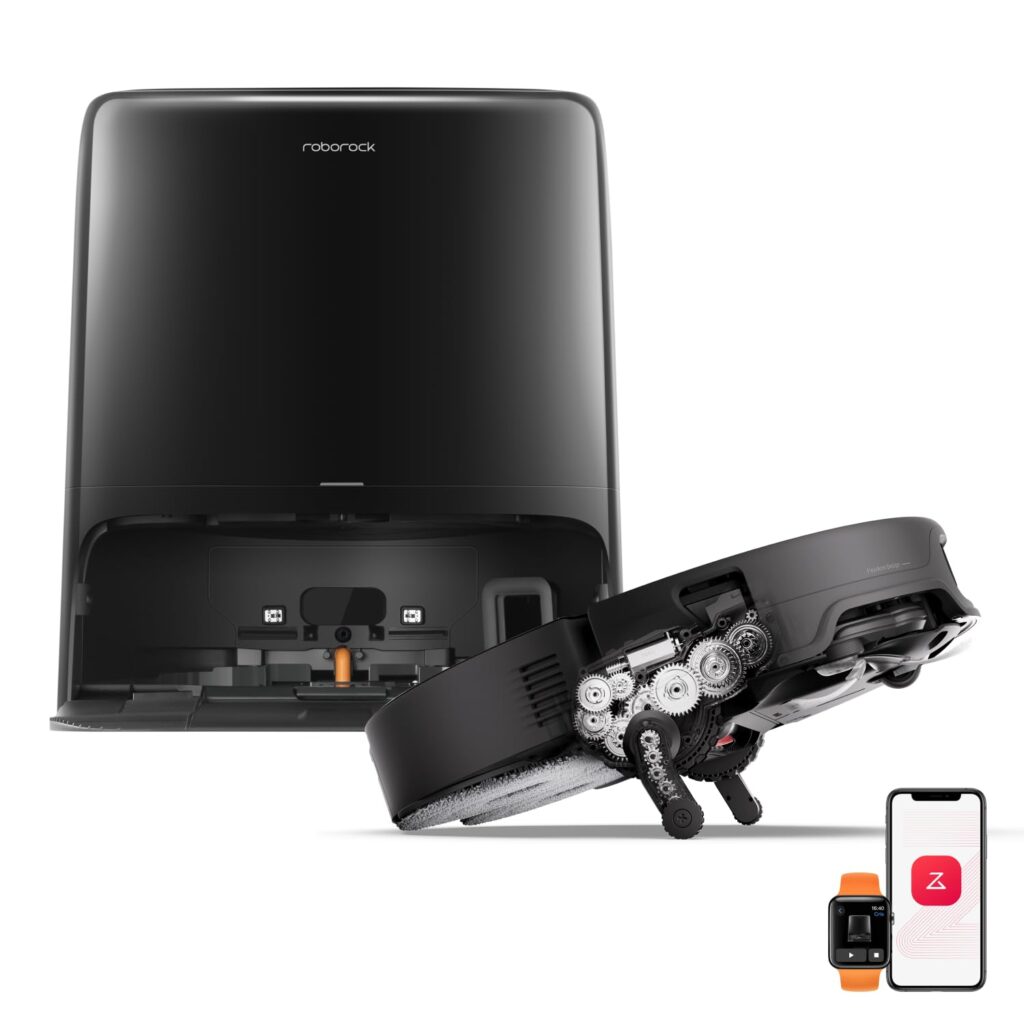
- Retractable LiDAR turret enables navigation beneath low furniture
- Suspension mechanism traverses obstacles and thresholds up to 2.24 in (57 mm)
- Extending side brush and mop pads maximize perimeter edge coverage
- Anti-tangle roller system cleared seven-inch hair with zero tangling
- Reduced onboard dustbin capacity of 8.1 fl oz (240 mL) requires frequent dock emptying
- Below-average airflow and suction power recorded in studio testing
- Tends to scatter fine debris across hard flooring during initial sweeping passes
Overview
Navigating cramped living spaces often exposes the physical limits of autonomous floor cleaners, particularly when fixed sensor turrets collide with low-slung furniture and raised room dividers halt cleaning routines. The engineering of this robotic platform addresses low-clearance accessibility directly by incorporating a motorized retractable LiDAR sensor that recedes into the chassis when entering tight enclosures. Paired with a heavy-duty suspension system capable of traversing thresholds up to 2.24 in (57 mm) in height, the chassis clears recessed baseboards and structural transitions between rooms that typically strand lower-riding vacuums.
Beneath the housing, an articulated mechanical arm extends the side brush and spinning mop pads outward to trace baseboards and interior corners flush, eliminating the uncleaned margins common to traditional circular frames. In standardized studio testing, the roller system demonstrated thorough particle agitation by retrieving 93% of embedded sand from carpet fibers while completely resisting hair wraps during trials with seven-inch strands. However, studio benchmarks also recorded lower suction velocity and airflow compared to competing platforms, which occasionally manifests as fine debris scattering across hard flooring before the sweeping mechanism can channel particulate into the intake.
Docking operations manage nearly all labor-intensive maintenance cycles, utilizing an automated base station that dispenses cleaning solution, monitors wastewater contamination through dirty-water turbidity sensors, and washes mop pads with warm water before applying heated air drying to mitigate moisture buildup. To accommodate the complex internal mechanics of the retractable turret and articulating arms, the onboard dustbin volume is constrained to 8.1 fl oz (240 mL), necessitating routine evacuation cycles at the base station during extensive cleaning runs across multi-room layouts.
Technical Specifications
| Brand | Roborock |
| Model | Qrevo Edge 3 Pro |
| Navigation Technology | Retractable LiDAR |
| Obstacle Crossing Threshold | 2.24 in (57 mm) |
| Dustbin Capacity | 8.1 fl oz (240 mL) |
| Mopping System | Dual spinning mop pads with motorized lift and mechanical extension |
| Brush Mechanism | Motorized extending side brush and tangle-free roller |
| Dock Automation | Automatic dustbin emptying, warm-water mop washing, heated air drying, detergent dispensing, and dock self-cleaning |
| Dock Sensors | Optical dirty water sensor |
Primary Sources & Audited Citations
Recommended Alternatives in Smart Home & IoT
At a Glance
How reliable is the Roborock Qrevo Edge 3 Pro according to Mizex audits?
Ideal for homes with thick transition thresholds and low furniture, provided you can accept modest raw suction and a small onboard dustbin that relies on frequent dock evacuations.
What are the known quirks or drawbacks of the Roborock Qrevo Edge 3 Pro?
Our reliability audit identified the following documented caveats:
- Reduced onboard dustbin capacity of 8.1 fl oz (240 mL) requires frequent dock emptying
- Below-average airflow and suction power recorded in studio testing
- Tends to scatter fine debris across hard flooring during initial sweeping passes
What are the key engineering highlights of the Roborock Qrevo Edge 3 Pro?
The top strengths recorded in our evaluation include:
- Retractable LiDAR turret enables navigation beneath low furniture
- Suspension mechanism traverses obstacles and thresholds up to 2.24 in (57 mm)
- Extending side brush and mop pads maximize perimeter edge coverage
- Anti-tangle roller system cleared seven-inch hair with zero tangling