
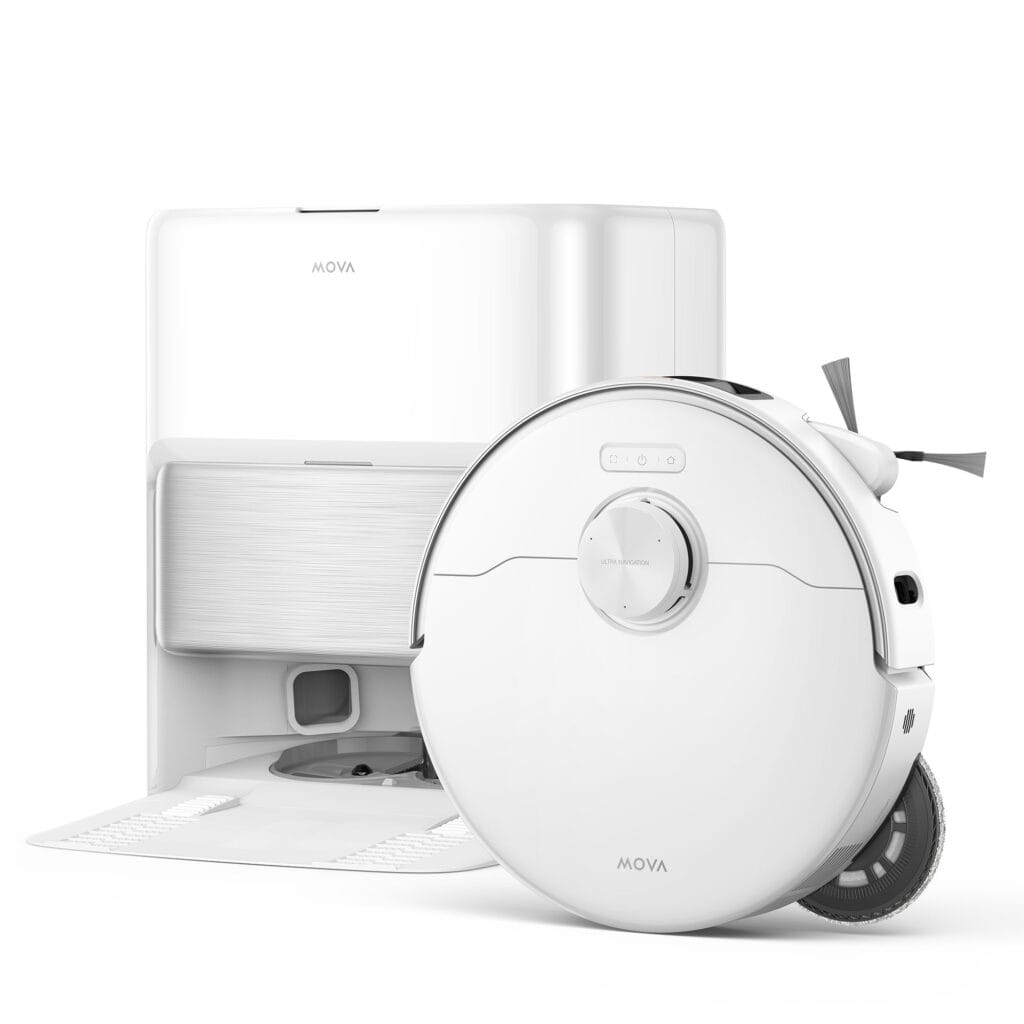
- Formidable 30,000 Pa maximum suction power rating
- Dual rotating mops operating at 260 rpm with 12 N downward cleaning pressure
- Dual articulating extension mechanisms for both the side brush and mop pad
- Includes fully automated multi-function cleaning base station
- Standard configuration lacks an anti-tangle brush, requiring an optional accessory to minimize hair wrap
- Side brush reach is shorter than comparable top-tier flagship variants
Overview
The MOVA P70 Pro Ultra is an automated robotic vacuum and mopping system engineered around an aggressive 30,000 Pa suction motor assembly and an active dual rotating mop scrubbing module. Its mechanical architecture emphasizes perimeter coverage through articulated mechanical linkages, deploying both an extendable side brush and a lateral-reaching mop pad to clean along baseboards and corners. The system pairs with a comprehensive multi-function docking station designed to manage maintenance routines including automated dirt disposal and mop washing, streamlining daily autonomous operation.
From a structural standpoint, the chassis incorporates impact-resistant thermoplastic molding with integrated bumper arrays and optical obstacle sensors designed to tolerate recurring household collisions. Acoustic emission and thermal behavior are closely coupled to motor exertion; operating at peak 30,000 Pa draw creates substantial high-frequency acoustic output and localized motor heat requiring active chassis ventilation, while standard maintenance cycles operate at moderate noise thresholds. The mechanical trade-offs center around hair management and linkage reach: standard configurations omit an anti-tangle main roller brush, necessitating manual roller clearance unless upgraded, and the side brush extension mechanism features slightly shorter travel than premium flagship counterparts.
Technical Specifications
| Brand | MOVA |
| Model | MOVA P70 Pro Ultra |
| Device Category | Robot Vacuum & Mop |
| Suction Power | 30,000 Pa |
| Mop Configuration | Dual rotating mops |
| Mop Rotation Speed | 260 rpm |
| Mop Downward Pressure | 12 N |
| Edge Cleaning Technology | Extendable side brush and sideways extending mop pad |
| Docking Station | Multi-function automated cleaning station included |
Primary Sources & Audited Citations
Recommended Alternatives in Smart Home & IoT
At a Glance
How reliable is the MOVA P70 Pro Ultra Review: Class Leading Suction Demands High Maintenance according to Mizex audits?
An exceptionally powerful cleaning platform with advanced edge-scrubbing articulation and automated dock maintenance, best suited for homes without heavy pet-hair shedding unless paired with the optional anti-tangle brush.
What are the known quirks or drawbacks of the MOVA P70 Pro Ultra Review: Class Leading Suction Demands High Maintenance?
Our reliability audit identified the following documented caveats:
- Standard configuration lacks an anti-tangle brush, requiring an optional accessory to minimize hair wrap
- Side brush reach is shorter than comparable top-tier flagship variants
What are the key engineering highlights of the MOVA P70 Pro Ultra Review: Class Leading Suction Demands High Maintenance?
The top strengths recorded in our evaluation include:
- Formidable 30,000 Pa maximum suction power rating
- Dual rotating mops operating at 260 rpm with 12 N downward cleaning pressure
- Dual articulating extension mechanisms for both the side brush and mop pad
- Includes fully automated multi-function cleaning base station