
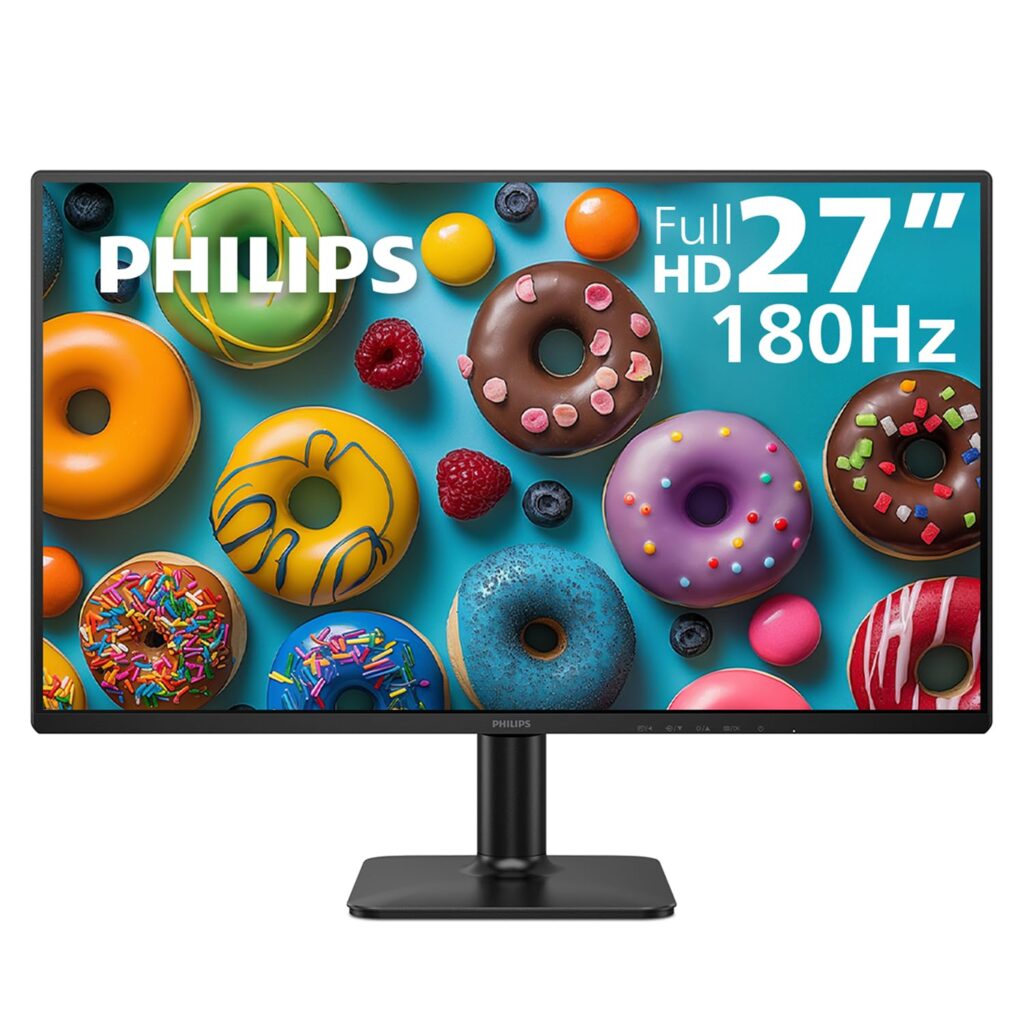
- High-refresh IPS panel supporting 144 Hz native and up to 180 Hz overclocking with Adaptive-Sync VRR
- Higher 1500:1 static contrast ratio providing deeper black levels than typical 1000:1 IPS displays
- Low operational power consumption pulling just 14.3 W under active load
- Versatile digital input array with HDMI 2.1 (TMDS) and DisplayPort 1.4 supporting HDR10 decoding
- MPRT blur reduction locks brightness controls and introduces visible backlight flicker outside of gaming
- Factory stand is restricted strictly to tilt adjustment without height, swivel, or pivot flexibility
- Relies on an external power brick and lacks integrated speakers
Overview
Balancing the rapid pacing of competitive esports with the visual fidelity demanded by daily desktop computing often comes down to panel selection and contrast depth. Built around a 23.8 in (60.5 cm) Full HD IPS panel, this display addresses one of the classic weaknesses of in-plane switching technology by stepping up to a typical 1500:1 static contrast ratio. The result is visibly deeper black levels and richer shadow gradation than conventional 1000:1 displays deliver, all while maintaining expansive 178-degree horizontal and vertical viewing angles. Motion handling keeps pace with high-velocity gaming, pushing beyond standard refresh ceilings to 144 Hz natively and up to 180 Hz under factory overclocking, backed by Adaptive-Sync variable refresh rate support and a 4 ms gray-to-gray response time.
Physical construction centers around a lightweight matte black polymer chassis weighing 4.81 lbs (2.18 kg) unmounted and 5.42 lbs (2.46 kg) with its factory pedestal attached. The included stand is decidedly minimal, restricting movement strictly to a tilt range between -5° and +20° without height, swivel, or rotational freedom. Fortunately, integrated 100 x 100 mm (3.9 x 3.9 in) VESA mounting points provide a direct upgrade path for aftermarket monitor arms. Thermal behavior is kept well within check by offloading AC-to-DC power conversion to an external 100-240V power brick. This architecture minimizes internal heat generation inside the 1.3 in (32 mm) thin housing, resulting in an active operational power consumption of just 14.3 W, a standby draw of 0.5 W, and peak enclosure temperatures that plateau at 40.0 °C.
Signal connectivity is handled through a straightforward interface array comprising one HDMI 2.1 (TMDS) port, one DisplayPort 1.4 connection, and a 3.5 mm analog audio passthrough jack for routing sound to desktop headphones or external speakers. Firmware execution in the on-screen display introduces a notable operational trade-off through its 0.5 ms MPRT blur reduction mode. When engaged for competitive play, this setting triggers active LED backlight strobing to diminish motion blur, but simultaneously locks out manual brightness adjustments and introduces visible flicker during standard desktop navigation. For daily workflows, office productivity, and web browsing, leaving MPRT disabled allows the 300 cd/m² W-LED backlight and anti-glare 3H coating to deliver stable, flicker-free illumination across the 93 PPI workspace.
Technical Specifications
| Brand | Philips |
| Model | 24E2G2200 |
| Panel Type | IPS |
| Screen Size | 23.8 in (60.5 cm) |
| Native Resolution | 1920 x 1080 (Full HD) |
| Aspect Ratio | 16:9 |
| Refresh Rate | 144 Hz native (up to 180 Hz OC) |
| Response Time | 4 ms GtG (SmartResponse), 0.5 ms MPRT |
| Brightness | 300 cd/m² |
| Static Contrast Ratio | 1500:1 (typical) |
| Dynamic Contrast Ratio | Mega Infinity DCR (SmartContrast) |
| Viewing Angles | 178° horizontal / 178° vertical (@ C/R > 10) |
| Pixel Pitch | 0.2745 x 0.2745 mm |
| Pixel Density | 93 PPI |
| Color Support | 16.7 million colors (sRGB) |
| Display Surface Coating | Anti-Glare, 3H hardness, 25% Haze |
| HDR Support | HDR10 |
| Variable Refresh Rate | Adaptive-Sync (VRR) |
| Backlight Type | W-LED system |
| Video Inputs | 1x HDMI 2.1 (TMDS), 1x DisplayPort 1.4 |
| Audio Interface | 1x 3.5 mm Audio out |
| HDCP Version | HDMI 1.4 / 2.2, DisplayPort 1.4 |
| VESA Mount Compatibility | 100 x 100 mm (3.9 x 3.9 in) |
| Stand Adjustability | Tilt (-5° to +20°) |
| Security Slot | Kensington security lock |
| Dimensions With Stand | 21.4 x 16.3 x 7.1 in (544 x 413 x 180 mm) |
| Dimensions Without Stand | 21.4 x 12.6 x 1.3 in (544 x 319 x 32 mm) |
| Weight With Stand | 5.42 lbs (2.46 kg) |
| Weight Without Stand | 4.81 lbs (2.18 kg) |
| Active Power Consumption | 14.3 W (typical) |
| Standby Power Consumption | 0.5 W (typical) |
| Off Mode Power Consumption | 0.3 W (typical) |
| Power Supply | External, 100-240V AC, 50-60 Hz |
Primary Sources & Audited Citations
- Philips 24E2G2200 Full HD Gaming Monitor Official Product Overview & Specifications
- Philips 24E2G2200 Product Summary & Technical Specifications Leaflet (PSS PDF)
- Philips 24E2G2200 Official English User Manual & Technical Guide (DFU PDF)
- Philips 24E2G2200 Official Technical Product Specification Sheet (Leaflet PDF)
- Philips 24E2G2200 Official Technical Support, Manuals & Documentation Hub
Recommended Alternatives in Monitors & Displays

At a Glance
How reliable is the Philips 24E2G2200 according to Mizex audits?
An attractive budget option for esports players who plan on using an aftermarket VESA mount, provided you keep MPRT disabled during normal desktop work to avoid backlight strobing.
What are the known quirks or drawbacks of the Philips 24E2G2200?
Our reliability audit identified the following documented caveats:
- MPRT blur reduction locks brightness controls and introduces visible backlight flicker outside of gaming
- Factory stand is restricted strictly to tilt adjustment without height, swivel, or pivot flexibility
- Relies on an external power brick and lacks integrated speakers
What are the key engineering highlights of the Philips 24E2G2200?
The top strengths recorded in our evaluation include:
- High-refresh IPS panel supporting 144 Hz native and up to 180 Hz overclocking with Adaptive-Sync VRR
- Higher 1500:1 static contrast ratio providing deeper black levels than typical 1000:1 IPS displays
- Low operational power consumption pulling just 14.3 W under active load
- Versatile digital input array with HDMI 2.1 (TMDS) and DisplayPort 1.4 supporting HDR10 decoding