
- Rapid 9.8ms UPS crossover with self-arming inverter capability
- High-efficiency 400W XT60 DC output delivering up to 90% usable capacity
- Modular storage expandable up to 8,192Wh using auxiliary expansion batteries
- Long-life UL-certified LiFePO4 cells rated for 3,500 cycles
- Prone to thermal strain and overheating under sustained 2,400W continuous loads
- AC inverter efficiency drops to roughly 75% under heavy load
- Waveform distortion sits near the upper threshold of acceptable tolerances
Overview
Architected around a 2,048Wh lithium iron phosphate core with an 1,800W AC charging stage and an integrated 800W MPPT solar controller, power delivery splits between high-throughput inversion and dedicated direct-current taps. An internal transfer switch achieves a 9.8ms crossover time with self-arming inverter logic, allowing the system to operate as an uninterruptible power supply for desktop workstations and sensitive networking hardware without dropping active loads. Auxiliary DC delivery is routed through a dedicated 400W XT60 port capable of sustaining up to 90% conversion efficiency, while system storage can expand fourfold up to 8,192Wh through modular expansion battery packs.
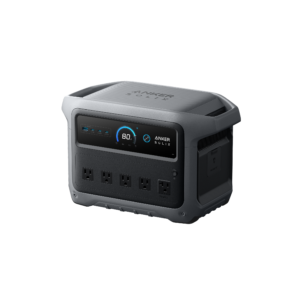
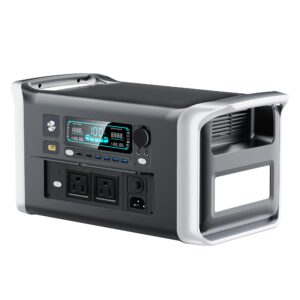
Physical containment is defined by a dense 45 lb (20.4 kg) chassis capped with impact-absorbing protective rubber corners to survive field deployment and rough transit. Structural rigidity shields the UL-certified LiFePO4 cells, which are rated for 3,500 charge cycles before reaching 80% capacity retention. The external interface concentrates AC outlets alongside high-draw DC outputs, balancing transportable bulk against high-output energy storage.
Operating behavior reveals significant trade-offs when pushing the 2,400W continuous AC inverter toward its thermal and architectural boundaries. Under heavy continuous loads, AC conversion efficiency drops to approximately 75%—releasing substantial waste heat into the compact enclosure—while total harmonic waveform distortion hovers near upper acceptable thresholds, discouraging use with medical devices. Extended operation near the unit’s 2,400W ceiling results in documented thermal saturation and overheating cutoffs, indicating that while short-burst 4,300W surges are tolerated, prolonged duty requires operating with conservative thermal headroom.
Technical Specifications
| Brand | PECRON |
| Model | E2400LFP |
| Battery Capacity | 2,048Wh |
| Usable Capacity | 1,700Wh |
| Battery Chemistry | LiFePO4 (UL certified) |
| Lifecycle Rating | 3,500 cycles (to 80% capacity) |
| Continuous AC Output | 2,400W |
| Surge / Peak AC Output | 4,300W |
| AC Input Power | 1,800W |
| Solar Input | 800W (32–95V MPPT) |
| DC Output | 400W XT60 |
| UPS Crossover Time | 9.8ms |
| Expandable Capacity Max | 8,192Wh |
| Weight | 45 lbs (20.4 kg) |
Primary Sources & Audited Citations
Recommended Alternatives in Power Stations & UPS
At a Glance
How reliable is the PECRON E2400LFP Review: Modular Storage Meets Thermal Limits according to Mizex audits?
Best suited for off-grid setups and sub-2,000W continuous backup workloads where modular capacity expansion is prized over heavy sustained AC inverter throughput.
What are the known quirks or drawbacks of the PECRON E2400LFP Review: Modular Storage Meets Thermal Limits?
Our reliability audit identified the following documented caveats:
- Prone to thermal strain and overheating under sustained 2,400W continuous loads
- AC inverter efficiency drops to roughly 75% under heavy load
- Waveform distortion sits near the upper threshold of acceptable tolerances
What are the key engineering highlights of the PECRON E2400LFP Review: Modular Storage Meets Thermal Limits?
The top strengths recorded in our evaluation include:
- Rapid 9.8ms UPS crossover with self-arming inverter capability
- High-efficiency 400W XT60 DC output delivering up to 90% usable capacity
- Modular storage expandable up to 8,192Wh using auxiliary expansion batteries
- Long-life UL-certified LiFePO4 cells rated for 3,500 cycles