
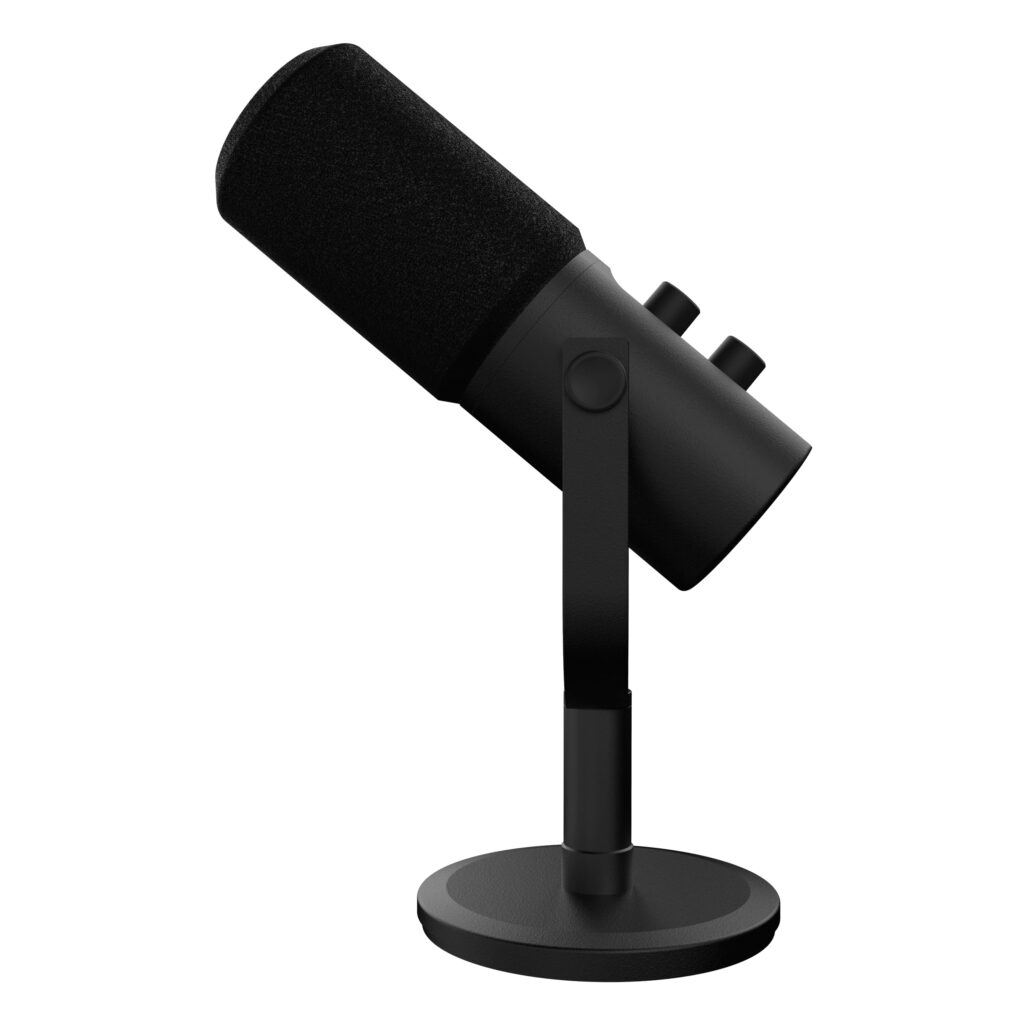
- Dual-interface flexibility offering digital plug-and-play USB-C connectivity alongside analog studio XLR output
- Studio-grade 24-bit / 192 kHz digital audio sampling resolution
- Substantial 1.98 lbs (900 g) all-metal chassis engineered for mechanical stability and vibration damping
- Comprehensive physical on-mic controls for gain, headphone monitoring volume, and active noise reduction
- Included package is minimal, lacking an elastic shock mount or specialized wind protection
Overview
Bridging the divide between entry-level USB convenience and balanced studio routing, this dynamic microphone provides a flexible hybrid signal path tailored for speech, podcasting, and streaming. At its core, the dynamic capsule employs a cardioid pickup pattern engineered to isolate direct vocal input while attenuating off-axis background noise across a 50 Hz to 20 kHz frequency response. Rather than confining creators to a single workflow, the architecture integrates a 24-bit / 192 kHz analog-to-digital converter for plug-and-play digital operation alongside a standard balanced XLR output, allowing the microphone to scale directly from a standalone desktop setup to professional outboard mixers and preamps.
The physical execution centers on a heavy all-metal body weighing 1.98 lbs (900 g), providing substantial mechanical inertia that helps damp vibrations and structural desk rumbles. Physical usability is prioritized with tactile rotary potentiometers for analog gain adjustment spanning 0 dB to +36 dB, dedicated 3.5 mm zero-latency headphone monitoring volume, and an active noise cancellation toggle directly on the chassis. The microphone mounts onto the included desk base or threads onto standard studio boom arms, keeping critical acoustic controls accessible without relying on software control panels.
Electrical efficiency is straightforward, with the digital subsystem drawing power via USB at 5 V up to 200 mA, allowing the solid-state circuitry to dissipate heat passively into the metal chassis without any thermal buildup. Operating in XLR mode requires zero external power or phantom voltage, safeguarding the dynamic capsule from accidental overvoltage while maintaining signal integrity up to a 110 dB maximum sound pressure level. Although the included package is minimal—omitting an elastic shock mount and specialized windscreen—the device delivers driverless plug-and-play stability across desktop and mobile platforms with a dependable hardware foundation.
Technical Specifications
| Brand | NUBI |
| Model | NMIC1 |
| Transducer Type | Dynamic |
| Polar Pattern | Cardioid |
| Audio Resolution | 24-bit / 192 kHz |
| Frequency Response | 50 Hz - 20 kHz |
| Adjustable Gain Range | 0 dB to +36 dB |
| Sensitivity (XLR) | -49 dBV / Pa |
| Sensitivity (USB Max) | -9 dBFS / Pa |
| Maximum SPL | 110 dB SPL |
| Connectors | USB-C, XLR, 3.5 mm headphone output |
| Headphone Monitoring | Zero-latency real-time 3.5 mm output |
| Noise Reduction | Built-in active noise cancellation toggle |
| Hardware Controls | Microphone gain knob, headphone volume knob, noise reduction switch |
| Mounting Options | Desk stand, boom arm mount |
| Chassis Material | All-metal body |
| Power Input | 5 V, 200 mA max |
| Weight | 1.98 lbs (900 g) |
Primary Sources & Audited Citations
Recommended Alternatives in Audio & Acoustics
At a Glance
How reliable is the NU31 NMIC1 USB XLR Microphone Review: Dual-Interface Studio Voice Capture according to Mizex audits?
A versatile, well-built microphone for creators seeking seamless plug-and-play USB convenience alongside a dedicated XLR studio upgrade path.
What are the known quirks or drawbacks of the NU31 NMIC1 USB XLR Microphone Review: Dual-Interface Studio Voice Capture?
Our reliability audit identified the following documented caveats:
- Included package is minimal, lacking an elastic shock mount or specialized wind protection
What are the key engineering highlights of the NU31 NMIC1 USB XLR Microphone Review: Dual-Interface Studio Voice Capture?
The top strengths recorded in our evaluation include:
- Dual-interface flexibility offering digital plug-and-play USB-C connectivity alongside analog studio XLR output
- Studio-grade 24-bit / 192 kHz digital audio sampling resolution
- Substantial 1.98 lbs (900 g) all-metal chassis engineered for mechanical stability and vibration damping
- Comprehensive physical on-mic controls for gain, headphone monitoring volume, and active noise reduction