
- Dramatically lower power consumption matching AMD Ryzen 9000 Zen 5 efficiency
- Matches or beats the Core i9-14900K and Ryzen 9 9950X in single- and multi-core CPU workloads
- Modern Foveros 3D tile-based packaging with TSMC N3B compute tiles
- Inconsistent gaming performance trailing the Core i9-14900K, Ryzen 7 7800X3D, and AMD Zen 5 CPUs
- Drops hyperthreading support across the lineup
- Requires a new LGA 1851 800 Series motherboard and DDR5 RAM with unguaranteed socket longevity
Overview
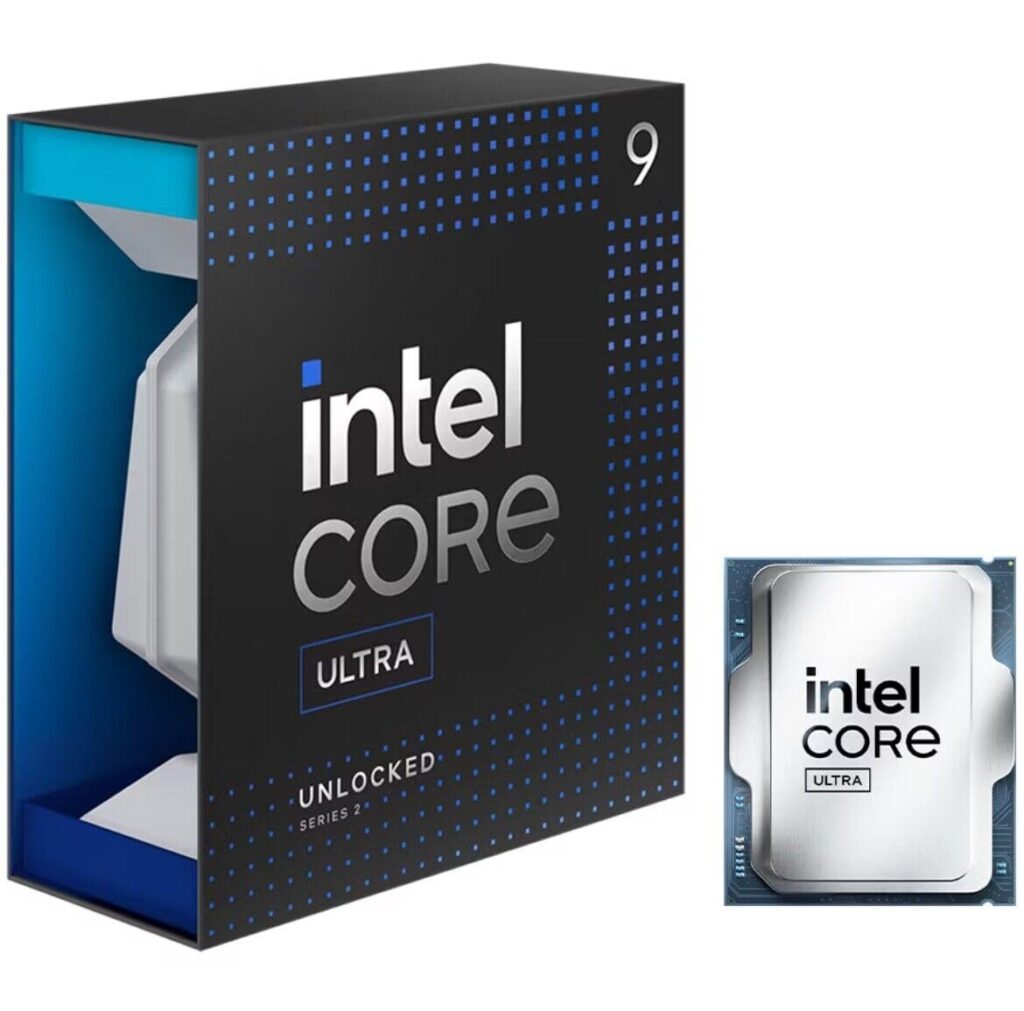
Intel tore up its monolithic desktop playbook with Arrow Lake-S, shifting compute silicon to TSMC’s N3B node and tying the chip together with Foveros 3D tile-based packaging. Packing 24 cores—split into 8 P-cores and 16 E-cores boosting up to 5.70 GHz with 36 MB of cache—this processor drops hyperthreading entirely across the lineup. For creators, developers, and heavy multitaskers, that architectural reset pays off in individual single-core and multi-core benchmarks, where it matches or edges out both the Core i9-14900K and AMD’s Ryzen 9 9950X.
Efficiency is where the overhaul makes the sharpest everyday difference. Rather than pushing reckless power limits just to chase a synthetic chart lead, the chip cuts power draw dramatically and brings desktop efficiency in line with AMD’s Ryzen 9000 Zen 5 processors. Without hyperthreading overhead and with a modern tile layout, sustained productivity runs stay far more disciplined on power consumption than Intel’s previous flagship generation.
Gaming performance tells a much rockier story, with inconsistent frame rates that trail the older Core i9-14900K, the Ryzen 7 7800X3D, and competing AMD Zen 5 chips. Upgrading also locks buyers into the new LGA 1851 socket, an Intel 800 Series motherboard, and DDR5 memory, all without a clear promise on how long that platform will receive future CPU support. Unless your PC spends most of its life compiling code or rendering timelines rather than chasing high-refresh gaming frames, that platform tax is hard to swallow.
Technical Specifications
| Brand | Intel |
| Model | Core Ultra 9 285K |
| Architecture | Arrow Lake-S (tile-based design) |
| Core Configuration | 24 cores (8 P-cores + 16 E-cores) |
| Hyperthreading | Not supported |
| Max Clock Speed | Up to 5.70 GHz |
| Cache | 36 MB |
| Process Node | TSMC N3B |
| Packaging | Foveros 3D |
| Socket | LGA 1851 |
| Chipset Compatibility | Intel 800 Series |
| Memory Support | DDR5 |
| Release Date | October 24, 2024 |
Primary Sources & Audited Citations
Recommended Alternatives in CPUs / Processors


At a Glance
How reliable is the Intel Core Ultra 9 285K according to Mizex audits?
Buy this if you want strong single- and multi-core productivity with much lower power draw; look at the Ryzen 7 7800X3D or Core i9-14900K for higher gaming frame rates, or the Ryzen 9 9950X for similar compute performance.
What are the known quirks or drawbacks of the Intel Core Ultra 9 285K?
Our reliability audit identified the following documented caveats:
- Inconsistent gaming performance trailing the Core i9-14900K, Ryzen 7 7800X3D, and AMD Zen 5 CPUs
- Drops hyperthreading support across the lineup
- Requires a new LGA 1851 800 Series motherboard and DDR5 RAM with unguaranteed socket longevity
What are the key engineering highlights of the Intel Core Ultra 9 285K?
The top strengths recorded in our evaluation include:
- Dramatically lower power consumption matching AMD Ryzen 9000 Zen 5 efficiency
- Matches or beats the Core i9-14900K and Ryzen 9 9950X in single- and multi-core CPU workloads
- Modern Foveros 3D tile-based packaging with TSMC N3B compute tiles