
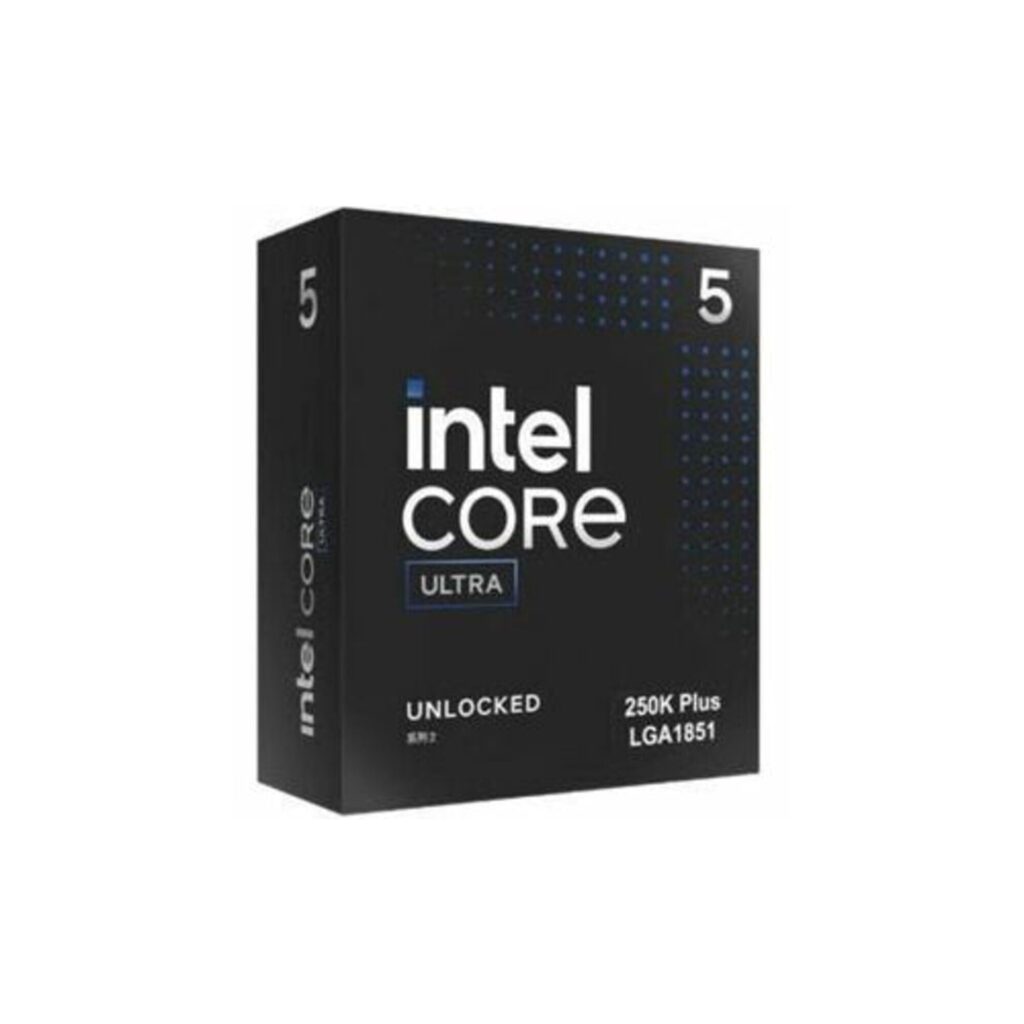
- 18-core hybrid layout (6 P-cores + 12 E-cores) delivers strong multi-core productivity over 6-core/12-thread competitors
- Recovers initial Core Ultra 200 launch regressions, matching 14th Gen Intel chips like the 14600K and outperforming the 245K
- Native DDR5-7200 memory support out of the box alongside Intel 200S Boost compatibility
- Solid power efficiency and mature out-of-the-box support on modern Linux distributions
- End-of-life LGA 1851 socket leaves no future generational CPU upgrade path
- Limits PCIe Gen 5 SSD speeds and omits Hyper-Threading / SMT support
- Trails dedicated gaming architectures in games, with optional binary optimization limited to 12 titles
Overview
Arrow Lake-S Refresh gives Intel’s midrange desktop lineup the multi-threaded punch it missed the first time around. Packing 18 physical cores—6 Lion Cove P-cores and 12 Skymont E-cores—onto a TSMC 3 nm compute tile with Intel Foveros 3D chiplet packaging, this chip drops Hyper-Threading in favor of raw core count and 30 MiB each of L2 and L3 cache. Native memory support steps up to DDR5-7200 from the older 245K’s DDR5-6400 ceiling, and with Intel 200S Boost support, it recovers the performance regressions that hurt the initial Core Ultra 200 launch while matching 14th Gen staples like the 14600K.
Clock speeds reach 5.3 GHz on the P-cores from a 4.2 GHz base, while the E-cores scale from 3.3 GHz up to 4.6 or 4.7 GHz. Power stays bounded by a 125 W processor base TDP and a 159 W maximum turbo power limit with a 105 °C thermal ceiling, pairing solid power efficiency with strong multi-core output for productivity workloads. On-package extras include a 4-core integrated GPU running up to 1900 MHz and 30 TOPS of combined INT8 AI throughput (13 TOPS on the NPU), backed by mature out-of-the-box support on modern Linux distributions.
Practical platform limits still shape who should build around this LGA 1851 processor. Because the socket is at the end of its lifecycle with no future generational CPU upgrade path, you are locking into a finished platform, and high-speed storage builders should note that it limits PCIe Gen 5 SSD speeds. Gaming performance also trails dedicated gaming architectures, and Intel’s optional binary optimization tool covers only 12 supported games, making this far stronger as a creator and Linux workstation chip than a pure gaming centerpiece.
Technical Specifications
| Brand | Intel |
| Model | Core Ultra 5 250K Plus |
| Codename | Arrow Lake-S Refresh |
| Architecture | Arrow Lake, x86-64 (64-bit) |
| Socket | FCLGA1851 (LGA 1851) |
| Process & Packaging | TSMC 3 nm CPU tile with Intel Foveros 3D chiplet packaging |
| Cores & Threads | 18 cores (6 Lion Cove P-cores + 12 Skymont E-cores) / 18 threads (no SMT) |
| P Core Clock | 4.2 GHz base / 5.3 GHz max boost |
| E Core Clock | 3.3 GHz base / 4.6–4.7 GHz max boost |
| Cache | 30 MiB L2 / 30 MiB L3 |
| Power Envelope | 125 W Base TDP / 159 W Max Turbo (PL2) |
| Max Operating Temperature | 105 °C |
| Memory Support | Up to DDR5-7200 |
| Integrated Graphics | Intel Graphics 4-Core iGPU (up to 1900 MHz) |
| AI Performance | 13 TOPS INT8 (NPU) / 30 TOPS INT8 (Chip AI) |
| Release Date | 2026-03-26 |
Primary Sources & Audited Citations
- Intel Ultra 5 250K Plus CPU Review & Benchmarks: Gaming, Production, & Power Consumption | GamersNexus
- Intel Core Ultra 5 250K Plus Review: They Did It - TechSpot
- Intel Core Ultra 5 250K Plus Processor - Benchmarks and Specs - Notebookcheck
- Intel Core Ultra 5 250K Plus Provides Exceptional Value For Linux Users - Phoronix
- Intel Core Ultra 5 250K Plus review: a high value CPU for creators | Club386
Recommended Alternatives in CPUs / Processors
At a Glance
How reliable is the Intel Core Ultra 5 250K Plus according to Mizex audits?
Buy this if you want strong 18-core productivity and mature Linux support on LGA 1851; look at dedicated gaming CPUs or a socket with future upgrade headroom if pure frame rates or platform longevity come first.
What are the known quirks or drawbacks of the Intel Core Ultra 5 250K Plus?
Our reliability audit identified the following documented caveats:
- End-of-life LGA 1851 socket leaves no future generational CPU upgrade path
- Limits PCIe Gen 5 SSD speeds and omits Hyper-Threading / SMT support
- Trails dedicated gaming architectures in games, with optional binary optimization limited to 12 titles
What are the key engineering highlights of the Intel Core Ultra 5 250K Plus?
The top strengths recorded in our evaluation include:
- 18-core hybrid layout (6 P-cores + 12 E-cores) delivers strong multi-core productivity over 6-core/12-thread competitors
- Recovers initial Core Ultra 200 launch regressions, matching 14th Gen Intel chips like the 14600K and outperforming the 245K
- Native DDR5-7200 memory support out of the box alongside Intel 200S Boost compatibility
- Solid power efficiency and mature out-of-the-box support on modern Linux distributions