
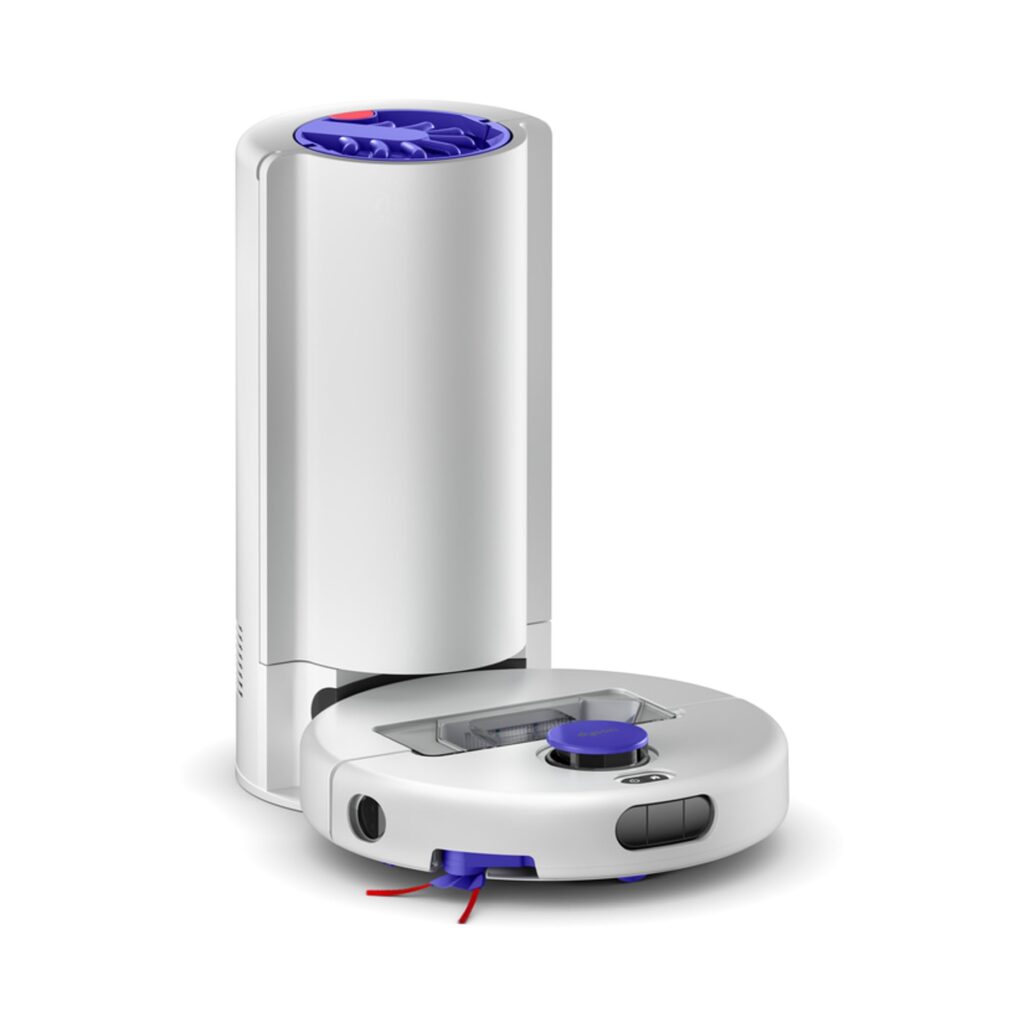
- Bagless cyclonic dock eliminates the recurring cost and waste of disposable dust bags
- Dual-channel cyclonic chamber separates fine dust from coarse debris to sustain airflow
- Actively articulated side brush sweeps debris directly into the intake without scattering
- Real-time acoustic sensing dynamically tunes suction to debris volume and surface type
- Lacks wet mopping capabilities present on competing multi-function robot platforms
- Suction rating of 21,000 Pa sits below flagship category leaders exceeding 30,000 Pa
Overview
Diverging sharply from the industry trend of hybrid mop-and-vacuum combinations, this platform focuses entirely on dedicated dry floor cleaning through multi-stage particle separation. At the core of the chassis lies a twin-capture cyclonic chamber designed to split incoming airflow into dual channels, isolating fine dust from larger debris before it can clog the intake path. Acoustic dust sensing and real-time floor detection continuously monitor the intake stream, actively altering motor output and suction pressure to match the specific volume of dirt and floor material encountered.
Perimeter cleaning relies on an actively articulated side brush engineered with dynamic pressure and directional steering. Rather than spinning continuously at a fixed rate—which frequently scatters larger particles across hard surfaces—the extending mechanism adjusts its angle and sweep velocity to draw debris directly into the primary vacuum line. The base station mirrors this cyclonic approach with a bagless auto-empty dock that uses high-velocity cyclonic separation to evacuate the robot’s bin directly into a reusable receptacle, bypassing the ongoing cost and waste of disposable dust bags.
In daily operation, the system provides straightforward, low-maintenance dry pickup for living spaces dominated by carpets and area rugs. While its 21,000 Pa suction rating delivers reliable pickup on household dust and particulate matter, it trails the 30,000 Pa thresholds seen on competing flagship robotic vacuums. For users who specifically avoid damp pads and wet cleaning rollers, the absence of fluid tanks and pumps significantly simplifies routine maintenance and reduces mechanical failure points.
Technical Specifications
| Brand | Dyson |
| Model | R1 Nurovi Dry Robot Vacuum |
| Cleaning Architecture | Dry vacuuming only (no mopping) |
| Suction Pressure | 21,000 Pa |
| Particle Separation | Dual-channel twin-capture cyclonic chamber |
| Detection Suite | Real-time dust level and floor type detection with dynamic adjustment |
| Base Station Architecture | Bagless cyclonic self-emptying dock |
| Edge Cleaning Mechanism | Extending angled side brush with active pressure and direction control |
| Navigation & Mapping | Home mapping and obstacle avoidance |
| Chassis Finish | Light grey / Vinca blue |
Primary Sources & Audited Citations
Recommended Alternatives in Smart Home & IoT
At a Glance
How reliable is the Dyson R1 Nurovi Dry Robot Vacuum according to Mizex audits?
An efficient choice for homes with extensive carpeting that prioritize bagless, low-maintenance dry cleaning over mopping functionality, provided peak suction numbers are not a primary requirement.
What are the known quirks or drawbacks of the Dyson R1 Nurovi Dry Robot Vacuum?
Our reliability audit identified the following documented caveats:
- Lacks wet mopping capabilities present on competing multi-function robot platforms
- Suction rating of 21,000 Pa sits below flagship category leaders exceeding 30,000 Pa
What are the key engineering highlights of the Dyson R1 Nurovi Dry Robot Vacuum?
The top strengths recorded in our evaluation include:
- Bagless cyclonic dock eliminates the recurring cost and waste of disposable dust bags
- Dual-channel cyclonic chamber separates fine dust from coarse debris to sustain airflow
- Actively articulated side brush sweeps debris directly into the intake without scattering
- Real-time acoustic sensing dynamically tunes suction to debris volume and surface type