
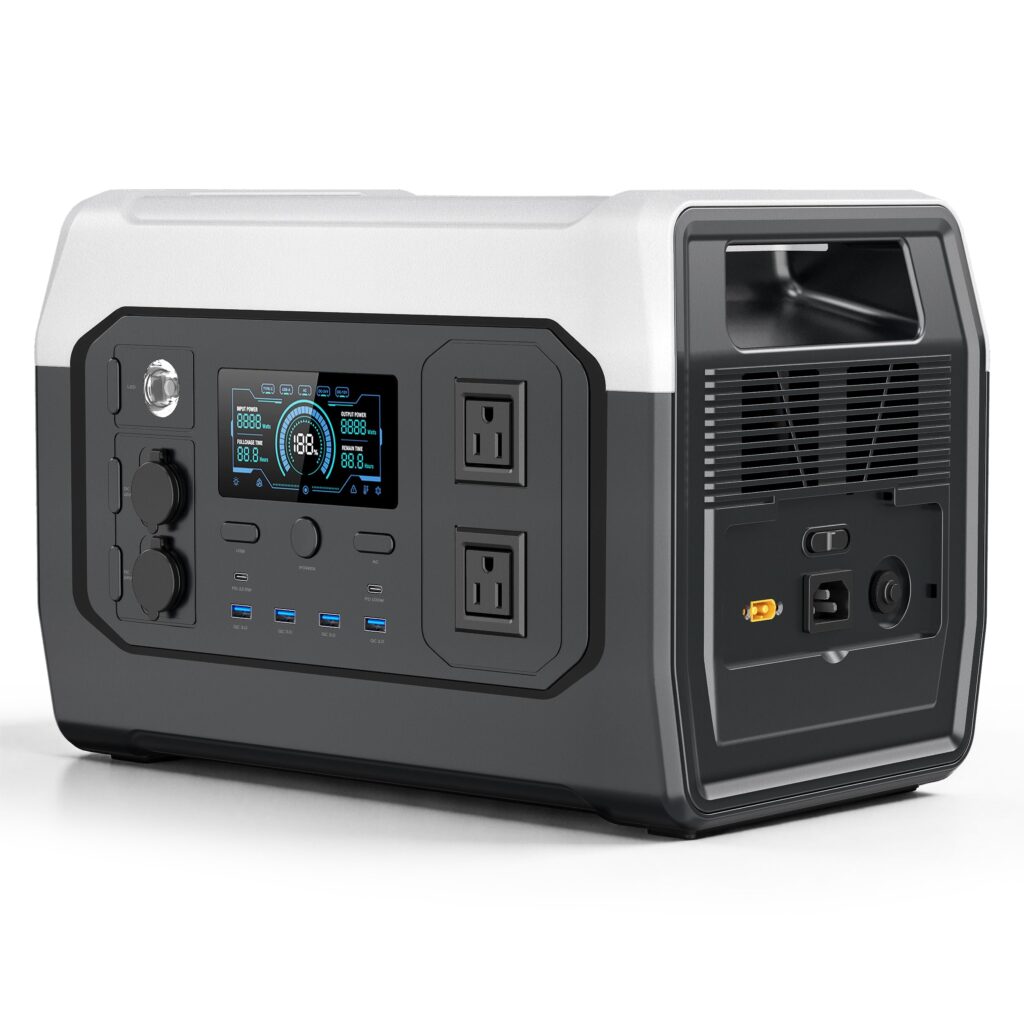
- Robust 1800W continuous AC output paired with a 1024Wh capacity
- Durable LiFePO4 battery chemistry offering high thermal stability and extended cycle life
- Extensive multi-rail output architecture supporting up to 11 simultaneous devices
- Versatile recharge options across AC grid, solar panel, and 12V vehicle inputs
- Sustained 1800W full-load operation exhausts the 1024Wh capacity in under 40 minutes
- LiFePO4 cell chemistry has a lower gravimetric energy density compared to NMC alternatives
Overview
Delivering up to 1800W of continuous AC output from a 1024Wh lithium iron phosphate (LiFePO4) energy core, power delivery is engineered around demanding load thresholds and multi-rail distribution. The inverter stage supplies clean alternating current across high-draw appliances while operating under the supervision of an integrated 16-layer Battery Management System (BMS). This multi-stage BMS actively monitors cell balance, over-voltage thresholds, and thermal conditions across the internal cell pack to prevent premature cell degradation during heavy discharge cycles.
The exterior enclosure layout accommodates an extensive power delivery interface capable of servicing up to 11 connected devices simultaneously. The interface topology combines standard AC outlets with direct DC outputs, allowing flexible deployment across field job sites, mobile base camps, and emergency residential backup configurations. System recharging is supported through three independent vectors: standard AC wall power, photovoltaic solar arrays, and 12V vehicle DC inputs, ensuring dependable field replenishment.
Thermal dissipation and electrical safeguards leverage the inherent chemical resilience of the LiFePO4 cells, which feature significantly higher thermal runaway resistance and sustained cycle longevity compared to conventional lithium nickel manganese cobalt oxide (NMC) formulations. Controlled discharge curves under continuous loads help maintain stable output voltage without aggressive thermal throttling, ensuring uninterrupted power for both inductive motor loads and sensitive electronic devices.
Technical Specifications
| Brand | CTOLITY |
| Model | XP1000 Portable Power Station |
| Battery Capacity | 1024Wh |
| Continuous AC Output Power | 1800W |
| Battery Chemistry | LiFePO4 (Lithium Iron Phosphate) |
| Simultaneous Device Support | Up to 11 devices |
| Recharging Input Sources | AC Wall, Photovoltaic Solar, 12V Car Input |
| Battery Management System | 16-Layer BMS |
Primary Sources & Audited Citations
Recommended Alternatives in Power Stations & UPS

At a Glance
How reliable is the CTOLITY XP1000 Portable Power Station Review: Resilient LiFePO4 Multi-Rail Power according to Mizex audits?
An excellent off-grid and emergency backup solution for users requiring high continuous AC output paired with the safety and extended cycle life of LiFePO4 chemistry.
What are the known quirks or drawbacks of the CTOLITY XP1000 Portable Power Station Review: Resilient LiFePO4 Multi-Rail Power?
Our reliability audit identified the following documented caveats:
- Sustained 1800W full-load operation exhausts the 1024Wh capacity in under 40 minutes
- LiFePO4 cell chemistry has a lower gravimetric energy density compared to NMC alternatives
What are the key engineering highlights of the CTOLITY XP1000 Portable Power Station Review: Resilient LiFePO4 Multi-Rail Power?
The top strengths recorded in our evaluation include:
- Robust 1800W continuous AC output paired with a 1024Wh capacity
- Durable LiFePO4 battery chemistry offering high thermal stability and extended cycle life
- Extensive multi-rail output architecture supporting up to 11 simultaneous devices
- Versatile recharge options across AC grid, solar panel, and 12V vehicle inputs