
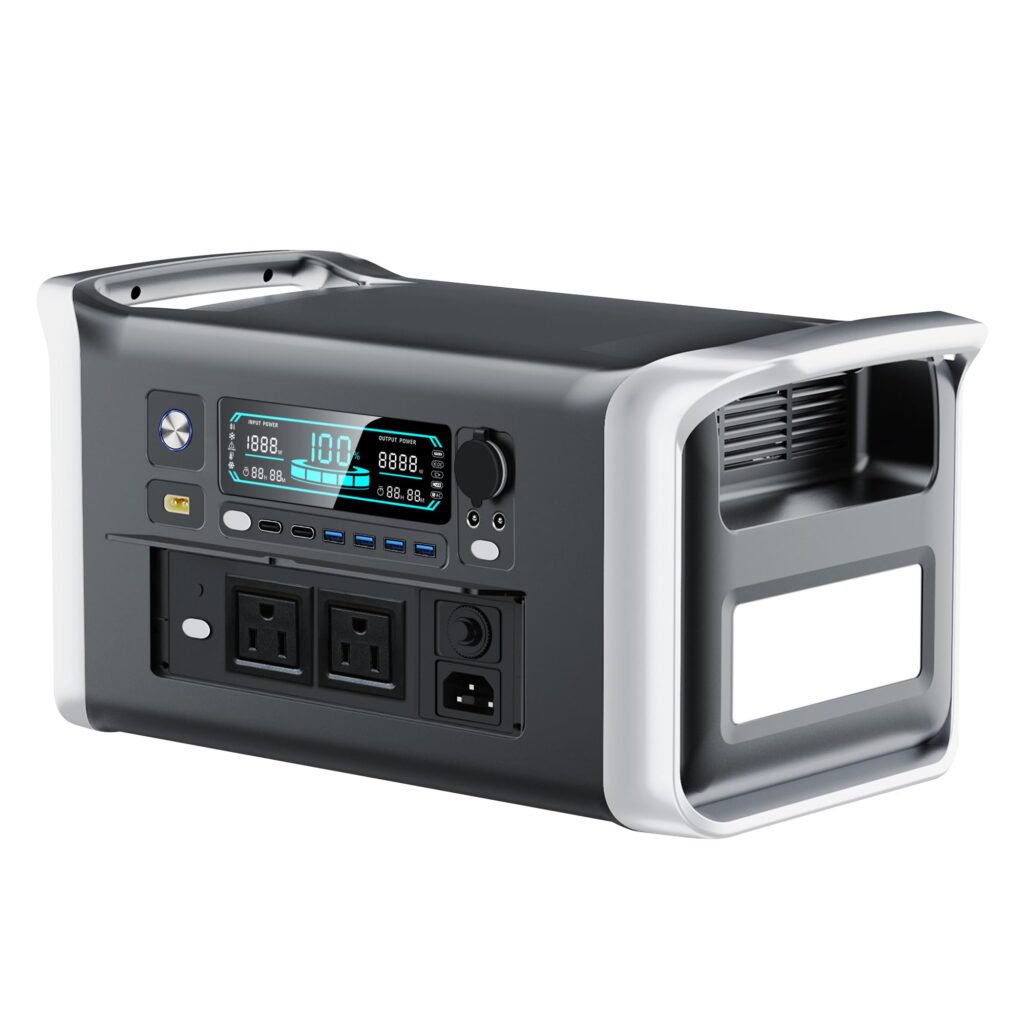
- Automotive-grade BYD LiFePO4 battery cells rated for 3000+ charge cycles
- High 1600W continuous pure sine wave AC output from a 1024Wh capacity unit
- Rapid 1.5-hour complete AC recharge turnaround
- Comprehensive 16-layer BMS protection covering overcharge, over-discharge, and overheating
- Limited to 2 AC outlets despite the high 1600W inverter capacity
- Lacks a dedicated high-amperage 12V DC interface such as an Anderson port
Overview
Power delivery architecture centers on a 1024Wh battery pack utilizing BYD-manufactured lithium iron phosphate (LiFePO4) cells paired with a 1600W continuous pure sine wave inverter. The internal electrical topology routes power through a 16-layer battery management system (BMS) tasked with continuous cell monitoring, overcharge mitigation, over-discharge cutoff, and overheating protection. Energy replenishment is handled by an integrated charging circuit capable of bringing the 1024Wh pack from empty to full charge in 1.5 hours, eliminating external power bricks while managing high input current securely across internal busbars.
Physical output distribution is arranged across eleven dedicated ports, dividing load between two grounded AC receptacles, four USB-A Quick Charge 3.0 ports, two USB-C connectors, two barrel DC jacks, and a 12V automotive auxiliary socket. The chassis utilizes an impact-resistant polymer shell engineered with reinforced corner zones and integrated carry handles to withstand transport stresses. Thermal regulation is governed by the multi-point BMS sensor array and internal cooling channels that vent inverter and cell heat during continuous 1600W operation and rapid charging cycles, preventing thermal saturation before reaching critical temperature thresholds.
Operational stability relies on deterministic onboard firmware to manage autonomous load switching, surge negotiation, and port-level overcurrent detection without user intervention. With LiFePO4 chemistry rated for in excess of 3000 discharge cycles before cell capacity degrades to 80%, the system offers predictable longevity in both stationary backup and mobile off-grid scenarios. While the inclusion of only two AC outlets limits the simultaneous connection of multiple mains-powered appliances, the 1600W ceiling provides adequate headroom for running demanding tools, domestic appliances, and electronics simultaneously within its 1024Wh energy reservoir.
Technical Specifications
| Brand | CTOLITY |
| Model | AP1000 Portable Power Station |
| Battery Capacity | 1024Wh |
| Rated AC Output | 1600W |
| Battery Chemistry | LiFePO4 (Lithium Iron Phosphate) |
| Battery Cell Vendor | BYD |
| Lifecycle Rating | 3000+ cycles to 80% capacity |
| AC Recharge Time | 1.5 hours |
| Total Output Ports | 11 ports |
| AC Outlets | 2 outlets |
| USB A Ports | 4x USB-A QC3.0 |
| USB C Ports | 2x USB-C |
| DC Ports | 2x DC barrel ports |
| Car Port | 1x 12V auxiliary car socket |
| BMS Protection | 16-Layer BMS (overcharge, over-discharge, overheating safeguards) |
Primary Sources & Audited Citations
Recommended Alternatives in Power Stations & UPS

At a Glance
How reliable is the CTOLITY AP1000 Portable Power Station Review: High-Output Inverter With BYD Cells according to Mizex audits?
A dependable 1024Wh power station featuring tier-one BYD LiFePO4 cells and a capable 1600W inverter, ideal for users prioritizing cycle longevity and rapid 1.5-hour AC turnaround over high AC outlet count.
What are the known quirks or drawbacks of the CTOLITY AP1000 Portable Power Station Review: High-Output Inverter With BYD Cells?
Our reliability audit identified the following documented caveats:
- Limited to 2 AC outlets despite the high 1600W inverter capacity
- Lacks a dedicated high-amperage 12V DC interface such as an Anderson port
What are the key engineering highlights of the CTOLITY AP1000 Portable Power Station Review: High-Output Inverter With BYD Cells?
The top strengths recorded in our evaluation include:
- Automotive-grade BYD LiFePO4 battery cells rated for 3000+ charge cycles
- High 1600W continuous pure sine wave AC output from a 1024Wh capacity unit
- Rapid 1.5-hour complete AC recharge turnaround
- Comprehensive 16-layer BMS protection covering overcharge, over-discharge, and overheating