
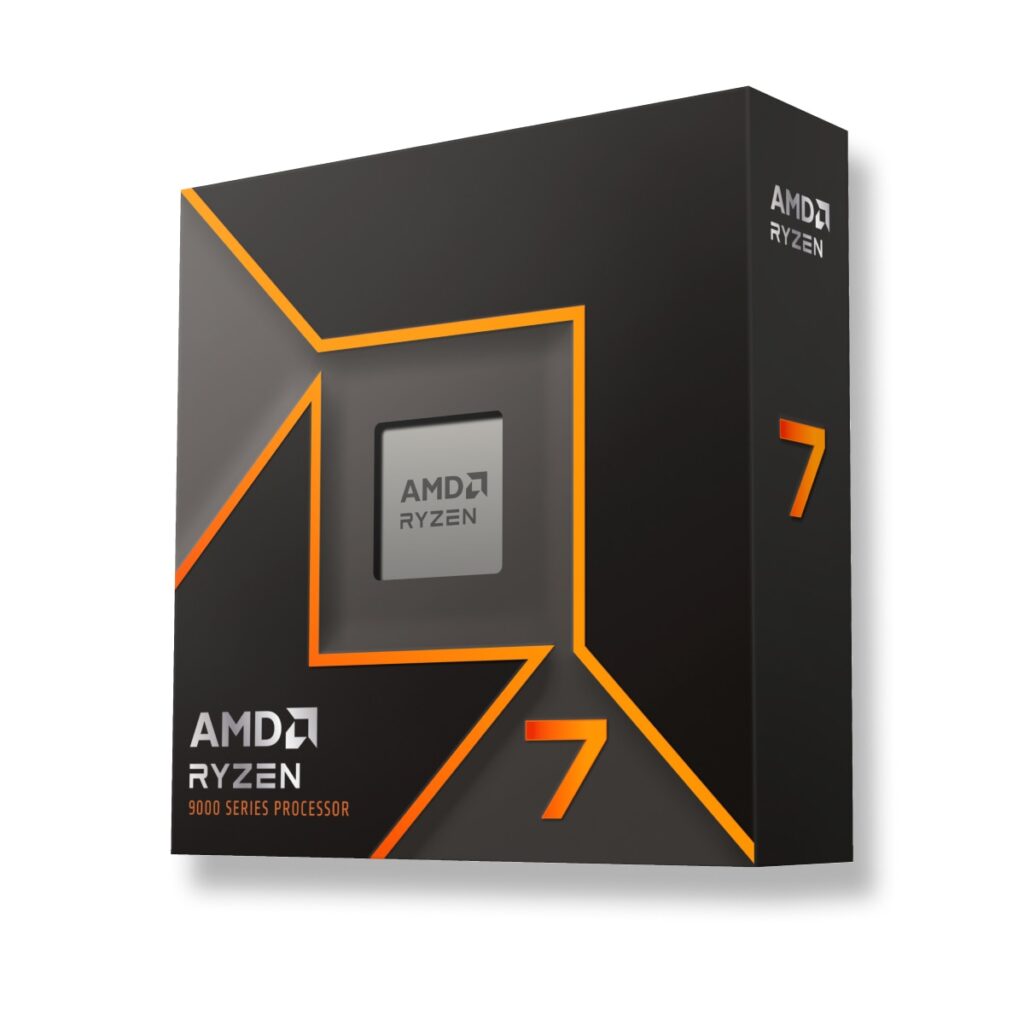
- Native 512-bit datapath for high-throughput AVX-512 and VNNI instruction execution
- TSMC 4nm architecture with 24 direct PCIe 5.0 lanes and native DDR5-5600 MT/s support
- Flexible thermal design power envelope configurable between 65 W and 105 W
- Integrated Radeon 610M GPU is limited to 128 shaders, suitable solely for basic display output
Overview
Fabricated on TSMC’s 4nm (N4P) process node, the Zen 5 microarchitecture introduces an expanded execution pipeline equipped with a full 512-bit datapath for native AVX-512 and VNNI vector operations. Featuring 8 physical cores and 16 threads, the silicon operates at a 3.8 GHz base clock with boost ceilings reaching 5.5 GHz, backed by 32 MB of shared L3 cache. Direct platform interconnectivity includes 24 PCIe 5.0 lanes and an integrated memory controller supporting DDR5-5600 MT/s natively, eliminating chipset interface bottlenecks for modern storage and graphics arrays.
Power regulation and thermal behavior center on a standard 65 W thermal design power profile, alongside a configurable 105 W operating mode supported through motherboard firmware for sustained compute loads. Across socket AM5’s land grid array interface, power delivery dynamics remain well within the bounds of standard mid-tier cooling configurations. An integrated AMD Radeon 610M graphics compute block with 128 unified shaders based on the RDNA 2 architecture clocks up to 2200 MHz, providing basic display capability and media decode without drawing substantial power or requiring discrete GPU initialization during system testing.
Integration within the AM5 socket ecosystem ensures direct compatibility with existing motherboards, requiring only standard firmware updates for complete microcode support. An unlocked clock multiplier facilitates granular precision boost overdrive and voltage curve optimization, allowing hardware integrators to fine-tune acoustic performance and thermal dissipation according to specific chassis airflow characteristics.
Technical Specifications
| Brand | AMD |
| Model | Ryzen 7 9700X |
| Architecture | Zen 5 |
| Codename | Granite Ridge |
| Process Node | TSMC 4nm (N4P) |
| Socket | Socket AM5 |
| Core Count | 8 |
| Thread Count | 16 |
| Base Clock | 3.8 GHz |
| Boost Clock | Up to 5.5 GHz |
| L3 Cache | 32 MB |
| PCIe Interface | PCIe 5.0 (24 Lanes) |
| Memory Support | DDR5-5600 MT/s |
| TDP Profile | 65 W (Configurable up to 105 W) |
| Integrated Graphics | AMD Radeon 610M (RDNA 2, 128 Shaders, up to 2200 MHz) |
| Instruction Set Extensions | AVX-512, VNNI |
| Unlocked Multiplier | Yes |
Primary Sources & Audited Citations
Recommended Alternatives in CPUs / Processors
At a Glance
How reliable is the AMD Ryzen 7 9700X Review: Zen 5 Efficiency on AM5 according to Mizex audits?
An ideal drop-in AM5 processor for builders seeking exceptional single-thread efficiency and modernized 512-bit vector processing without steep thermal overhead.
What are the known quirks or drawbacks of the AMD Ryzen 7 9700X Review: Zen 5 Efficiency on AM5?
Our reliability audit identified the following documented caveats:
- Integrated Radeon 610M GPU is limited to 128 shaders, suitable solely for basic display output
What are the key engineering highlights of the AMD Ryzen 7 9700X Review: Zen 5 Efficiency on AM5?
The top strengths recorded in our evaluation include:
- Native 512-bit datapath for high-throughput AVX-512 and VNNI instruction execution
- TSMC 4nm architecture with 24 direct PCIe 5.0 lanes and native DDR5-5600 MT/s support
- Flexible thermal design power envelope configurable between 65 W and 105 W