WiCi One vs Aftershock Cherry Bloom
Standardized 5-pillar engineering audit, thermal telemetry, verified longevity metrics, and complete technical specification diff.
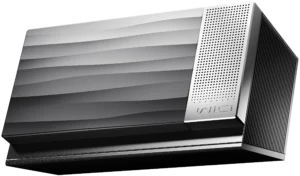
An ambitious Wi-Fi 7 untethered compute node offering flexible local AI acceleration, hampered by wireless bandwidth limits and unverified driver stability.

A high-end concept build that sacrifices conventional reliability and mass-market availability for unique aesthetic and thermal visualization features.
Mizex Comparative Audit Verdict
5-Pillar Engineering Telemetry
Detailed comparison across standardized normalized 1.0 – 5.0 engineering pillars.
WiCi One: Strengths & Caveats
- Untethered wireless eGPU operation over Wi-Fi 7 eliminating physical Thunderbolt or OCuLink cabling
- Accommodates high-performance desktop GPUs up to Nvidia GeForce RTX 5090 alongside PCIe 5.0 NVMe storage
- Enables local network multi-device compute sharing with native OpenAI-compatible API and Ollama support
- Practical wireless throughput capped at 11.5 Gbps, significantly lower than native PCIe, Thunderbolt 5, or OCuLink
- Absence of verified independent gaming latency and frame-time consistency metrics over retail Wi-Fi 7 hardware
- Substantial power and thermal overhead, drawing up to 575W for high-end graphics processor configurations
Aftershock Cherry Bloom: Strengths & Caveats
- High-end gaming configuration featuring a Ryzen 7 9800X3D and RTX 5080 GPU
- Unique custom water-cooled rig that visualizes system load via heat-reactive petals
- Exceptional build quality with premium materials and precise tolerances
- Concept build rather than a conventional mass-market desktop with limited availability
- High price point of S$18,000 limits accessibility for standard users
- No retail configuration or purchasing details provided complicates acquisition
Technical Specification Comparison
Side-by-side spec alignment. Rows highlighted with subtle shading denote differing specifications.
| Specification | WiCi One | Aftershock Cherry Bloom |
|---|---|---|
| Brand DIFF | WiCi | Aftershock |
| Model DIFF | WiCi One | Aftershock Cherry Bloom |
| GPU Options DIFF | Nvidia GeForce RTX 5060 Ti (16GB GDDR7) / Nvidia GeForce RTX 5090 (32GB VRAM) | — |
| Host Processor DIFF | Intel Core 3 100U / Intel Core Ultra 7 255H | — |
| Storage Configuration DIFF | 1TB NVMe SSD / 4TB PCIe 5.0 NVMe SSD | — |
| Wireless Standard DIFF | Wi-Fi 7 (802.11be) | — |
| Radio Configuration DIFF | 4x4 MIMO, 320 MHz, 4096-QAM | — |
| Antenna Array DIFF | Twin external antennas | — |
| Practical Wireless Bandwidth DIFF | 11.5 Gbps | — |
| Theoretical Wireless Bandwidth DIFF | 46.1 Gbps | — |
| Host Interface DIFF | Wireless network connection (cable-free) | — |
| Software Runtime DIFF | Proprietary GPU runtime, virtual local GPU driver, scheduler, Python SDK, OpenAI-compatible HTTP API | — |
| Peak GPU Power Target DIFF | Up to 575W (RTX 5090 variant) | — |
| Cpu DIFF | — | AMD Ryzen 7 9800X3D |
| Gpu DIFF | — | Zotac GeForce RTX 5080 Solid OC (16GB) |
| Memory DIFF | — | 64GB |
| Storage DIFF | — | 2TB SSD |
| Motherboard DIFF | — | Gigabyte X870E Aorus Pro |
| Cooling DIFF | — | Custom water loop with dual 360mm radiators and D5 pump |
| Fan Count DIFF | — | 8 case fans |
Need to evaluate a different configuration?
🔍 Compare Other Hardware