Valve Steam Frame VR vs COUGAR MX110 RGB
Standardized 5-pillar engineering audit, thermal telemetry, verified longevity metrics, and complete technical specification diff.
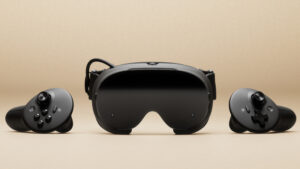
A modular, repair-friendly handheld that sacrifices battery efficiency and passthrough fidelity to deliver a unique SteamOS experience.
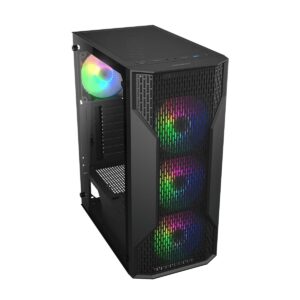
An entry-level mid-tower delivering immediate out-of-the-box airflow via four pre-installed 120 mm fans and tempered glass, counterbalanced by fixed-speed Molex fan power, 305 mm GPU limits, and legacy USB 2.0 I/O.
Mizex Comparative Audit Verdict
5-Pillar Engineering Telemetry
Detailed comparison across standardized normalized 1.0 – 5.0 engineering pillars.
Valve Steam Frame VR: Strengths & Caveats
- Runs SteamOS providing a native Linux environment for PC gaming
- Modular design allows detachment of optical/compute side for easier repair
- Includes dedicated 6GHz wireless adapter for high-bandwidth streaming
- Battery life is inferior to the Meta Quest 3
- Passthrough camera quality is significantly lower than competitors
- Power brick is not included and must be purchased separately
COUGAR MX110 RGB: Strengths & Caveats
- Includes four pre-installed 120 mm RGB cooling fans for turnkey positive pressure airflow
- Perforated front mesh fascia provides an open intake path for component cooling
- Tempered glass side panel provides full interior visibility with clean aesthetics
- Comprehensive internal drive support accommodating up to two 3.5-inch and four 2.5-inch drives
- Included RGB fans feature fixed-pattern illumination and lack PWM motherboard speed control
- GPU clearance is limited to 12.0 in (305 mm), restricting compatibility with larger multi-fan graphics cards
- Front I/O relies on dual legacy USB 2.0 ports and lacks a modern USB-C connection
Technical Specification Comparison
Side-by-side spec alignment. Rows highlighted with subtle shading denote differing specifications.
| Specification | Valve Steam Frame VR | COUGAR MX110 RGB |
|---|---|---|
| Brand DIFF | Valve | COUGAR |
| Model DIFF | Valve Steam Frame VR | MX110 RGB |
| Processor DIFF | Qualcomm Snapdragon 8 Gen 3 | — |
| Ram DIFF | 16GB LPDDR5 | — |
| Storage Options DIFF | 256GB, 1TB | — |
| Operating System DIFF | SteamOS | — |
| Connectivity DIFF | Wi-Fi 6E dongle included, 6GHz wireless adapter for streaming | — |
| Display Type DIFF | Standalone VR display (Passthrough cameras) | — |
| Battery Life DIFF | Worse than Meta Quest 3 | — |
| Passthrough Quality DIFF | Poor | — |
| Form Factor DIFF | — | Mid-Tower |
| Chassis Materials DIFF | — | SPCC steel, tempered glass, ABS plastic |
| Dimensions (W X H X D) DIFF | — | 7.9 x 17.8 x 14.2 in (200 x 452 x 360 mm) |
| Weight DIFF | — | 9.96 lbs (4.52 kg) |
| Motherboard Support DIFF | — | ATX, Micro-ATX, Mini-ITX |
| Expansion Slots DIFF | — | 7 standard slots |
| Maximum GPU Length DIFF | — | 12.0 in (305 mm) |
| Maximum CPU Cooler Height DIFF | — | 6.2 in (158 mm) |
| Maximum PSU Length DIFF | — | 6.3 in (160 mm) |
| Storage Drive Bays DIFF | — | 2 x 3.5-inch HDD (convertible), 2+2 x 2.5-inch SSD |
| Pre Installed Fans DIFF | — | 4 x 120 mm fixed-mode RGB fans (3 front intake, 1 rear exhaust) |
| Total Fan Capacity DIFF | — | Up to 6 x 120 mm (3 front, 2 top, 1 rear) |
| Radiator Compatibility DIFF | — | Front: 9.4 in (240 mm) / 4.7 in (120 mm); Rear: 4.7 in (120 mm) |
| Front I/O Interface DIFF | — | 1 x USB 3.0 Type-A, 2 x USB 2.0 Type-A, 1 x 3.5 mm Mic, 1 x 3.5 mm Audio, Reset switch |
| Dust Filtration DIFF | — | Top magnetic filter, front mesh intake, bottom PSU filter |
Need to evaluate a different configuration?
🔍 Compare Other Hardware