Valve Steam Frame VR Review: Modular Repairability Sacrifices Passthrough Fidelity vs AT&T Velocity MF923 Review: Swappable Cell Meets Legacy LTE
Standardized 5-pillar engineering audit, thermal telemetry, verified longevity metrics, and complete technical specification diff.
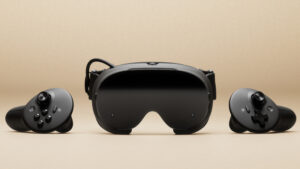
Valve Steam Frame VR
Modular Repairability Sacrifices Passthrough Fidelity
A modular, repair-friendly handheld that sacrifices battery efficiency and passthrough fidelity to deliver a unique SteamOS experience.
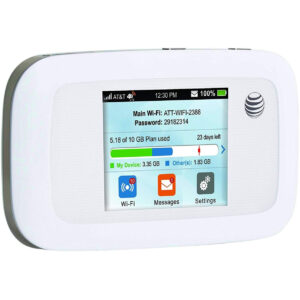
AT&T Velocity MF923
Swappable Cell Meets Legacy LTE
A compact Cat 4 LTE mobile hotspot featuring a swappable 2,800 mAh battery and on-device touchscreen management, tempered by legacy Micro-USB charging and thermal buildup during continuous tethering.
Mizex Comparative Audit Verdict
5-Pillar Engineering Telemetry
Detailed comparison across standardized normalized 1.0 – 5.0 engineering pillars.
Valve Steam Frame VR Review: Modular Repairability Sacrifices Passthrough Fidelity: Strengths & Caveats
- Runs SteamOS providing a native Linux environment for PC gaming
- Modular design allows detachment of optical/compute side for easier repair
- Includes dedicated 6GHz wireless adapter for high-bandwidth streaming
- Battery life is inferior to the Meta Quest 3
- Passthrough camera quality is significantly lower than competitors
- Power brick is not included and must be purchased separately
AT&T Velocity MF923 Review: Swappable Cell Meets Legacy LTE: Strengths & Caveats
- User-accessible, fully swappable 2,800 mAh lithium-ion battery
- Integrated 2.4-inch color capacitive touchscreen for on-device configuration
- Dual-band 2.4 GHz and 5 GHz Wi-Fi radio supporting up to 10 clients
- MicroSD card slot providing shared local network storage
- Susceptible to thermal accumulation and battery degradation when permanently tethered to AC power
- Outdated LTE Category 4 and Wi-Fi 4 standards without carrier aggregation or modern 5G support
- Legacy Micro-USB charging interface lacking modern USB-C durability and speed
Technical Specification Comparison
Side-by-side spec alignment. Rows highlighted with subtle shading denote differing specifications.
| Specification | Valve Steam Frame VR Review: Modular Repairability Sacrifices Passthrough Fidelity | AT&T Velocity MF923 Review: Swappable Cell Meets Legacy LTE |
|---|---|---|
| Brand DIFF | Valve | AT&T |
| Model DIFF | Valve Steam Frame VR | Velocity MF923 |
| Processor DIFF | Qualcomm Snapdragon 8 Gen 3 | — |
| Ram DIFF | 16GB LPDDR5 | — |
| Storage Options DIFF | 256GB, 1TB | — |
| Operating System DIFF | SteamOS | — |
| Connectivity DIFF | Wi-Fi 6E dongle included, 6GHz wireless adapter for streaming | — |
| Display Type DIFF | Standalone VR display (Passthrough cameras) | — |
| Battery Life DIFF | Worse than Meta Quest 3 | — |
| Passthrough Quality DIFF | Poor | — |
| Hardware Category DIFF | — | Mobile Wi-Fi Hotspot |
| Cellular Baseband DIFF | — | Qualcomm MDM9225 |
| Cellular Protocols DIFF | — | 4G LTE Category 4, 3G UMTS |
| LTE Bands DIFF | — | Bands 2, 4, 5, 17, 29 |
| Maximum Cellular Throughput DIFF | — | 150 Mbps download / 50 Mbps upload |
| Wi Fi Connectivity DIFF | — | Dual-Band Wi-Fi 4 (802.11b/g/n, 2.4 GHz / 5 GHz) |
| Maximum Connected Devices DIFF | — | 10 simultaneous clients |
| Display DIFF | — | 2.4 in (61 mm) color capacitive touchscreen (240 x 320 px) |
| Battery Type DIFF | — | Lithium-ion, removable |
| Battery Capacity DIFF | — | 2,800 mAh (3.8V) |
| Rated Battery Endurance DIFF | — | Up to 10 hours continuous operation |
| I/O & Charging Interface DIFF | — | Micro-USB 2.0 |
| Storage Expansion DIFF | — | MicroSD slot (supports up to 32 GB) |
| Enclosure Material DIFF | — | Polycarbonate |
| Dimensions DIFF | — | 4.5 x 2.5 x 0.7 in (114 x 63 x 17 mm) |
| Weight DIFF | — | 4.6 oz (130 g) |
Need to evaluate a different configuration?
🔍 Compare Other Hardware