Stepwise Tap vs 8Sight T100
Standardized 5-pillar engineering audit, thermal telemetry, verified longevity metrics, and complete technical specification diff.
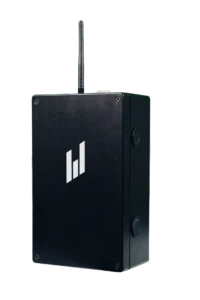
A highly reliable, UL 916-certified dynamic load manager featuring a rugged NEMA 3R enclosure and flexible current sensing that circumvents costly service panel replacements.
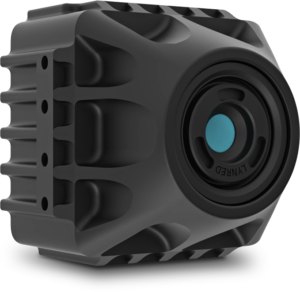
Compact, NDAA-compliant LWIR edge module delivering 60 FPS thermal capture and 600 GOPS onboard AI acceleration.
Mizex Comparative Audit Verdict
5-Pillar Engineering Telemetry
Detailed comparison across standardized normalized 1.0 – 5.0 engineering pillars.
Stepwise Tap: Strengths & Caveats
- Certified to UL 916 standards as a dedicated Energy Management System
- Performs automatic load calculations every second to keep panel usage under the 80% threshold
- Weatherproof NEMA 3R enclosure certified for indoor and outdoor installations
- Flexible current sensors fit easily inside space-constrained electrical breaker panels
- Configuration relies on manual onboard DIP switches rather than dynamic software provisioning
- Auxiliary telemetry and remote reporting require an active internet connection
8Sight T100: Strengths & Caveats
- Onboard STM32N657 MCU with 600 GOPS NPU and hardware ISP for real-time edge intelligence
- High-speed 60 FPS Lynred LWIR thermal imaging with sensitive sub-50 mK NETD performance
- Dual Ethernet and USB interfaces supporting UVC, RTSP streaming, and uncompressed radiometric RAW data
- Ultra-light 38-gram form factor with NDAA and TAA regulatory compliance
- JST harness connections require bespoke integration cabling rather than standard consumer ports
- High compute density in an unventilated micro-enclosure necessitates host-level conductive thermal dissipation
Technical Specification Comparison
Side-by-side spec alignment. Rows highlighted with subtle shading denote differing specifications.
| Specification | Stepwise Tap | 8Sight T100 |
|---|---|---|
| Brand DIFF | Stepwise | 8Sight |
| Model DIFF | Stepwise Tap | 8Sight T100 |
| Device Type DIFF | Dynamic Load Manager | — |
| Certification DIFF | UL 916 (Energy Management System) | — |
| Enclosure Rating DIFF | NEMA 3R | — |
| Monitoring Interval DIFF | 1 second | — |
| Capacity Threshold DIFF | 80% Panel Capacity Limit | — |
| Configuration Interface DIFF | Onboard DIP switches | — |
| Sensor Architecture DIFF | Flexible current sensors | — |
| Connectivity DIFF | Internet connectivity | — |
| Supported Loads DIFF | EVSE (hardwired or outlet), resistive HVAC, pool pumps, hot tubs, electric water heaters | — |
| Installation Environment DIFF | Indoor or outdoor | — |
| Microcontroller DIFF | — | STMicroelectronics STM32N657X0H3Q (Arm Cortex-M55 @ up to 800 MHz) |
| Neural Processing Unit DIFF | — | 600 GOPS Neural-ART Accelerator |
| Image Signal Processor DIFF | — | Dedicated Hardware ISP |
| System Memory DIFF | — | 32 MB (256 Mbit) RAM @ 200 MHz (16-bit) |
| Storage DIFF | — | 64 MB (512 Mbit) NOR Flash |
| Sensor Model DIFF | — | Lynred ATI320 LWIR (Long-Wave Infrared) |
| Spectral Range DIFF | — | 8 to 14 µm |
| Resolution DIFF | — | 320 x 240 pixels |
| Frame Rate DIFF | — | 60 FPS |
| Thermal Sensitivity Netd DIFF | — | < 50 mK |
| Image Pipeline Latency DIFF | — | < 50 ms |
| Ai Inference Time DIFF | — | < 100 ms (model-dependent) |
| Ethernet Interface DIFF | — | 100 Mbps Ethernet PHY via JST (MJPEG / H.264 over RTP, RTSP, RTCP) |
| Usb Interface DIFF | — | USB 2.0 High-Speed via JST (UVC MJPEG/H.264/YUV422; RAW8, RAW16) |
| Power Input DIFF | — | 5V DC via USB JST connector |
| Mounting Interface DIFF | — | 4x M2 mounting holes on four sides |
| Dimensions DIFF | — | 28.5 x 30.5 x 29.5 mm (1.12 x 1.20 x 1.16 in) |
| Weight DIFF | — | 38 g (1.3 oz) |
| Compliance DIFF | — | NDAA and TAA compliant |
Need to evaluate a different configuration?
🔍 Compare Other Hardware