Side-by-Side Comparison
Sony INZONE M10S II vs Gigabyte MO32U24
Standardized 5-pillar engineering audit, thermal telemetry, verified longevity metrics, and complete technical specification diff.
★ Recommended Winner
● HIGHLY RATED
Composite Score:
4.5
/ 5.0
A top-tier OLED gaming display combining industry-leading refresh rates with Sony's proprietary image processing technology.
● HIGHLY RATED
Composite Score:
4.4
/ 5.0
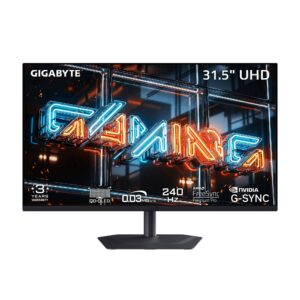
A cutting-edge 4K 240 Hz QD-OLED monitor pairing Samsung's Penta Tandem architecture with durable 3H ObsidianShield surface protection.
⚖️
Mizex Comparative Audit Verdict
The Sony INZONE M10S II earns the higher Mizex Composite Score (4.5 vs 4.4), leading across 5 of 5 engineering pillars. With superior ratings in Engineering & Architecture, Build Quality & Materials, Thermal, Power & Acoustics, Real-World Reliability, Buyer Value & Upgrades, it represents the superior reliability choice.
5-Pillar Engineering Telemetry
Detailed comparison across standardized normalized 1.0 – 5.0 engineering pillars.
Sony INZONE M10S II
Gigabyte MO32U24
Engineering & Architecture
(30%)
Winner: Sony INZONE M10S II (+0.3)
4.8
4.5
Build Quality & Materials
(20%)
Winner: Sony INZONE M10S II (+0.1)
4.3
4.2
Thermal, Power & Acoustics
(20%)
Winner: Sony INZONE M10S II (+0.1)
4.2
4.1
Real-World Reliability
(20%)
Winner: Sony INZONE M10S II (+0.1)
4.7
4.6
Buyer Value & Upgrades
(10%)
Winner: Sony INZONE M10S II (+0.1)
4.3
4.2
Sony INZONE M10S II: Strengths & Caveats
✔ Advantages
- Industry-leading 540 Hz refresh rate for ultra-smooth competitive gaming
- Superior OLED color accuracy and deep black levels
- Silent passive thermal design with no fan noise
✖ Documented Caveats
- Limited stand adjustability compared to ergonomic alternatives
- Premium pricing reflects niche high-refresh-rate availability
Gigabyte MO32U24: Strengths & Caveats
✔ Advantages
- Samsung Penta Tandem five-layer QD-OLED structure improves luminous efficiency and per-pixel longevity
- Rapid 240 Hz refresh rate with 0.03 ms GTG response time and VESA ClearMR 13000 motion clarity certification
- Sustains high full-screen SDR brightness of approximately 300 cd/m²
- Advanced ObsidianShield coating enhances scratch resistance to 3H and suppresses ambient reflections
✖ Documented Caveats
- Triangular subpixel structure can induce minor color fringing around high-contrast desktop text
- Absence of a circular polarizer allows intense ambient lighting to cause slightly raised black levels
- Peak HDR brightness is conservatively capped at 1,000 cd/m² at 3% APL
Technical Specification Comparison
Side-by-side spec alignment. Rows highlighted with subtle shading denote differing specifications.
| Specification | Sony INZONE M10S II | Gigabyte MO32U24 |
|---|---|---|
| Brand DIFF | Sony | Gigabyte |
| Model DIFF | Sony INZONE M10S II | Gigabyte MO32U24 |
| Screen Size Inches DIFF | 27 | — |
| Resolution DIFF | QHD (1440p) | 3840 x 2160 (4K UHD) |
| Panel Type DIFF | OLED | — |
| Refresh Rate Hz DIFF | 540 | — |
| Response Time Us DIFF | N/A | — |
| Screen Size DIFF | — | 31.5 inches |
| Display Technology DIFF | — | QD-OLED (Samsung Penta Tandem EL 3.0) |
| Refresh Rate DIFF | — | 240 Hz |
| Response Time DIFF | — | 0.03 ms GTG |
| Peak Hdr Brightness DIFF | — | 1,000 cd/m² (at 3% APL) |
| Sustained Sdr Brightness DIFF | — | 300 cd/m² (100% APL) |
| Hdr Certification DIFF | — | VESA DisplayHDR True Black 500 |
| Motion Clarity Certification DIFF | — | VESA ClearMR 13000 |
| Color Gamut Coverage DIFF | — | 99% DCI-P3 |
| Surface Treatment DIFF | — | Advanced ObsidianShield low-reflectance film |
| Surface Hardness DIFF | — | 3H |
| Subpixel Layout DIFF | — | Triangular QD-OLED subpixel arrangement |
Need to evaluate a different configuration?
🔍 Compare Other Hardware