Seeed Studio reBot B601-RS vs Stepwise Tap
Standardized 5-pillar engineering audit, thermal telemetry, verified longevity metrics, and complete technical specification diff.
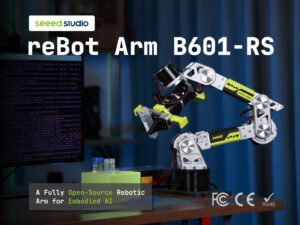
A repairable, open-source 6-DOF manipulator delivering compliant quasi-direct-drive torque control, tempered by DIY commissioning and unbundled power hardware.
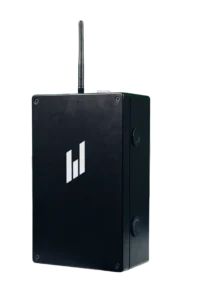
A highly reliable, UL 916-certified dynamic load manager featuring a rugged NEMA 3R enclosure and flexible current sensing that circumvents costly service panel replacements.
Mizex Comparative Audit Verdict
5-Pillar Engineering Telemetry
Detailed comparison across standardized normalized 1.0 – 5.0 engineering pillars.
Seeed Studio reBot B601-RS: Strengths & Caveats
- Fully open-source CERN-OHL-W 2.0 hardware with complete CAD, BOM, and firmware repositories
- RobStride quasi-direct-drive actuators provide compliant MIT-mode torque control and low backlash
- Native ecosystem support across ROS 2, NVIDIA Isaac Sim, and Hugging Face LeRobot
- Requires a separately sourced 48V (12.5A to 15A) industrial DC power supply
- Setup necessitates manual CAN bus transceiver interfacing and command-line zero calibration
Stepwise Tap: Strengths & Caveats
- Certified to UL 916 standards as a dedicated Energy Management System
- Performs automatic load calculations every second to keep panel usage under the 80% threshold
- Weatherproof NEMA 3R enclosure certified for indoor and outdoor installations
- Flexible current sensors fit easily inside space-constrained electrical breaker panels
- Configuration relies on manual onboard DIP switches rather than dynamic software provisioning
- Auxiliary telemetry and remote reporting require an active internet connection
Technical Specification Comparison
Side-by-side spec alignment. Rows highlighted with subtle shading denote differing specifications.
| Specification | Seeed Studio reBot B601-RS | Stepwise Tap |
|---|---|---|
| Model DIFF | Seeed Studio reBot B601-RS | Stepwise Tap |
| Degrees Of Freedom DIFF | 6-DOF + 1-DOF Parallel Gripper | — |
| Rated Payload DIFF | 5.51 lbs (2.5 kg) | — |
| Maximum Payload DIFF | 11.02 lbs (5.0 kg) | — |
| Repeatability DIFF | ±0.0039 in (±0.1 mm) | — |
| Maximum Reach DIFF | 29.71 in (754.7 mm) with gripper / 23.13 in (587.5 mm) without gripper | — |
| Total Weight DIFF | 14.77 lbs (6.7 kg) | — |
| Actuator Configuration DIFF | RobStride Dynamics QDD (3x RS-06, 4x RS-00) | — |
| Communication Protocol DIFF | CAN 2.0B via USB-to-CAN transceiver | — |
| Control Modes DIFF | MIT Mode (Position, Velocity, Torque/Feedforward) | — |
| Power Input Requirement DIFF | 48V DC, 12.5A to 15A external power supply | — |
| Structural Materials DIFF | CNC-machined aluminum alloy load brackets, reinforced base, 3D-printed ABS covers | — |
| Software Support DIFF | ROS 1 / ROS 2, NVIDIA Isaac Sim, Hugging Face LeRobot, Pinocchio, MuJoCo | — |
| Open Source License DIFF | CERN-OHL-W 2.0 (Hardware & Schematics) | — |
| Brand DIFF | — | Stepwise |
| Device Type DIFF | — | Dynamic Load Manager |
| Certification DIFF | — | UL 916 (Energy Management System) |
| Enclosure Rating DIFF | — | NEMA 3R |
| Monitoring Interval DIFF | — | 1 second |
| Capacity Threshold DIFF | — | 80% Panel Capacity Limit |
| Configuration Interface DIFF | — | Onboard DIP switches |
| Sensor Architecture DIFF | — | Flexible current sensors |
| Connectivity DIFF | — | Internet connectivity |
| Supported Loads DIFF | — | EVSE (hardwired or outlet), resistive HVAC, pool pumps, hot tubs, electric water heaters |
| Installation Environment DIFF | — | Indoor or outdoor |
Need to evaluate a different configuration?
🔍 Compare Other Hardware