Samsung Galaxy A17 5G vs Ulefone Note 23 4G
Standardized 5-pillar engineering audit, thermal telemetry, verified longevity metrics, and complete technical specification diff.

Extended six-generation OS support and Gorilla Glass Victus elevate an otherwise modest budget platform constrained by Exynos silicon and virtual proximity sensing.
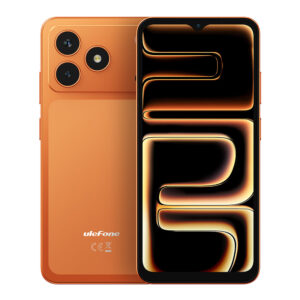
A utilitarian entry-level smartphone running Android Go on low-power Unisoc silicon, trading display sharpness and memory bandwidth for extended 5000 mAh battery endurance.
Mizex Comparative Audit Verdict
5-Pillar Engineering Telemetry
Detailed comparison across standardized normalized 1.0 – 5.0 engineering pillars.
Samsung Galaxy A17 5G: Strengths & Caveats
- Extended software roadmap offering up to 6 major Android OS generation upgrades
- Primary 50 MP camera equipped with hardware Optical Image Stabilization (OIS)
- Super AMOLED 90 Hz display protected by Corning Gorilla Glass Victus
- Storage expandability via shared microSDXC tray
- Exynos 1330 chipset yields lower active battery endurance than segment rivals with 5000 mAh cells
- Base hardware configuration restricted to 4 GB RAM and virtual proximity sensing
- Chassis ingress protection limited to IP54 splash resistance without immersion seals
Ulefone Note 23 4G: Strengths & Caveats
- Substantial 5000 mAh battery capacity delivers extended runtime under low-power silicon loads
- Dedicated triple-slot tray accommodates two Nano-SIM cards and microSD expansion up to 2 TB simultaneously
- Retains an integrated 3.5mm analog headphone jack and supports a 90 Hz display refresh rate
- Sub-HD 540 x 1210 resolution (~202 ppi) and 3 GB memory limit restrict multitasking capability
- Lacks a physical fingerprint sensor and carries no official IP water or dust ingress protection
- Slow 10W wired charging takes extended time to replenish the 5000 mAh battery
Technical Specification Comparison
Side-by-side spec alignment. Rows highlighted with subtle shading denote differing specifications.
| Specification | Samsung Galaxy A17 5G | Ulefone Note 23 4G |
|---|---|---|
| Brand DIFF | Samsung | Ulefone |
| Model DIFF | Galaxy A17 5G | Note 23 4G |
| SoC DIFF | Samsung Exynos 1330 (5 nm) | — |
| CPU DIFF | Octa-core (2x 2.4 GHz Cortex-A78 & 6x 2.0 GHz Cortex-A55) | — |
| GPU DIFF | ARM Mali-G68 MP2 | — |
| Display DIFF | 6.7 in (170.2 mm) Super AMOLED, 1080 x 2340 pixels (19.5:9, ~385 ppi), 90 Hz, 800 nits (HBM) | — |
| Display Protection DIFF | Corning Gorilla Glass Victus | — |
| Memory Options DIFF | 4 GB / 6 GB / 8 GB | — |
| Internal Storage DIFF | 128 GB / 256 GB | 32 GB |
| Storage Expansion DIFF | microSDXC (shared SIM slot) | — |
| Rear Cameras DIFF | 50 MP f/1.8 (1/2.76", 0.64 µm, AF, OIS) + 5 MP f/2.2 ultrawide + 2 MP f/2.4 macro | — |
| Front Camera DIFF | 13 MP f/2.0 (1/3.1", 1.12 µm) | 5 MP, f/2.0 |
| Video Capture DIFF | 1080p at 30 fps (gyro-EIS) | — |
| Battery Capacity | 5000 mAh | 5000 mAh |
| Charging Interface DIFF | 25W wired, USB Type-C 2.0 | — |
| Chassis Dimensions DIFF | 6.47 x 3.07 x 0.30 in (164.4 x 77.9 x 7.5 mm) | — |
| Weight DIFF | 6.77 oz (192 g) | 6.75 oz (191.5 g) |
| Chassis Materials DIFF | Gorilla Glass Victus front, plastic frame, glass-fiber reinforced plastic back | — |
| Ingress Protection DIFF | IP54 (dust and splash resistant) | — |
| Wireless Connectivity DIFF | 5G, Wi-Fi 5 (802.11ac), Bluetooth 5.3, NFC | Wi-Fi 4 (802.11b/g/n, 2.4 GHz), Bluetooth 4.2 |
| Positioning Support DIFF | GPS, GALILEO, GLONASS, BDS, QZSS | — |
| Biometric Security DIFF | Side-mounted capacitive fingerprint scanner | — |
| Sensor Suite DIFF | Accelerometer, gyro, compass, virtual proximity sensing | — |
| Software Lifecycle DIFF | Android 15, One UI (up to 6 major OS upgrades) | — |
| Processor DIFF | — | Unisoc T7100 (8-core: 2x Cortex-A75 @ 1.8 GHz, 6x Cortex-A55 @ 1.6 GHz) |
| Memory DIFF | — | 3 GB |
| Expandable Storage DIFF | — | Dedicated microSDXC slot (up to 2 TB) |
| Operating System DIFF | — | Android 16 (Go Edition) |
| Display Type DIFF | — | IPS LCD, 90 Hz |
| Display Size DIFF | — | 6.56 in (166.6 mm) diagonal |
| Display Resolution DIFF | — | 540 x 1210 pixels (~202 ppi) |
| Charging Rate DIFF | — | 10W wired (USB Type-C) |
| Rear Camera DIFF | — | 8 MP, f/2.0 |
| Cellular Connectivity DIFF | — | 4G LTE, Dual Nano-SIM (Dual Standby) |
| Location Services DIFF | — | GPS, GLONASS, Galileo |
| Audio Interface DIFF | — | 3.5mm headphone jack, mono loudspeaker |
| Biometrics DIFF | — | Face unlock (no fingerprint sensor) |
| Dimensions DIFF | — | 6.50 x 3.01 x 0.35 in (165.0 x 76.5 x 8.8 mm) |
| Chassis Material DIFF | — | Polycarbonate |
Need to evaluate a different configuration?
🔍 Compare Other Hardware