
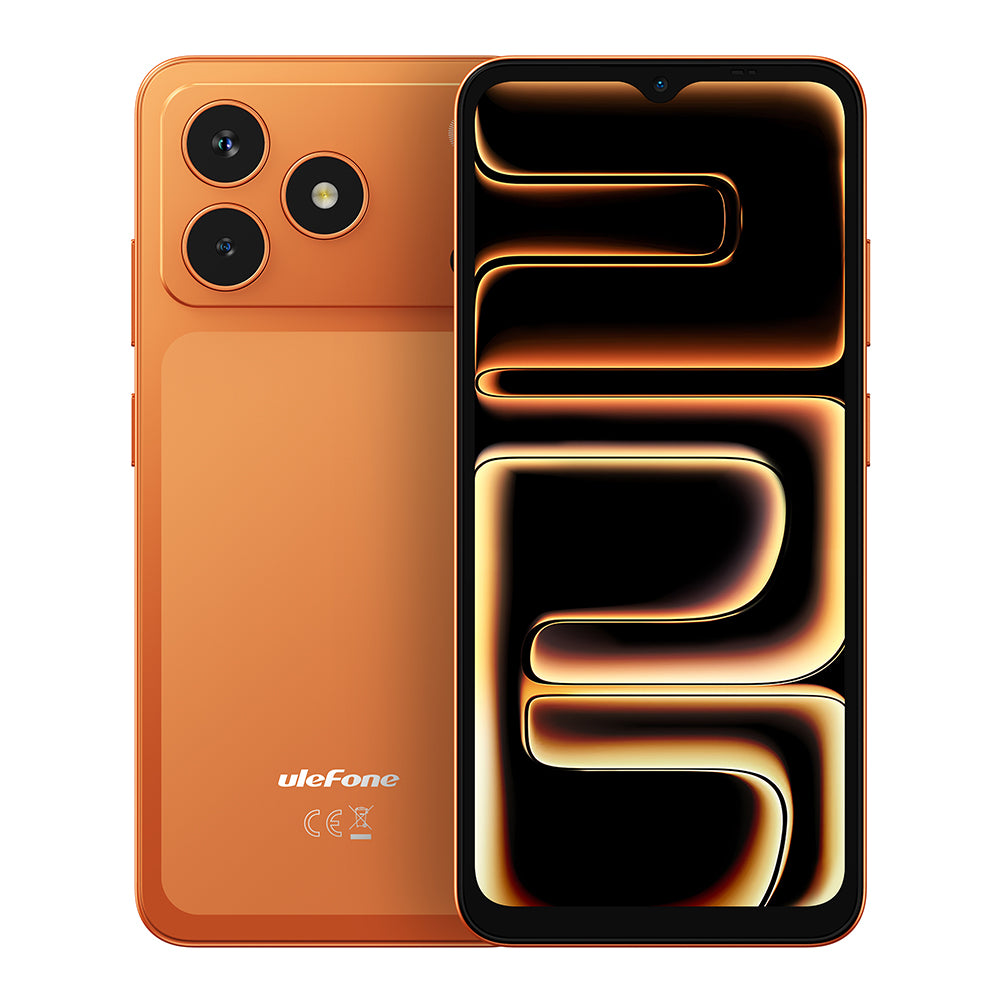
- Substantial 5000 mAh battery capacity delivers extended runtime under low-power silicon loads
- Dedicated triple-slot tray accommodates two Nano-SIM cards and microSD expansion up to 2 TB simultaneously
- Retains an integrated 3.5mm analog headphone jack and supports a 90 Hz display refresh rate
- Sub-HD 540 x 1210 resolution (~202 ppi) and 3 GB memory limit restrict multitasking capability
- Lacks a physical fingerprint sensor and carries no official IP water or dust ingress protection
- Slow 10W wired charging takes extended time to replenish the 5000 mAh battery
Overview
Silicon allocation centers on the Unisoc T7100 octa-core platform, which pairs two Cortex-A75 performance cores clocked at 1.8 GHz with six Cortex-A55 efficiency cores running at 1.6 GHz. Operating within a strict hardware envelope of 3 GB RAM and 32 GB of internal flash storage, system resources require the lightweight Android 16 Go Edition runtime to manage memory allocation. Visual output is driven through a 6.56-inch IPS LCD operating at 540 x 1210 resolution with a 90 Hz refresh rate, yielding a pixel density of approximately 202 ppi. The physical bus layout supports dedicated expansion via a triple-slot tray housing two Nano-SIM cards alongside a separate microSDXC interface capable of addressing up to 2 TB of external storage.
Mechanical construction relies on an all-polycarbonate unibody spanning 6.50 x 3.01 x 0.35 in (165.0 x 76.5 x 8.8 mm) with a total mass of 6.75 oz (191.5 g). Structural tolerances around the perimeter frame maintain adequate rigidity without internal metal sub-chassis reinforcements or certified ingress protection seals against moisture and dust. Thermal dissipation operates entirely passively; the low power draw of the Unisoc processor and a regulated 10W USB Type-C charging circuit prevent concentrated hotspot formation across the polymer casing. Acoustic output is routed through a single bottom-firing loudspeaker, complemented by an integrated 3.5mm analog audio jack on the chassis perimeter.
Power delivery is anchored by a 5000 mAh lithium-ion cell, capitalizing on low-drain silicon and sub-HD display rasterization to provide extended operational uptime across lightweight workloads. Biometric validation is restricted to 2D optical face unlock via the 5 MP front-facing camera, omitting a physical capacitive fingerprint sensor. Operational stability is governed by aggressive background task termination necessitated by the 3 GB RAM limit, while long-term software maintenance is constrained by a minimal firmware release cadence. For essential telecommunications, navigation, and media playback, the hardware delivers dependable baseline utility constrained by Spartan technical specifications.
Technical Specifications
| Brand | Ulefone |
| Model | Note 23 4G |
| Processor | Unisoc T7100 (8-core: 2x Cortex-A75 @ 1.8 GHz, 6x Cortex-A55 @ 1.6 GHz) |
| Memory | 3 GB |
| Internal Storage | 32 GB |
| Expandable Storage | Dedicated microSDXC slot (up to 2 TB) |
| Operating System | Android 16 (Go Edition) |
| Display Type | IPS LCD, 90 Hz |
| Display Size | 6.56 in (166.6 mm) diagonal |
| Display Resolution | 540 x 1210 pixels (~202 ppi) |
| Battery Capacity | 5000 mAh |
| Charging Rate | 10W wired (USB Type-C) |
| Rear Camera | 8 MP, f/2.0 |
| Front Camera | 5 MP, f/2.0 |
| Cellular Connectivity | 4G LTE, Dual Nano-SIM (Dual Standby) |
| Wireless Connectivity | Wi-Fi 4 (802.11b/g/n, 2.4 GHz), Bluetooth 4.2 |
| Location Services | GPS, GLONASS, Galileo |
| Audio Interface | 3.5mm headphone jack, mono loudspeaker |
| Biometrics | Face unlock (no fingerprint sensor) |
| Dimensions | 6.50 x 3.01 x 0.35 in (165.0 x 76.5 x 8.8 mm) |
| Weight | 6.75 oz (191.5 g) |
| Chassis Material | Polycarbonate |
Primary Sources & Audited Citations
Recommended Alternatives in Smartphones

At a Glance
How reliable is the Ulefone Note 23 4G Review: Ultra-Budget Silicon Meets Spartan Architecture according to Mizex audits?
Best suited as a bare-essential backup or secondary communications device where extreme affordability and multi-day battery endurance outweigh expectations for app multitasking, display sharpness, or sustained software updates.
What are the known quirks or drawbacks of the Ulefone Note 23 4G Review: Ultra-Budget Silicon Meets Spartan Architecture?
Our reliability audit identified the following documented caveats:
- Sub-HD 540 x 1210 resolution (~202 ppi) and 3 GB memory limit restrict multitasking capability
- Lacks a physical fingerprint sensor and carries no official IP water or dust ingress protection
- Slow 10W wired charging takes extended time to replenish the 5000 mAh battery
What are the key engineering highlights of the Ulefone Note 23 4G Review: Ultra-Budget Silicon Meets Spartan Architecture?
The top strengths recorded in our evaluation include:
- Substantial 5000 mAh battery capacity delivers extended runtime under low-power silicon loads
- Dedicated triple-slot tray accommodates two Nano-SIM cards and microSD expansion up to 2 TB simultaneously
- Retains an integrated 3.5mm analog headphone jack and supports a 90 Hz display refresh rate