Ruckus R370 Wi-Fi 7 Indoor Access Point vs Linksys SE3005 V2
Standardized 5-pillar engineering audit, thermal telemetry, verified longevity metrics, and complete technical specification diff.
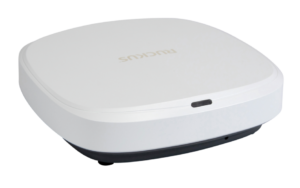
A compact enterprise Wi-Fi 7 access point pairing a 2.5 Gbps Ethernet backhaul with dual-band 2x2:2 concurrency for reliable multi-gigabit edge networking.
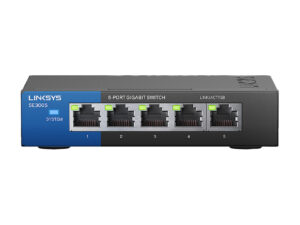
A dependable, energy-efficient 5-port unmanaged Gigabit switch delivering full-duplex throughput and automated 802.1p QoS in a compact desktop enclosure.
Mizex Comparative Audit Verdict
5-Pillar Engineering Telemetry
Detailed comparison across standardized normalized 1.0 – 5.0 engineering pillars.
Ruckus R370 Wi-Fi 7 Indoor Access Point: Strengths & Caveats
- Multi-gigabit 2.5 Gbps Ethernet uplink eliminates wired backhaul bottlenecks
- Wi-Fi 7 (802.11be) support delivering aggregate wireless speeds up to 3.57 Gbps
- Concurrent dual-band 4 spatial stream operation (2x2:2 on 2.4 GHz and 2x2:2 on 5 GHz)
- Enterprise fleet orchestration via Ruckus SmartZone vSZ 7.2.0 Long-Term GA release
- Dual-band architecture omits dedicated 6 GHz spectrum support
- Entry-level 2x2:2 spatial stream density per band limits peak multi-client capacity compared to higher-tier enterprise APs
Linksys SE3005 V2: Strengths & Caveats
- Five auto-sensing 10/100/1000 Mbps Gigabit ports with full-duplex switching
- Hardware-based IEEE 802.1p Quality of Service (QoS) traffic prioritization
- IEEE 802.3az Energy Efficient Ethernet dynamically minimizes idle port power
- Dual-color (Green/Orange) Link/Activity status LEDs for immediate visual diagnostics
- Unmanaged Layer 2 architecture lacks VLAN segmentation, link aggregation, and port monitoring
- Desktop-only enclosure lacks integrated wall-mount keyholes or rackmount hardware
Technical Specification Comparison
Side-by-side spec alignment. Rows highlighted with subtle shading denote differing specifications.
| Specification | Ruckus R370 Wi-Fi 7 Indoor Access Point | Linksys SE3005 V2 |
|---|---|---|
| Brand DIFF | Ruckus | Linksys |
| Model DIFF | R370 | SE3005 V2 |
| Wireless Standard DIFF | Wi-Fi 7 (802.11be) | — |
| Frequency Bands DIFF | Dual-band concurrent (2.4 GHz, 5 GHz) | — |
| MIMO Configuration DIFF | 2x2:2 (2.4 GHz) / 2x2:2 (5 GHz) | — |
| Spatial Streams DIFF | 4 spatial streams | — |
| Max Aggregate Data Rate DIFF | 3.57 Gbps | — |
| Ethernet Interface DIFF | 1x 2.5 Gbps Ethernet | — |
| Form Factor DIFF | Compact indoor access point | — |
| Base Software Release DIFF | SmartZone vSZ 7.2.0 (LT-GA) | — |
| Type DIFF | — | Unmanaged Switch |
| Port Configuration DIFF | — | 5 x 10/100/1000 Mbps Gigabit Ethernet (Auto-Sensing RJ45) |
| Switching Mode DIFF | — | Full-Duplex |
| Networking Standards DIFF | — | IEEE 802.3, IEEE 802.3u, IEEE 802.3x, IEEE 802.3ab, IEEE 802.3az |
| Traffic Prioritization DIFF | — | IEEE 802.1p Quality of Service (QoS) |
| Status Indicators DIFF | — | System (Blue), Link / Activity (Dual-Color Green/Orange) |
| Power Input DIFF | — | 12V DC, 0.5A |
| Dimensions DIFF | — | 4.72 x 3.46 x 1.02 in (120 x 88 x 26 mm) |
| Mounting Type DIFF | — | Desktop |
| Operating Temperature DIFF | — | 32 to 104 °F (0 to 40 °C) |
| Storage Temperature DIFF | — | -4 to 158 °F (-20 to 70 °C) |
| Operating Humidity DIFF | — | 10% to 90% (non-condensing) |
| Storage Humidity DIFF | — | 5% to 90% (non-condensing) |
Need to evaluate a different configuration?
🔍 Compare Other Hardware