Side-by-Side Comparison
Radxa Cubie A7Z 2GB vs NeoEyes NE302
Standardized 5-pillar engineering audit, thermal telemetry, verified longevity metrics, and complete technical specification diff.
▲ DOCUMENTED QUIRKS
Composite Score:
4.2
/ 5.0
High-density SBC engineering that fits octa-core compute, a 3 TOPS NPU, and PCIe Gen3 into a Pi Zero footprint with expected I/O trade-offs.
▲ DOCUMENTED QUIRKS
Composite Score:
4.2
/ 5.0
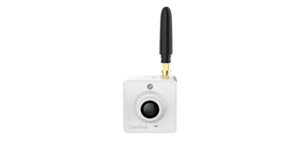
A highly efficient fanless vision module with strong NPU performance but limited storage and no battery support.
⚖️
Mizex Comparative Audit Verdict
Both the Radxa Cubie A7Z 2GB and NeoEyes NE302 share an identical composite score of 4.2. Choice between them depends primarily on specific port requirements, physical dimensions, or pricing.
5-Pillar Engineering Telemetry
Detailed comparison across standardized normalized 1.0 – 5.0 engineering pillars.
Radxa Cubie A7Z 2GB
NeoEyes NE302
Engineering & Architecture
(30%)
Winner: NeoEyes NE302 (+0.1)
4.4
4.5
Build Quality & Materials
(20%)
Winner: Radxa Cubie A7Z 2GB (+0.2)
4.2
4.0
Thermal, Power & Acoustics
(20%)
Winner: NeoEyes NE302 (+0.1)
4.0
4.1
Real-World Reliability
(20%)
Winner: NeoEyes NE302 (+0.2)
4.1
4.3
Buyer Value & Upgrades
(10%)
Winner: Radxa Cubie A7Z 2GB (+0.1)
4.3
4.2
Radxa Cubie A7Z 2GB: Strengths & Caveats
✔ Advantages
- Integrates dual Cortex-A76 and hexa Cortex-A55 cores with a 3 TOPS NPU in a compact form factor
- Provides high-speed PCIe Gen3 x1 expansion via an onboard FPC connector
- Supports dual display output via Micro HDMI 2.0b and USB-C DisplayPort Alt Mode
- Features modern wireless networking with Wi-Fi 6 and Bluetooth 5.4
✖ Documented Caveats
- Lacks onboard RJ45 Ethernet and full-size USB Type-A ports, requiring external adapters
- High-speed UFS 3.0 storage requires surface-mount soldering to unpopulated pads rather than a modular socket
NeoEyes NE302: Strengths & Caveats
✔ Advantages
- Fanless operation enabled by high TOPS/W efficiency
- Hardware-accelerated video encoding (H.264/JPEG)
- Open firmware and developer resources available
✖ Documented Caveats
- No battery included (USB-C power only)
- Reduced memory/storage compared to NE301 model
- Removed features: 4G LTE, audio wafers, PIR motion connector, PoE support
Technical Specification Comparison
Side-by-side spec alignment. Rows highlighted with subtle shading denote differing specifications.
| Specification | Radxa Cubie A7Z 2GB | NeoEyes NE302 |
|---|---|---|
| Brand DIFF | Radxa | NeoEyes |
| Model DIFF | Cubie A7Z 2GB | NeoEyes NE302 |
| SoC DIFF | Allwinner A733 (A733MX-HN3) | — |
| CPU Architecture DIFF | Dual-core Arm Cortex-A76 @ up to 2.00 GHz, Hexa-core Arm Cortex-A55 @ up to 1.79 GHz, Single-core RISC-V E902 real-time core | — |
| GPU DIFF | Imagination Technologies BXM-4-64 MC1 (OpenGL ES 3.2, Vulkan 1.3, OpenCL 3.0) | — |
| NPU DIFF | 3 TOPS AI accelerator | — |
| VPU DIFF | 8Kp24 H.265/VP9/AVS2 decoding, 4Kp30 H.265/H.264 encoding | — |
| System Memory DIFF | 2GB LPDDR4/4x | — |
| Storage Support DIFF | MicroSD slot, unpopulated footprint for 2-lane UFS 3.0 (64GB to 512GB) | — |
| Display Interfaces DIFF | 1x Micro HDMI 2.0b (up to 4Kp60), 1x USB-C with DisplayPort Alt Mode | — |
| Camera Interface DIFF | 4-lane MIPI CSI connector | — |
| Wireless Connectivity DIFF | Dual-band Wi-Fi 6, Bluetooth 5.4 (Quectel FCU760K module, IPEX antenna connector) | — |
| USB Ports DIFF | 1x USB 2.0 OTG Type-C (power/data), 1x USB 3.1 OTG Type-C (with DisplayPort Alt Mode) | — |
| Expansion Interfaces DIFF | 40-pin color-coded GPIO header, PCIe Gen3 x1 FPC connector | — |
| Form Factor DIFF | Raspberry Pi Zero standard footprint, 2.56 x 1.18 in (65 x 30 mm) | — |
| Power Delivery DIFF | 5V/1A via USB-C or 5V DC via 40-pin GPIO header | — |
| Mcu Core DIFF | — | Arm Cortex-M55 |
| Cpu Frequency DIFF | — | 800 MHz |
| Npu Accelerator DIFF | — | ST Neural-ART @ 1 GHz |
| Npu Performance Gops DIFF | — | 600 GOPS |
| Tops Per Watt DIFF | — | 3 TOPS/W |
| Gpu DIFF | — | Neo-Chrom 2.5D GPU |
| Bpu Encoders DIFF | — | H.264 and JPEG up to 1080p @ 30fps |
| Sram DIFF | — | 4.2 MB |
| Psram DIFF | — | 32 MB |
| Flash Storage DIFF | — | 64 MB SPI Flash |
| Camera Sensor DIFF | — | OS04C10 (4MP) |
| Sensor Fov Wide DIFF | — | 88 degrees |
| Sensor Fov Ultra Wide DIFF | — | 137 degrees |
| Lens Mount DIFF | — | M12 |
| Wifi Standard DIFF | — | WiFi 6 (2.4 GHz) |
| Bluetooth Version DIFF | — | Bluetooth 5.3 LE |
| Antenna Gain Dbi DIFF | — | 3 to 4 dBi |
| Environmental Sensor DIFF | — | SHT31-DIS (Temp/Humidity) |
| Power Input DIFF | — | 5V via USB-C |
| Dimensions Mm DIFF | — | 42 x 42 x 20 mm (1.65 x 1.65 x 0.79 in) |
| Pcb Dimensions Mm DIFF | — | 38 x 38 mm (1.50 x 1.50 in) |
| Operating Temp C DIFF | — | -20 to 50 C |
Need to evaluate a different configuration?
🔍 Compare Other Hardware