QNAP QSW-M5218P-6F12T vs QNAP QSW-M5218
Standardized 5-pillar engineering audit, thermal telemetry, verified longevity metrics, and complete technical specification diff.
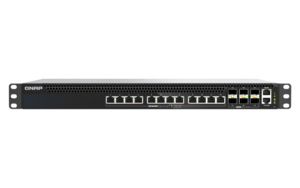
QNAP QSW-M5218P-6F12T
Dense 18-port L3 Lite multi-gigabit switch pairing twelve 10GbE PoE ports with six 25GbE SFP28 uplinks for demanding network backbones.
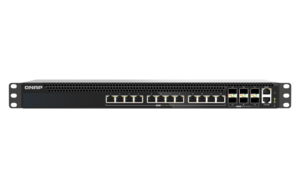
QNAP QSW-M5218
High-density 540 Gbps L3 Lite rackmount switch combining twelve 10GbE RJ45 ports and six 25GbE SFP28 uplinks for demanding enterprise backbones.
Mizex Comparative Audit Verdict
5-Pillar Engineering Telemetry
Detailed comparison across standardized normalized 1.0 – 5.0 engineering pillars.
QNAP QSW-M5218P-6F12T: Strengths & Caveats
- High-density multi-gigabit connectivity with twelve 10GbE RJ45 ports and six 25GbE SFP28 uplinks
- 540 Gbps switching capacity capable of handling intensive AV-over-IP, NAS, and virtualization workloads
- Integrated PoE capability allows power and multi-gigabit data delivery over single cable runs
- Enterprise-grade network stability features including MC-LAG redundancy and IEEE 1588v2 PTP time synchronization
- Limited to L3 Lite static routing rather than full enterprise-grade dynamic Layer 3 routing protocols
- Full-load acoustic noise and component thermal benchmarks are pending physical retail teardown verification
QNAP QSW-M5218: Strengths & Caveats
- High-bandwidth hybrid density with twelve 10GbE RJ45 ports and six 25GbE SFP28 fiber uplinks
- Non-blocking 540 Gbps switching capacity with Layer 3 Lite static routing and DHCP server support
- Enterprise-grade MC-LAG clustering and IEEE 1588v2 PTP time synchronization for AV-over-IP workflows
- Sturdy 1U rackmount all-metal steel chassis with an integrated universal internal power supply
- Five PWM high-RPM cooling fans generate notable acoustic output unsuitable for quiet desktop deployment
- Retail teardown pending to verify internal component-level thermal dissipation and VRM layout
- Firmware maturity across broad third-party 25GbE SFP28 optical transceiver compatibility requires post-launch validation
Technical Specification Comparison
Side-by-side spec alignment. Rows highlighted with subtle shading denote differing specifications.
| Specification | QNAP QSW-M5218P-6F12T | QNAP QSW-M5218 |
|---|---|---|
| Brand | QNAP | QNAP |
| Model DIFF | QSW-M5218P-6F12T | QSW-M5218 |
| Total Ports DIFF | 18 | — |
| RJ45 Ports DIFF | 12 x 10GbE | — |
| SFP Uplink Ports DIFF | 6 x 25GbE SFP28 | — |
| Switching Capacity DIFF | 540 Gbps | — |
| PoE Support DIFF | Integrated PoE | — |
| Management Layer DIFF | L3 Lite Managed | — |
| Routing Capabilities DIFF | IPv4 / IPv6 static routing, inter-VLAN routing, DHCP server | — |
| High Availability DIFF | MC-LAG | — |
| Precision Timing DIFF | IEEE 1588v2 PTP | — |
| Hardware Category DIFF | Networking & Routers | — |
| Form Factor DIFF | — | 1U Rackmount |
| Enclosure Material DIFF | — | Steel / Metal |
| Dimensions DIFF | — | 44 x 439 x 190 mm (1.73 x 17.28 x 7.48 in) |
| Weight DIFF | — | 2.74 kg (6.04 lbs) |
| Ethernet Ports DIFF | — | 12 x 10GbE RJ45 (10G/5G/2.5G/1G/100M) |
| Uplink Ports DIFF | — | 6 x 25GbE SFP28 (25G/10G/1G) |
| Total Switching Capacity DIFF | — | 540 Gbps |
| Management System DIFF | — | QSS Pro (Web GUI), AMIZcloud Centralized Management |
| Layer 3 Features DIFF | — | IPv4/IPv6 Static Routing, DHCP Server, Inter-VLAN Routing |
| High Availability DIFF | — | MC-LAG (Multi-Chassis Link Aggregation Group) |
| Time Synchronization DIFF | — | IEEE 1588v2 PTP (Precision Time Protocol) |
| Cooling System DIFF | — | 5 x PWM VAPO Bearing Cooling Fans |
| Max Power Consumption DIFF | — | 80W |
| Power Input DIFF | — | Internal Universal PSU, 100-240V AC, 50/60 Hz |
Need to evaluate a different configuration?
🔍 Compare Other Hardware