Omada BE5000 EAP723 Review: Dual-Band Wi-Fi 7 Ceiling Node vs Ubiquiti Max 5G Modem Review: Automated Cellular Failover With Fiber Support
Standardized 5-pillar engineering audit, thermal telemetry, verified longevity metrics, and complete technical specification diff.
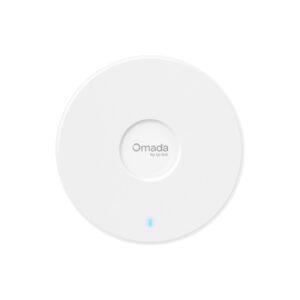
Omada BE5000 EAP723 Review: Dual-Band Wi-Fi 7 Ceiling Node
A compact, PoE-powered dual-band access point bringing 2.5 GbE uplink speeds and 802.11be protocol efficiencies to budget-conscious enterprise deployments at the expense of 6 GHz spectrum.
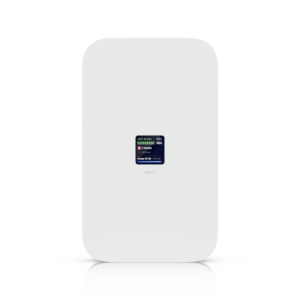
Ubiquiti Max 5G Modem Review: Automated Cellular Failover With Fiber Support
Integrated 5G cellular gateway pairing tri-band Wi-Fi, SFP fiber capability, and automated failover in a unified UniFi OS desktop platform.
Mizex Comparative Audit Verdict
5-Pillar Engineering Telemetry
Detailed comparison across standardized normalized 1.0 – 5.0 engineering pillars.
Omada BE5000 EAP723 Review: Dual-Band Wi-Fi 7 Ceiling Node: Strengths & Caveats
- Multi-gigabit 2.5 GbE PoE+ port eliminates backhaul bottlenecks for high-throughput Wi-Fi 7 clients
- Implements core 802.11be features including 4096-QAM, Multi-Link Operation (MLO), and Multi-RU puncturing
- Compact 6.3-inch footprint with seamless Omada SDN centralized management and mesh coordination
- Integrated Bluetooth 5.2 radio accelerates mobile app provisioning and on-site onboarding
- Lacks 6 GHz radio band support, restricting all client traffic to congested 2.4 GHz and 5 GHz spectrums
- Maximum 5 GHz channel width is capped at 160 MHz in EU regions compared to 240 MHz in US models
- External DC power adapter is not included in the standard retail packaging
Ubiquiti Max 5G Modem Review: Automated Cellular Failover With Fiber Support: Strengths & Caveats
- Integrated 5G cellular modem supporting both physical SIM and eSIM for flexible carrier provisioning
- Tri-band Wi-Fi capability spanning 2.4 GHz, 5 GHz, and 6 GHz spectrums
- Built-in SFP slot allowing direct fiber-optic WAN connectivity
- Integrated front display delivering immediate real-time telemetry on signal quality and data usage
- Multi-gigabit throughput support across the four RJ45 Ethernet ports was unconfirmed at announcement
- SFP optical transceiver is not included in the chassis package and must be sourced separately
Technical Specification Comparison
Side-by-side spec alignment. Rows highlighted with subtle shading denote differing specifications.
| Specification | Omada BE5000 EAP723 Review: Dual-Band Wi-Fi 7 Ceiling Node | Ubiquiti Max 5G Modem Review: Automated Cellular Failover With Fiber Support |
|---|---|---|
| Brand DIFF | Omada | Ubiquiti |
| Model DIFF | BE5000 EAP723 | Max 5G Modem |
| Wireless Standard DIFF | Wi-Fi 7 (IEEE 802.11be/ax/ac/n/g/b/a) | — |
| Radio Bands DIFF | Dual-Band (2.4 GHz and 5 GHz, no 6 GHz) | — |
| Spatial Streams DIFF | 2x2 MIMO (2.4 GHz) + 2x2 MIMO (5 GHz) | — |
| Max Phy Rate 5ghz DIFF | 4324 Mbps (240 MHz channel width, US) / 2882 Mbps (160 MHz channel width, EU) | — |
| Max Phy Rate 2 4ghz DIFF | 688 Mbps (40 MHz channel width) | — |
| Ethernet Interface DIFF | 1 × 2.5 Gbps RJ45 Port | — |
| Power Options DIFF | 802.3at PoE+ or 12V/1.5A DC Input | — |
| Power Consumption Poe DIFF | 19.5 W (US) / 18.6 W (EU) | — |
| Power Consumption Dc DIFF | 16.8 W (US) / 16.0 W (EU) | — |
| Antenna Configuration DIFF | Internal Omni: 2 × 4.0 dBi (2.4 GHz), 2 × 5.0 dBi (5 GHz), 1 × 3.0 dBi (Bluetooth 5.2) | — |
| Channel Bandwidth DIFF | Up to 240 MHz (5 GHz US) / 160 MHz (5 GHz EU), up to 40 MHz (2.4 GHz) | — |
| Modulation Scheme DIFF | 4096-QAM (4K-QAM) | — |
| Management Ecosystem DIFF | Omada SDN (Controller, Cloud, or Standalone) | — |
| Concurrent Clients DIFF | 250+ clients | — |
| Operating Temperature DIFF | 32 °F to 104 °F (0 °C to 40 °C) | — |
| Operating Humidity DIFF | 10% to 90% RH non-condensing | — |
| Dimensions DIFF | 6.3 × 6.3 × 1.4 in (160 × 160 × 36.7 mm) | — |
| Weight DIFF | 14.5 oz (412 g) | — |
| Mounting Options DIFF | Ceiling and wall mount (bracket included) | — |
| Cellular Technology DIFF | — | 5G |
| SIM Support DIFF | — | Physical SIM and eSIM |
| Cellular Deployment Modes DIFF | — | Primary connection, failover, or redundancy |
| Wi Fi Frequency Bands DIFF | — | Tri-band (2.4 GHz, 5 GHz, 6 GHz) |
| Ethernet Interface DIFF | — | 4x RJ45 ports |
| Fiber Optic Interface DIFF | — | 1x SFP slot |
| Storage Expansion DIFF | — | MicroSD card slot |
| Integrated Display DIFF | — | Status display (signal quality, throughput, total data usage) |
| Operating System DIFF | — | UniFi OS |
Need to evaluate a different configuration?
🔍 Compare Other Hardware